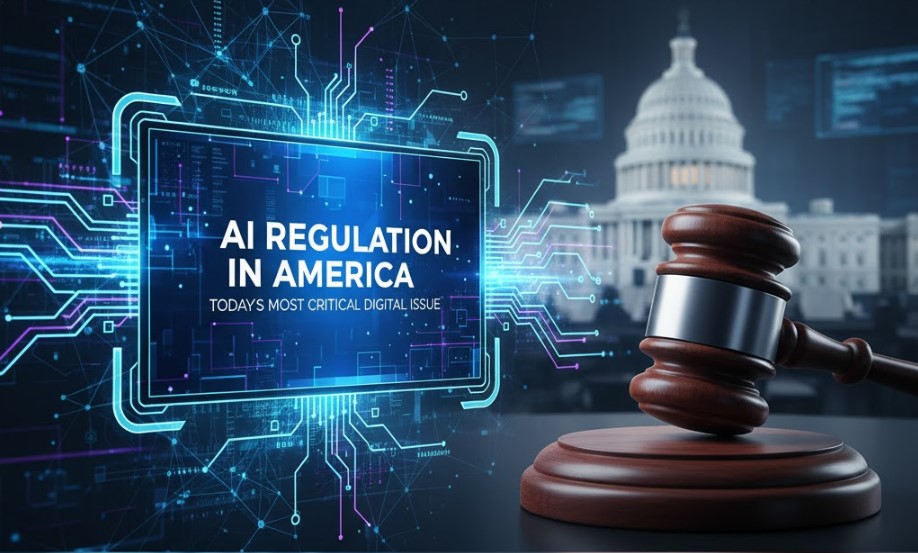
In 2025, no topic in America’s digital landscape is gaining more attention than AI regulation. From lawmakers in Washington to tech leaders in Silicon Valley, the United States is now facing a crucial question:
How do we control artificial intelligence without stopping innovation?
As AI becomes embedded in daily life—powering apps, shaping online content, influencing jobs, and even creating realistic fake images—Americans are demanding stronger protections and clearer rules. This turning point is shaping the future of digital safety in the U.S.
Here’s why AI regulation has become one of the most important national conversations today.
1. Deepfake Harm Is Exploding — and the U.S. Had to Respond
One of the biggest catalysts for new laws is the rapid rise of AI-generated deepfakes, especially explicit or non-consensual content targeting women, minors, and public figures.
In early 2025, the U.S. introduced stricter laws requiring platforms to remove harmful AI-generated images within 48 hours once reported.
Today, deepfakes are no longer a fringe online problem. They affect:
- teenagers
- celebrities
- teachers
- influencers
- everyday social media users
The government now sees deepfake abuse as a national digital safety issue, similar to cybersecurity or online harassment.
2. AI Is Reshaping the American Job Market
AI’s impact on U.S. employment is one of the most discussed topics of 2025.
Many industries are being transformed by automation:
- customer service
- marketing
- media and writing
- data entry
- hourly wage jobs
- tech and software
This has created pressure on both sides:
- Workers fear losing jobs or being replaced by AI tools.
- Companies argue that AI boosts productivity and reduces costs.
This tension is pushing the government to explore new regulations around:
- worker protection
- fair AI systems
- transparency in AI decision-making
America is facing a new kind of labor revolution—and the rules are still being written.
3. Big Tech and AI Investments Are Growing Fast
Major U.S. companies like Google, Microsoft, Meta, and OpenAI are investing billions into AI infrastructure.
Massive data centers are being built across the country, raising debates about:
- energy consumption
- environmental impact
- power grid pressure
- data privacy and storage
As AI dependency increases, so does the need for policies that ensure safety, sustainability, and transparency.
4. Privacy and Data Protection Are More Important Than Ever
AI systems rely heavily on data—your face, your voice, your habits, your online behavior.
Americans are increasingly concerned about:
- how their information is collected
- who controls it
- how AI models use it
- whether their data can be used to train AI without consent
This has sparked discussions about creating a national privacy law, something the U.S. still lacks compared to Europe.
5. The Ethics of AI Are Now a National Debate
AI raises major ethical questions:
- Can AI discriminate?
- Who is responsible when AI makes a harmful decision?
- Should AI be allowed to mimic real people?
- What protections exist for minors exposed to AI content?
Universities, lawmakers, and tech companies are racing to create “ethical AI frameworks,” but the debate is far from settled.
6. Why AI Regulation Matters for the Future of America
The U.S. is entering a defining moment. AI is becoming as influential as electricity, the internet, and smartphones once were.
But without proper regulation, risks include:
- misinformation
- job displacement
- identity theft
- deepfake abuse
- loss of privacy
- biased algorithms
- digital manipulation
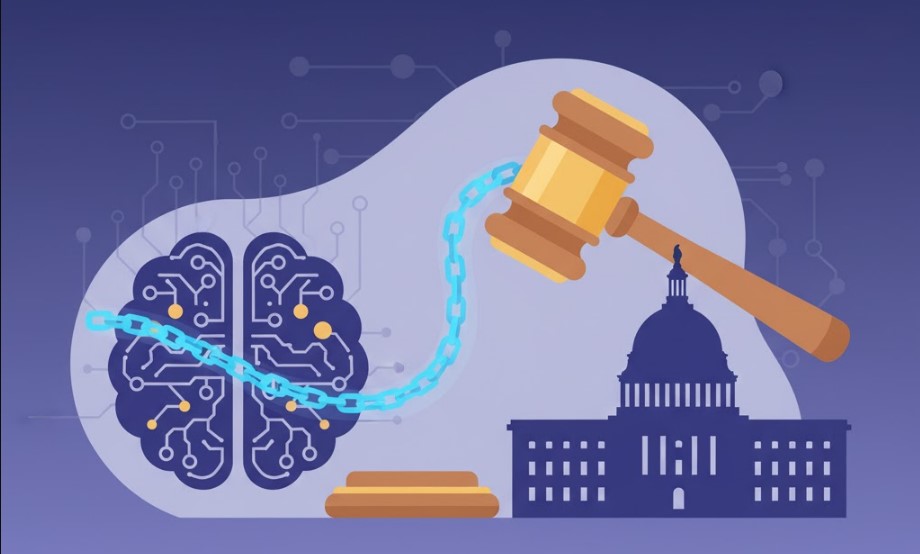
Smart regulation doesn’t aim to stop AI—it aims to protect people while allowing innovation to grow.
Conclusion: The U.S. Is Building the Rules for a New Digital Era
AI regulation is the most important digital topic in America today because it shapes the future of everything:
- safety
- work
- education
- identity
- privacy
- national security
The decisions made in 2025 will influence how Americans live, work, and interact with technology for decades to come.
The U.S. is not just adjusting to AI—it’s redefining what it means to live in a digital-first society.