Introduction: AI’s Growing Influence in the Workplace
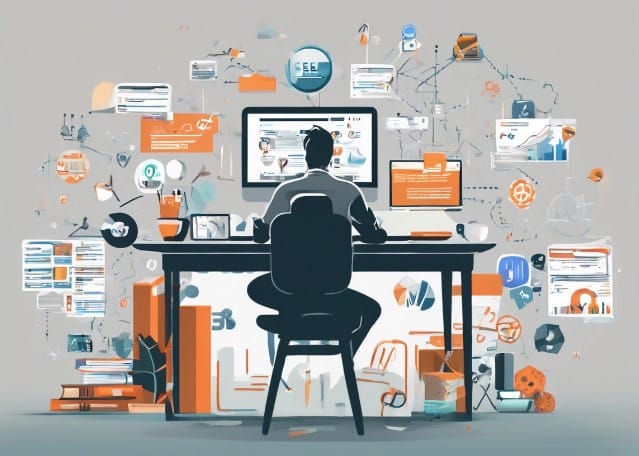
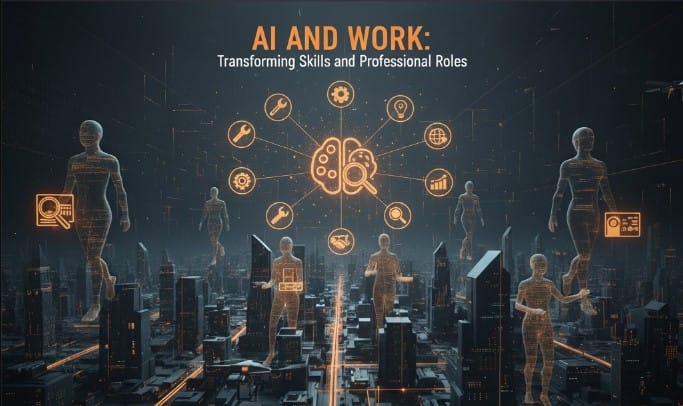
Artificial Intelligence (AI) is no longer a futuristic concept; it is actively reshaping the way we work. In 2025, AI impacts nearly every industry — from healthcare and finance to marketing and manufacturing.
The rise of AI means that professional roles and required skills are evolving rapidly. Some tasks are being automated, while new opportunities emerge for those who can collaborate effectively with AI systems.
This article explores:
- The types of work AI is transforming
- Skills professionals need to stay relevant
- Emerging roles and career opportunities
- Strategies to adapt in an AI-driven workplace
1. AI Transforming the Nature of Work
AI is not replacing humans entirely; instead, it is changing how work is performed:
- Automation of Routine Tasks: Repetitive, data-heavy tasks are increasingly handled by AI.
- Decision Support: AI provides insights for faster, data-driven decision-making.
- Collaboration: AI tools assist professionals in problem-solving, content creation, and predictive analysis.
- Scalability: AI allows individuals and teams to achieve more in less time.
💡 Example: An accountant using AI can automate invoice processing and focus on financial strategy and advisory roles instead of manual entry.
2. Skills in Demand in an AI-Driven Workplace
To thrive in 2025, professionals must combine technical, creative, and interpersonal skills:
A. Technical Skills
- AI and Machine Learning Fundamentals
- Data Analysis and Visualization
- Programming and Automation (Python, R, SQL, AI APIs)
- Cybersecurity awareness
B. Creative & Analytical Skills
- Problem-solving and critical thinking
- Innovation and design thinking
- Content creation and digital storytelling
- AI-assisted creative design
C. Interpersonal Skills
- Communication and collaboration with AI-augmented teams
- Leadership in hybrid human-AI environments
- Ethical decision-making and responsible AI awareness
💡 Tip: Upskilling in AI literacy is essential across all professional levels.
3. Emerging Professional Roles in 2025
AI is creating new opportunities and reshaping traditional roles:
| Role | Description |
|---|---|
| AI Ethicist | Ensures AI applications align with ethical guidelines. |
| Data Analyst / Scientist | Interprets AI-driven insights for business decisions. |
| Automation Specialist | Designs workflows integrating AI and other digital tools. |
| AI-Enhanced Content Creator | Produces content leveraging generative AI tools. |
| Human-AI Collaboration Manager | Oversees teams combining human judgment with AI capabilities. |
💡 Trend: Hybrid roles that combine domain expertise with AI literacy are highly sought after.
4. Industries Most Impacted by AI
AI is not uniform in its impact; some sectors are evolving faster than others:
- Healthcare: AI-assisted diagnostics, predictive analytics, and personalized treatment plans.
- Finance: Algorithmic trading, fraud detection, and automated reporting.
- Marketing & Media: AI-driven content creation, personalized advertising, and social media management.
- Manufacturing & Logistics: Robotics, predictive maintenance, and supply chain optimization.
- Education: AI tutors, personalized learning platforms, and automated grading systems.
💡 Impact: Employees in these sectors must adapt to AI-supported workflows to remain competitive.
5. Strategies to Adapt in an AI-Driven Workplace
- Continuous Learning: Stay updated on AI trends, tools, and certifications.
- Embrace AI Tools: Use AI to augment productivity rather than fear displacement.
- Focus on Human-Centric Skills: Creativity, empathy, leadership, and critical thinking are irreplaceable.
- Experiment and Innovate: Explore new ways AI can enhance your work and efficiency.
- Network with AI Professionals: Collaborate and learn from experts in AI integration.
💡 Tip: Professionals who proactively upskill in AI literacy gain a strategic advantage over peers.
6. Ethical Considerations in an AI Workplace
Responsible AI use is crucial:
- Bias Mitigation: Ensure AI tools do not propagate discrimination.
- Transparency: Understand how AI decisions affect workflows and outcomes.
- Privacy: Safeguard sensitive data handled by AI systems.
- Human Oversight: Critical decisions should remain under human accountability.
7. The Future of Work with AI
In 2025, the workplace is evolving into a hybrid ecosystem, where humans and AI collaborate seamlessly:
- Routine and repetitive tasks are automated
- Professionals focus on strategic, creative, and human-centric roles
- AI literacy becomes as essential as traditional domain knowledge
- Organizations adopt AI-augmented workflows to improve efficiency, innovation, and decision-making
💡 Conclusion: The future of work is not AI versus humans — it’s humans empowered by AI.
Conclusion: Thrive in an AI-Enhanced Career
AI is transforming professional roles and required skills, creating both challenges and opportunities.
The key to success in 2025 is to adapt, upskill, and embrace AI as a collaborator, not a competitor. Professionals who can integrate AI into their workflows and maintain human-centric skills will lead the next wave of innovation across industries.
Bonus Tip
Start small by integrating AI tools in your daily tasks:
- Use AI for data analysis and reporting
- Leverage AI-assisted content creation
- Explore workflow automation for repetitive tasks
By doing so, you position yourself as a forward-thinking professional ready for the AI-driven future.