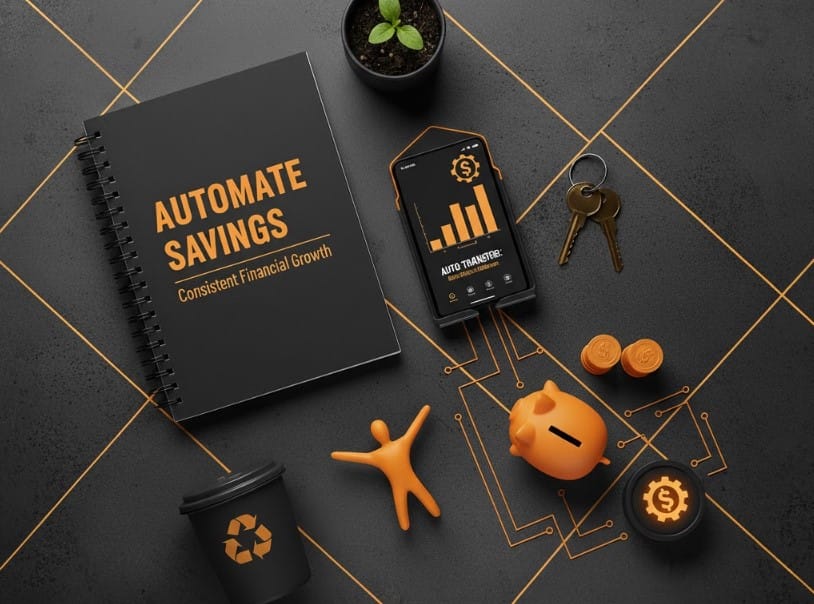
In today’s fast-paced world, managing money manually can be overwhelming. Between bills, subscriptions, and daily expenses, it’s easy for saving to become an afterthought. But the truth is — building wealth doesn’t require constant effort; it requires consistent action.
And the smartest way to achieve that? Automation.
Automating your savings takes the guesswork, guilt, and inconsistency out of money management — turning financial growth into a habit rather than a struggle.
1. Why Automation Matters in Personal Finance
Most people want to save, but few actually do it regularly. That’s not because they lack discipline — it’s because human behavior is emotional and inconsistent.
Automation solves this by making saving automatic, predictable, and emotion-free. Once you set it up, money flows directly into your savings or investment accounts without you even noticing.
The result?
- You save consistently every month.
- You stop relying on willpower.
- You build wealth in the background — stress-free.
As the saying goes:
“The best financial system is the one that works even when you forget about it.”
2. The Psychology Behind Automated Saving
When you automate your savings, you’re doing more than moving money — you’re rewiring your financial behavior.
Automation eliminates decision fatigue. You no longer need to ask, “Should I save this month?” The system decides for you. This creates momentum, which is the foundation of lasting financial growth.
It also removes the emotional friction tied to saving — guilt, procrastination, or fear of missing out. You save first and spend what’s left, instead of the other way around.
That simple reversal changes everything.
3. How to Automate Your Savings Step by Step
Step 1: Pay Yourself First
The golden rule of financial growth: save before you spend.
Set up an automatic transfer from your main account to a savings or investment account right after each paycheck.
Even small amounts matter — consistency beats size.
Step 2: Choose the Right Savings Vehicles
- High-Yield Savings Accounts: Great for emergency funds or short-term goals.
- Investment Accounts (ETFs, IRAs): Ideal for long-term wealth growth.
- Automatic Micro-Investing Apps: Apps like Acorns or Revolut round up your purchases and invest the spare change.
Step 3: Automate Debt Payments
If you’re still paying off debt, automate minimum payments to avoid fees — then manually pay extra when possible. Automation protects your credit and peace of mind.
Step 4: Use Budgeting Tools and Apps
Tools like YNAB, Mint, or Revolut Vaults can automate both tracking and transfers. They help visualize your progress and send reminders without manual input.
Step 5: Increase Savings Gradually
Once your system is running, raise your contribution rate over time — for example, 1–2% every six months. You’ll barely notice the difference, but your savings will grow exponentially.
4. How Much Should You Automate?
It depends on your income and goals. A healthy starting point is:
- 10% of income → General savings
- 5% of income → Emergency fund or short-term goals
- 10–15% of income → Investments or retirement
If that feels too high, start smaller — even $25 per week builds momentum. What matters most is consistency, not perfection.
5. The Hidden Benefits of Automating Savings
Beyond the obvious financial growth, automation brings several unexpected benefits:
- Less Stress: You stop thinking about money constantly.
- Fewer Mistakes: No more missed payments or forgotten transfers.
- More Freedom: You spend guilt-free knowing your savings are handled.
- Improved Self-Trust: You begin to see yourself as someone who’s financially disciplined.
Over time, this quiet confidence becomes one of your greatest financial assets.
6. Common Mistakes to Avoid
While automation simplifies saving, a few pitfalls can derail progress:
- Forgetting to Review Accounts: Set quarterly check-ins to adjust for life changes.
- Automating Too Much: Keep flexibility for emergencies or irregular expenses.
- Ignoring High-Interest Debt: Pay down bad debt before increasing savings.
Think of automation as a partner, not a replacement for awareness.
7. Combine Automation with Mindful Spending
Automation works best when paired with intentional spending habits. Track where your money goes — not to restrict yourself, but to ensure your spending aligns with your values.
For example:
- Automate saving for travel if experiences matter to you.
- Automate investments if long-term freedom is your goal.
The idea isn’t to save endlessly — it’s to save purposefully.
8. Let Compounding Do the Work
When savings happen automatically, you unlock the magic of compound growth.
Even modest contributions, when automated and left untouched, can turn into something substantial over time.
Example:
Saving $200/month at a modest 6% annual return grows to nearly $200,000 in 30 years — without a single manual action.
That’s the quiet power of financial consistency.
9. Real-Life Example
Emma, a marketing consultant, used to save only when she remembered. Then she set up an automatic transfer of $300 per paycheck into a high-yield account.
A year later, she had over $7,000 saved — without ever feeling deprived.
“I stopped trying to force discipline,” she says. “Automation made it effortless.”
Her next step? Automating investments — building long-term wealth one invisible step at a time.
10. Financial Growth That Feels Effortless
The beauty of automating savings lies in how boring it becomes. There’s no drama, no guilt, no endless spreadsheets — just quiet, steady progress.
It’s not about being rich overnight; it’s about being financially secure for life.
You’re not just saving money — you’re building a system that saves for you.
Conclusion
Financial freedom doesn’t come from working harder — it comes from working smarter with your money. Automating your savings is one of the simplest, most powerful habits you can create.
By letting technology and systems do the heavy lifting, you remove emotion from the equation and replace it with consistency.
Start small. Set it once. And then let your money grow — quietly, automatically, and powerfully — while you focus on living your life.
“The smartest savers don’t think about saving all the time — because they’ve already automated it.”