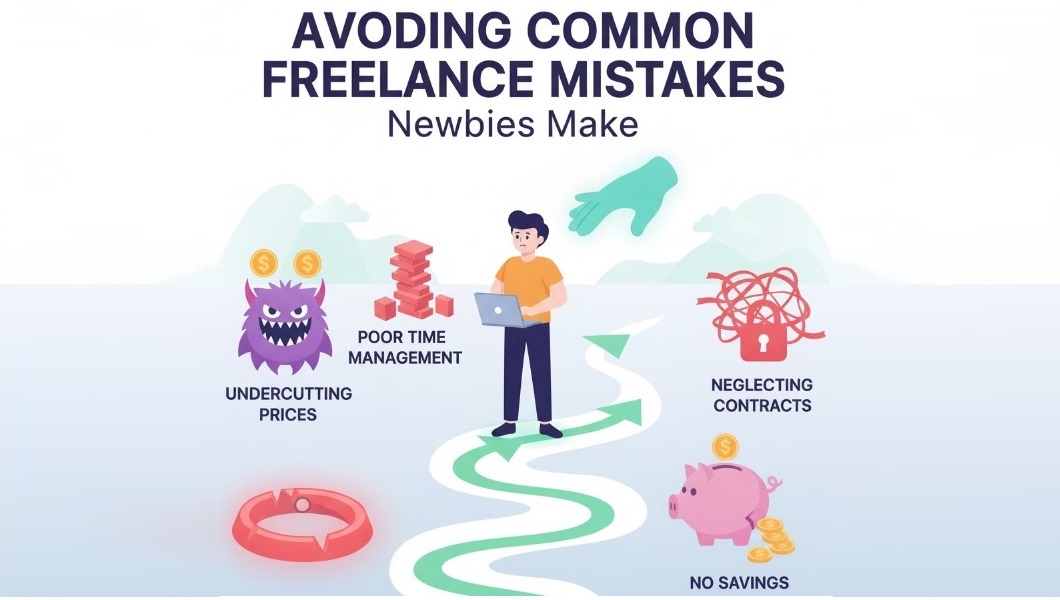
Introduction: Every Freelancer Starts Somewhere
Freelancing offers flexibility, independence, and limitless opportunities. But for beginners, it can also feel overwhelming—especially when learning everything from client management to pricing and productivity.
The truth? Many freelancers fail not because of lack of talent, but because of avoidable mistakes early in their journey.
This guide will help you identify and avoid the most common freelance mistakes, so you can start strong, grow fast, and succeed sustainably in 2025.
1. Starting Without a Clear Niche
Many new freelancers try to offer every service under the sun, hoping to attract more clients.
The result? Confusion and weak positioning.
What to Do Instead:
- Identify your strongest skills and target market.
- Choose a specific niche (e.g., “social media management for small businesses” or “SEO writing for tech startups”).
- Tailor your portfolio and marketing to that audience.
💡 Pro Tip: Specialization builds credibility, attracts better-paying clients, and makes you stand out.
2. Undervaluing Your Work
New freelancers often charge too little to “get started.” While tempting, low rates can harm your credibility and motivation.
Fix It:
- Research average market rates in your field.
- Start with competitive but fair pricing.
- Raise your rates gradually as your experience grows.
💡 Strategy: Clients value results, not hours. Charge based on value, not time.
3. Skipping Contracts and Agreements
One of the biggest rookie mistakes is trusting clients without written agreements.
Verbal deals lead to confusion, unpaid work, or disputes.
Always Use a Contract:
- Define project scope, deadlines, payment terms, and revisions.
- Use free tools like HelloSign, Bonsai, or AND.CO for e-signatures.
- Include clauses for late payments and scope changes.
💡 Pro Tip: A clear contract protects both parties and prevents costly misunderstandings.
4. Failing to Set Boundaries
Freelancers often say “yes” to everything—extra tasks, urgent deadlines, or weekend work.
This leads to burnout and resentment.
Fix It:
- Set clear working hours and communication rules.
- Politely decline unreasonable requests.
- Create a work-life balance that keeps you productive and happy.
💡 Tip: Boundaries don’t push clients away—they build respect.
5. Poor Time Management
Without structure, freelancers can easily procrastinate or overwork.
Disorganization leads to missed deadlines and stress.
Improve With:
- Time-blocking your day (assign hours to specific tasks).
- Using tools like Toggl, Clockify, or Google Calendar.
- Prioritizing high-value tasks over busy work.
💡 Pro Tip: Time management = income management. More efficiency means more profit.
6. Ignoring Personal Branding
In today’s digital age, your online presence is your resume.
If clients can’t find you—or your profile looks unprofessional—you’ll lose opportunities.
Build a Strong Personal Brand:
- Create a portfolio website showcasing your best work.
- Maintain an optimized LinkedIn profile.
- Share tips or insights on social media to show expertise.
💡 Strategy: Clients hire professionals they trust. Branding builds that trust.
7. Not Asking for Upfront Payments
Many beginners start projects without deposits—and end up chasing payments for weeks.
Fix It:
- Always request 30–50% upfront before starting.
- For long projects, use milestone payments.
- Clearly state payment terms in your contract.
💡 Pro Tip: Serious clients respect professionals who value their work.
8. Working Without a Financial Plan
Freelancers must manage irregular income wisely.
Relying on one client or failing to save can lead to financial stress.
Smart Money Habits:
- Save 20–30% of income for taxes or emergencies.
- Diversify clients to reduce risk.
- Track all income and expenses using tools like Wave or QuickBooks.
💡 Strategy: Treat freelancing like a business, not a side hustle.
9. Neglecting Marketing and Networking
Many freelancers stop marketing once they find clients—until those projects end.
Consistent marketing keeps your pipeline full.
Keep Marketing Constant:
- Update your portfolio regularly.
- Network on LinkedIn, Twitter/X, or in freelancer communities.
- Ask satisfied clients for referrals or testimonials.
💡 Pro Tip: Marketing is ongoing—it’s part of your freelance routine, not an optional task.
10. Avoiding Feedback and Learning
Some freelancers take criticism personally or avoid skill-building.
In a competitive industry, stagnation is failure.
How to Grow:
- Request client feedback after projects.
- Learn from mistakes and adjust.
- Invest time in courses, webinars, or mentorship.
💡 Strategy: Continuous improvement is what separates average freelancers from successful ones.
11. Not Tracking Productivity or Burnout
New freelancers often overwork trying to “prove themselves.”
But exhaustion kills creativity and focus.
Balance Your Energy:
- Track working hours and breaks.
- Take weekends off or limit workdays.
- Schedule downtime to recharge.
💡 Pro Tip: Sustainable productivity means working smart, not nonstop.
12. Quitting Too Early
Freelancing takes patience. Clients, income, and confidence grow over time.
Stay the Course:
- Set realistic short-term goals (e.g., 3 clients in 2 months).
- Celebrate small wins.
- Learn from setbacks instead of quitting.
💡 Strategy: Every experienced freelancer started as a beginner who didn’t give up.
Conclusion: Build Smart, Grow Strong
Every freelancer makes mistakes—but successful freelancers learn from them quickly.
By avoiding these common pitfalls, you can save time, reduce stress, and build a thriving freelance business faster.
Remember: freelancing is more than a job—it’s a long-term career built on skill, professionalism, and continuous growth.
Start smart, stay focused, and success will follow.
Bonus Tip: Create a Freelancer Checklist
Before taking any new project, ask yourself:
- Do I have a signed contract?
- Have I agreed on payment terms?
- Am I working within my niche?
- Have I planned my time and deliverables?
- Am I communicating professionally?
💡 Final Thought: Consistency, clarity, and confidence are your best tools to avoid beginner mistakes and thrive as a professional freelancer.