Why Placement Matters More Than Quantity
One of the biggest mistakes new affiliate marketers make is throwing links everywhere.
Here’s the truth: affiliate income doesn’t come from the number of links, but from strategic placement. Where and how you place affiliate links determines whether readers click — or scroll past.
Think of affiliate links as recommendations in a conversation. If you bring them up naturally at the right time, people listen. If you repeat them every other sentence, they tune out.
Story: The Case of Two Bloggers
- Blogger A crammed 15 affiliate links into a single 1,200-word article. Readers got overwhelmed and clicked none.
- Blogger B wrote a 1,200-word guide with 3 affiliate links — one in the intro, one in a product comparison table, and one in the conclusion with a strong call-to-action. Blogger B doubled the conversions with fewer links.
👉 The difference? Placement with purpose.
Best Practices for Affiliate Link Placement
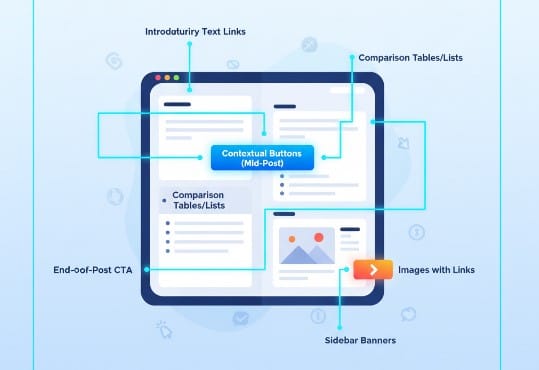
1. Above the Fold for Quick Wins
Don’t bury your affiliate links at the bottom. Many readers skim — so adding a link in the intro section can capture clicks early.
👉 Example: “I cut my grocery bill in half using this budgeting app.”
2. Contextual Links Inside the Content
Affiliate links work best when woven naturally into sentences where they add value.
👉 Example: “When I started tracking my expenses with this tool, I realized I was overspending on subscriptions.”
3. Comparison Tables & Product Boxes
Tables or product highlight boxes draw attention and simplify decision-making.
👉 Example: A “Top 3 Budgeting Apps” table with affiliate links to each option.
4. Call-to-Action Links in Conclusions
End with a clear next step.
👉 Example: “If you’re ready to get control of your money, start with this free trial.”
5. Sidebar, Widgets, and Resource Pages
Create a static “Tools I Recommend” or “Resources” page with evergreen affiliate links. This becomes a long-term income hub.
👉 Action Step: Add your top 3–5 affiliate products to your sidebar or resources page.
6. Email Newsletters
Email readers are warmer than blog skimmers. Include affiliate links in:
- Tutorials
- Weekly “tools I love” sections
- Special promotions
👉 Pro Tip: Always disclose affiliate use in emails for compliance and trust.
7. Use Buttons for Higher Visibility
Sometimes a plain link gets lost. A bold button like “Start Your Free Trial” increases clicks.
👉 Example: Insert a button mid-article after explaining benefits.
Things to Avoid
❌ Adding too many links (looks spammy)
❌ Linking to irrelevant products
❌ Hiding affiliate disclosures
❌ Pop-ups stuffed with affiliate offers
Your audience should feel guided, not pressured.
Tracking & Testing Placement
Use data to find your sweet spot:
- Heatmaps (Hotjar, CrazyEgg): See where people click most.
- UTM Tags: Track which placements bring conversions.
- A/B Testing: Try buttons vs. text links to see what converts best.
👉 Smart affiliates test and tweak instead of guessing.
Future of Affiliate Link Placement (2025–2030)
- AI personalization: Blogs will show different affiliate offers depending on reader behavior.
- Voice search optimization: Affiliate promotions will adapt for conversational queries.
- Interactive content: Quizzes, calculators, and tools with embedded affiliate links will outperform static links.
- Trust-first marketing: Transparent placements with clear benefits will outperform hidden links.
Conclusion: Placement Is Strategy, Not Spam
Affiliate links aren’t just about “dropping links.” They’re about placing the right product, in the right spot, for the right reader.
By weaving links into valuable content, using comparison tools, and guiding readers with calls-to-action, you’ll increase conversions without losing trust.
🔑 Interactive Question: Which affiliate link placement strategy do you think would work best on your blog — and why?
Light CTA (evergreen):
If this guide gave you clarity, share it with another blogger. Smarter affiliate placement could be the difference between clicks and crickets.