Introduction
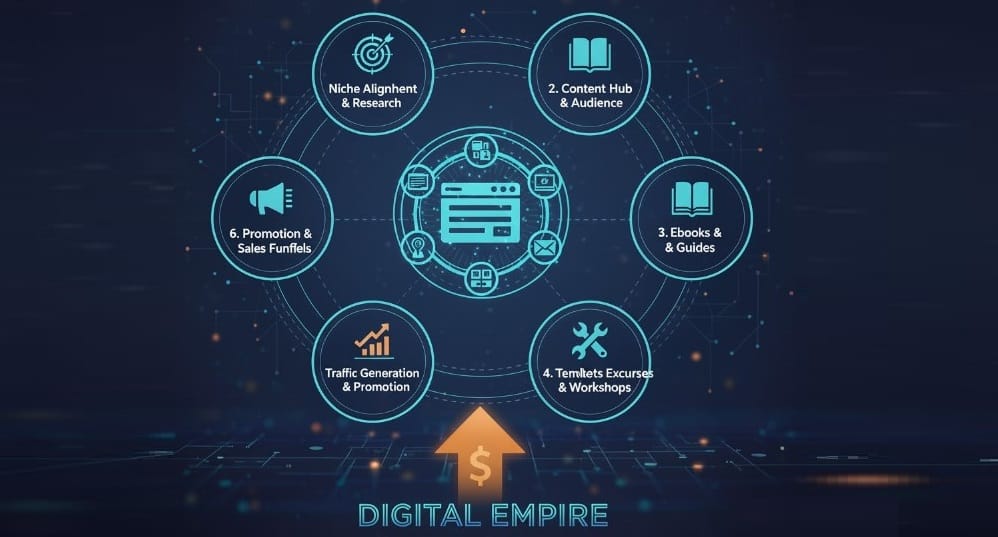
Monetizing a blog goes beyond affiliate marketing and ad revenue. By creating a digital product suite, you can provide real value to your audience while generating high-margin, scalable income.
A digital product suite is a collection of complementary products — eBooks, online courses, templates, or tools — designed to meet your audience’s needs at different levels of engagement and price points.
In this guide, you’ll learn how to plan, create, and launch a digital product suite that grows your revenue and strengthens your brand.
⚙️ Step 1: Identify Your Audience Needs
- Analyze your blog traffic and engagement metrics.
- Conduct surveys or polls to understand what your audience struggles with.
- Look at comments, emails, and social media messages for recurring questions.
💡 Pro Tip: Focus on problems your audience is willing to pay to solve.
⚙️ Step 2: Plan Your Product Suite
A well-structured suite includes products at multiple price points:
- Lead Magnets (Free)
- Examples: checklists, mini-guides, templates.
- Purpose: build your email list and introduce your brand.
- Entry-Level Products ($10–$50)
- Examples: eBooks, downloadable templates, mini-courses.
- Purpose: create your first paying customers and establish trust.
- Mid-Tier Products ($50–$200)
- Examples: full online courses, workshops, advanced guides.
- Purpose: provide in-depth solutions and increase average order value.
- High-Ticket Products ($200+)
- Examples: coaching, consulting, membership sites.
- Purpose: deliver premium value to loyal followers and maximize revenue.
⚙️ Step 3: Create Your Products
- eBooks & Guides — Write actionable content based on your blog expertise.
- Templates & Tools — Provide ready-to-use resources that save time for your audience.
- Online Courses & Workshops — Teach step-by-step skills using video, audio, and text.
- Membership Sites — Offer ongoing training, community access, and exclusive content.
⚡ Tip: Start small with one product, then expand your suite based on feedback and demand.
⚙️ Step 4: Set Up a Sales Funnel
- Landing Pages — Showcase product benefits and testimonials.
- Email Marketing — Use automated sequences to nurture leads and upsell products.
- Upsells & Cross-Sells — Offer complementary products to increase average order value.
- Payment & Delivery — Use platforms like Gumroad, SendOwl, Podia, or Shopify Digital Downloads.
⚙️ Step 5: Price Your Products Strategically
- Entry-level: low cost to attract new buyers.
- Mid-tier: competitive but valuable, justifying the price.
- High-ticket: premium products for loyal or highly engaged followers.
💡 Pro Tip: Use bundle pricing or product packages to encourage larger purchases.
⚙️ Step 6: Promote Your Product Suite
- Blog posts: integrate your products naturally within content.
- Email campaigns: segment lists and promote relevant products.
- Social media: share tutorials, demos, and testimonials.
- Webinars or live workshops: educate and convert your audience directly.
📊 Example Digital Product Suite
| Product Type | Example | Price Range | Purpose |
|---|---|---|---|
| Lead Magnet | Free checklist | $0 | Build email list |
| Entry-Level | eBook “10 Tips for Productivity” | $29 | Introduce paying customers |
| Mid-Tier | Full online course | $99 | Deliver in-depth learning |
| High-Ticket | 1:1 coaching or membership | $299+ | Maximize revenue & loyalty |
✅ Conclusion
Building a digital product suite around your blog is a powerful strategy to monetize your expertise. By combining free, entry-level, mid-tier, and high-ticket products, you can:
- Grow your email list
- Increase revenue
- Strengthen your brand
- Provide scalable value to your audience
Focus on quality, audience needs, and strategic promotion to create a product suite that stands the test of time.
🚀 Call to Action
Start building your digital product suite today:
- Analyze your audience and identify problems to solve.
- Plan a multi-tier product structure (free, entry, mid, high-ticket).
- Create your first product and launch it using a sales funnel.
- Promote strategically and expand your suite over time.
By following this approach, your blog becomes not just content but a revenue-generating business hub.