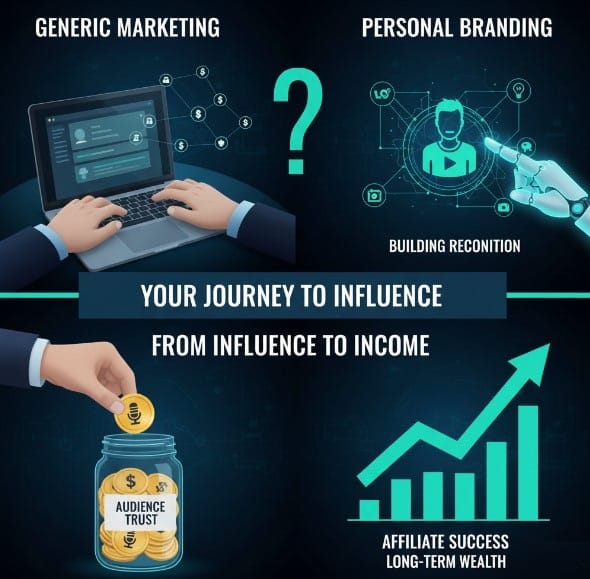
In 2025, affiliate marketing isn’t just about promoting products—it’s about building trust, credibility, and authority. Creating a personal brand around your affiliate business helps you stand out in a crowded market, attract loyal audiences, and increase conversions.
This article explores how to establish and grow a personal brand for affiliate marketing, with practical tips and real-world examples.
Why Personal Branding Matters for Affiliate Marketing
- Builds Trust
Audiences are more likely to purchase through affiliates they know and trust. A personal brand humanizes your recommendations. - Differentiates You
With millions of affiliate marketers online, a strong personal brand sets you apart from competitors. - Increases Lifetime Value
Followers of your brand are more likely to engage with future content, sign up for newsletters, and click on affiliate links repeatedly.
Case Study: Personal Branding Success
Meet Sophia, a health and wellness blogger:
- Sophia focused on building her authentic voice, sharing personal experiences with fitness products.
- She consistently produced high-quality blog posts, YouTube reviews, and Instagram tips.
- By aligning her personal brand with her niche, she grew a loyal audience and tripled her affiliate revenue within a year.
Key takeaway: Personal stories and authenticity create strong connections that drive affiliate success.
Step 1: Define Your Niche and Audience
- Identify the niche where you have expertise or passion.
- Understand your audience’s pain points, desires, and interests.
- Example: If you’re promoting productivity tools, target remote workers, freelancers, or entrepreneurs.
Step 2: Craft Your Unique Brand Voice
- Be authentic and relatable; avoid sounding like a generic marketer.
- Share personal experiences, case studies, and lessons learned.
- Maintain a consistent tone across all channels—blogs, videos, and social media.
Step 3: Create High-Value Content
- Focus on solving problems for your audience.
- Content types:
- Product reviews and tutorials
- How-to guides and case studies
- Email newsletters with tips and curated products
- Use storytelling to make content engaging and memorable.
Step 4: Optimize Social Media Presence
- Select platforms that match your audience: Instagram, TikTok, YouTube, LinkedIn, or Pinterest.
- Share behind-the-scenes content, personal insights, and affiliate recommendations.
- Interact with followers through comments, polls, and live sessions to strengthen trust.
Step 5: Leverage Email Marketing
- Build an email list to nurture relationships.
- Share exclusive tips, updates, and curated affiliate offers.
- Personal touches increase click-through rates and conversions.
Step 6: Monitor and Grow Your Brand
- Track metrics like website traffic, social engagement, and affiliate conversions.
- Test content formats and posting schedules to find what resonates best.
- Collaborate with other influencers or affiliates to expand reach.
Bonus Tips
- Be Transparent – Always disclose affiliate relationships to maintain trust.
- Invest in Branding – Professional website design, logos, and consistent visuals help establish credibility.
- Share Personal Wins and Failures – Authenticity strengthens connections.
- Stay Consistent – Personal branding takes time; consistency is key for growth.
Conclusion
Building a personal brand around affiliate marketing is a powerful strategy for long-term success. By defining your niche, creating authentic content, engaging your audience, and leveraging multiple platforms, you can increase conversions, build authority, and grow sustainable income.
🔑 Interactive Question for Readers:
What strategies have you used to build a personal brand for affiliate marketing, and which have been most effective? Share your experiences below!