Introduction: Why Chernobyl Still Matters in 2025
Nearly four decades after the 1986 explosion at Reactor 4 of the Chernobyl Nuclear Power Plant, the name “Chernobyl” still resonates globally as a symbol of nuclear risk, human resilience, and environmental recovery.
In October 2025, Chernobyl once again made headlines when a temporary power outage at the site triggered emergency systems and prompted swift international concern. While power was quickly restored, the incident underscores why this decommissioned plant remains under the world’s watchful eye. Chernobyl is not just a relic of the past — it is an ongoing case study in nuclear safety, environmental management, and international cooperation.
The Current Status of Chernobyl’s Facilities
The New Safe Confinement (NSC)
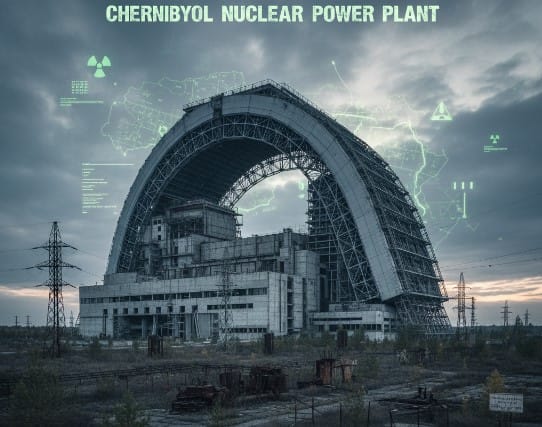
At the heart of the site lies the New Safe Confinement (NSC), the massive steel arch built to contain the remains of Reactor 4 and its radioactive materials. Completed in 2016, the NSC is designed to last at least 100 years, allowing time to safely dismantle the reactor’s structure and manage radioactive debris.
The NSC is more than just a containment shell — it requires external power to operate ventilation, monitoring, and robotic dismantling systems. Any disruption, like the October 2025 outage, immediately draws global attention because safety depends on continuous functionality.
The Interim Spent Fuel Storage Facility (ISF-2)
Another key component of Chernobyl’s modern infrastructure is ISF-2, the world’s largest dry-storage facility for used nuclear fuel. Operational since 2020, it safely stores thousands of fuel assemblies removed from Chernobyl’s reactors 1–3.
Unlike wet storage systems, ISF-2 keeps fuel in sealed, ventilated casks designed for centuries of safety. Still, the facility relies on surveillance, environmental monitoring, and international oversight to ensure its stability.
The October 2025 Power Outage: What Happened
On October 2, 2025, reports confirmed that a nearby strike damaged an external power line feeding the Chernobyl site, briefly cutting electricity to parts of the NSC. Emergency diesel systems and backup batteries were activated immediately, ensuring continuous monitoring and safety.
According to Ukrainian officials and the International Atomic Energy Agency (IAEA), power was restored within hours, and no radiation release occurred. Yet the incident highlights the fragility of Chernobyl’s safety systems in a region still affected by conflict.
Why Power Matters at Chernobyl
Even though Chernobyl is no longer an active power plant, electricity is vital for:
- Cooling systems for spent fuel (at least in the short term).
- Monitoring equipment that measures radiation and air quality.
- Ventilation and filtration inside the NSC.
- Security systems that prevent intrusions into the Exclusion Zone.
Any interruption in power can raise alarms internationally, particularly given the geopolitical context of 2022–2025.
Oversight and Governance: The Role of the IAEA
The IAEA plays a central role in monitoring nuclear safety at Chernobyl. It provides independent assessments, deploys expert missions, and issues safety updates when incidents occur.
In its 2024–2025 reports, the IAEA emphasized:
- The importance of uninterrupted external power supplies.
- Continued safe storage of spent fuel at ISF-2.
- Monitoring the structural integrity of the NSC.
This global oversight not only reassures the public but also helps Ukraine access technical expertise and international funding for long-term decommissioning.
Beyond the Plant: The Exclusion Zone’s Ecological Paradox
Perhaps one of the most fascinating aspects of Chernobyl today is the 30-kilometer Exclusion Zone, which has become an unintended wildlife reserve. Wolves, lynx, bears, and rare birds now roam areas once abandoned by humans.
Yet, ecological studies paint a nuanced picture. While populations appear to have rebounded, radiation continues to affect genetics, reproduction, and species diversity in complex ways. Chernobyl is simultaneously a tragedy, a laboratory, and a refuge, making it one of the most unusual ecological landscapes in the world.
The Long Road Ahead
Chernobyl’s decommissioning is a project spanning decades, possibly into the 22nd century. Key challenges ahead include:
- Safely dismantling Reactor 4’s remains inside the NSC.
- Long-term monitoring of ISF-2 and other radioactive waste facilities.
- Ensuring uninterrupted safety systems amid regional instability.
- Continued ecological research to understand the full impact of radiation.
What makes Chernobyl unique is not only the scale of the disaster but also the global effort to manage its aftermath. International collaboration — from the European Bank for Reconstruction and Development (which funded the NSC) to ongoing IAEA involvement — will remain essential.
Conclusion: Why the World Still Watches Chernobyl
Chernobyl is no longer producing power, but it continues to generate questions about nuclear safety, resilience, and humanity’s relationship with technology and nature. The October 2025 power outage was a reminder that the site requires constant vigilance, even 39 years after the accident.
The lessons of Chernobyl are not frozen in history; they are unfolding today, shaping how we think about nuclear energy, environmental recovery, and global cooperation.
🔑 Interactive Question for Readers
If Chernobyl teaches us the importance of long-term accountability in technology, what modern industries (AI, energy, biotech) do you think we need to monitor just as closely over the next 50 years?