Introduction
In the world of digital income, your niche is everything.
It defines your audience, your message, and your long-term earning potential. Yet, most creators skip this crucial step — they start a blog, YouTube channel, or online store without truly understanding who they’re serving or why it matters.
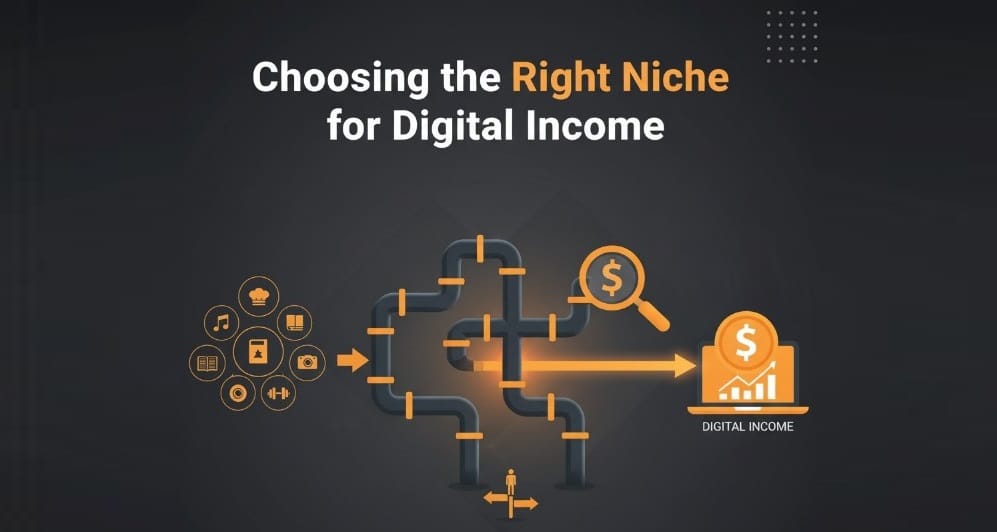
Choosing the right niche isn’t about chasing trends — it’s about finding the perfect balance between passion, demand, and profitability. This guide walks you through the process of discovering, testing, and validating your ideal niche to build a successful digital income business that lasts.
1. What Is a Niche and Why It Matters
A niche is a focused segment of a larger market — a specific audience with shared needs or interests.
Instead of targeting “everyone,” you focus on one well-defined group of people you can help better than anyone else.
Example:
- Broad topic: Fitness
- Niche: Home workouts for busy professionals
- Micro-niche: 15-minute workouts for remote workers over 30
A clear niche helps you:
- Attract loyal readers or customers who trust your expertise.
- Differentiate your brand in a crowded market.
- Monetize effectively through products, courses, or affiliate programs.
- Build authority faster because you speak directly to your audience’s needs.
2. The Three Golden Rules of Choosing a Profitable Niche
To build sustainable digital income, your niche should meet these three conditions:
Rule 1: Passion
Choose something you enjoy talking about — endlessly.
Building digital income takes time, and your motivation will keep you consistent.
Ask yourself:
- Can I create 100 blog posts or videos about this topic?
- Would I still enjoy it if I earned no money for the first 6 months?
Rule 2: Demand
Your passion must intersect with market demand — what people are already searching for or spending money on.
Use tools like Google Trends, AnswerThePublic, and Ubersuggest to check keyword volume and interest over time.
Search for:
- Popular products or affiliate programs in your topic.
- Online communities (Reddit, Facebook groups) where people ask related questions.
Rule 3: Profitability
Even high-interest niches fail if people aren’t willing to spend.
Profitability comes from problem-solving — if your content or products solve real pain points, your audience will pay.
💡 Examples of high-profit niches:
- Digital Marketing / SEO
- Finance & Investing
- Health & Fitness
- Online Education / AI Tools
- Lifestyle Productivity or Self-Improvement
3. Brainstorming and Researching Niche Ideas
Start by listing 5–10 things you:
- Know well or are learning about
- Are passionate about
- Can help others with
Then validate each using three simple filters:
- Search Demand: Use Google Keyword Planner to check search volume.
- Competition: Use Ahrefs or Ubersuggest to analyze ranking difficulty.
- Profit Potential: Research affiliate programs, digital products, or coaching opportunities in that niche.
📘 Example Process:
- Interest: “Photography”
- Validation:
- Keyword “learn photography online” = 10k+ monthly searches
- Affiliate programs (cameras, presets, courses) available
- Medium competition
✅ Result: Profitable niche with long-term potential.
4. The Power of Micro-Niches
While broad niches have bigger audiences, micro-niches convert better.
They help you dominate search results faster, build stronger communities, and create tailored products.
Examples:
- Instead of “Fitness,” target “Postpartum home workouts.”
- Instead of “Finance,” focus on “Personal budgeting for freelancers.”
- Instead of “AI Tools,” narrow to “AI tools for small business owners.”
🎯 Pro Tip: Start micro, grow broad. You can always expand later, but it’s hard to shrink once you’ve gone too wide.
5. Monetization Paths by Niche Type
Different niches work better with different income models.
| Niche Type | Monetization Model | Example |
|---|---|---|
| Educational (e.g., coding, AI tools) | Online courses, ebooks, memberships | “Master ChatGPT for Work” course |
| Product Review (e.g., tech, fitness) | Affiliate marketing | Amazon Associates, Impact Radius |
| Lifestyle / Wellness | Sponsorships, digital coaching | “Digital Slow Living” program |
| Finance / Productivity | Consulting, premium resources | Budget templates, online mentoring |
| Creative or Design | Printables, merch, or digital products | Etsy digital store |
The goal is to align your niche with a revenue model that feels authentic and sustainable.
6. Testing and Validating Your Niche
Before going all in, validate your niche through real audience feedback:
- Write 3–5 blog posts or videos about your niche.
- Observe which ones get more engagement or traffic.
- Ask your audience directly through polls or email surveys.
- Check if people in your niche spend money on courses, products, or memberships.
If you receive consistent engagement and interest — you’ve found your goldmine.
7. Tools to Help You Find and Test Niches
Here are top free and paid tools to accelerate your research:
- Google Trends: See search popularity over time.
- Ubersuggest / Ahrefs: Keyword analysis and competition insights.
- Reddit / Quora: Discover real problems people want solved.
- Exploding Topics: Spot emerging profitable markets early.
- ChatGPT / AI Tools: Generate niche ideas and validate demand quickly.
8. Common Mistakes to Avoid
Avoid these pitfalls that derail most beginners:
- Choosing a niche only for money — without passion.
- Going too broad (e.g., “health” instead of “fitness for busy moms”).
- Ignoring SEO and keyword research.
- Copying competitors instead of finding your unique angle.
- Changing niches too soon — consistency builds authority.
💡 Reminder: A great niche is discovered through clarity, not speed.
9. From Niche to Brand — Building Long-Term Authority
Once your niche is validated, it’s time to turn it into a recognizable brand identity:
- Create a consistent message — your “why.”
- Design branding elements (logo, colors, typography).
- Build authority with high-quality, SEO-optimized content.
- Engage your community — reply to comments, emails, and feedback.
- Expand income streams — add courses, ebooks, or memberships once your traffic grows.
The goal isn’t just to have a niche — it’s to become the go-to expert in that niche.
10. Final Thoughts
Choosing the right niche is the foundation of all digital success.
It determines your audience, your products, your marketing, and ultimately your freedom.
Don’t rush the process. Take time to understand what excites you, what helps others, and what earns consistent revenue.
Your ideal niche is waiting at the intersection of passion, demand, and profit — once you find it, everything else aligns naturally.
Start with clarity, build with consistency, and grow with authenticity.
That’s the real formula for digital income success.