💡 Introduction
Mobile apps are no longer passive tools that wait for user input. In 2025, they are evolving into autonomous, conversational agents capable of engaging, acting, and assisting users proactively.
These agent-style apps combine generative AI, natural language processing (NLP), and contextual awareness to understand intentions, anticipate needs, and complete tasks with minimal user effort.
From scheduling meetings to automating shopping lists, conversational AI is redefining mobile productivity, engagement, and user experience.
⚙️ What Are Conversational & Agent-Style Apps?
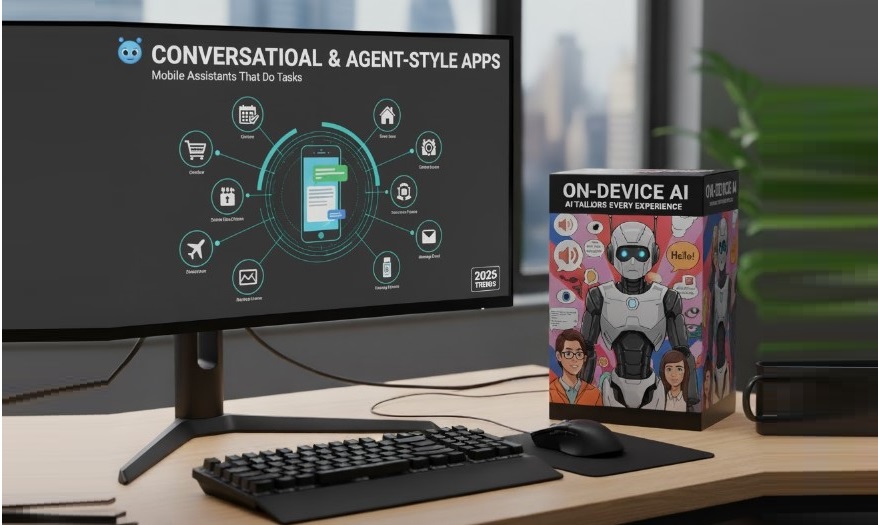
Conversational apps allow users to interact via natural language, either text or voice, while agent-style apps go a step further — they take action autonomously based on user preferences, behavior, and context.
Key features include:
- Task Automation: Completing actions like booking appointments, sending reminders, or managing subscriptions.
- Context-Aware Assistance: Adapting suggestions based on location, time, and user habits.
- Proactive Engagement: Initiating interactions without explicit prompts, e.g., reminding a user to reorder groceries or suggesting meeting reschedules.
- Multimodal Communication: Supporting text, voice, and visual interfaces seamlessly.
🌟 Benefits of Agent-Style Mobile Apps
1. Enhanced Productivity
Users can delegate tasks to AI assistants, reducing repetitive actions and manual input.
2. Proactive Help
Agent apps anticipate user needs and provide timely suggestions or actions before the user asks.
3. Improved Engagement
Conversational interfaces encourage interaction through natural dialogue, increasing app retention.
4. Personalization
By learning user preferences and context, these apps tailor responses and actions for each individual.
5. Cross-App Integration
Many agents connect multiple apps or platforms, allowing seamless workflow automation across calendars, messaging, shopping, and productivity tools.
🧠 Real-World Examples
1. Apple Siri & Shortcuts
Siri can now execute automated workflows using Shortcuts, such as sending messages, launching apps, or even controlling smart home devices based on user behavior and context.
2. Google Assistant
Beyond answering questions, Google Assistant reschedules appointments, drafts emails, and recommends actions proactively, often before the user explicitly asks.
3. Microsoft Copilot (Mobile)
Mobile Copilot integrates with productivity apps to summarize documents, generate emails, and manage tasks autonomously based on ongoing work context.
4. ChatGPT Mobile Agent Features
AI-powered chat apps like ChatGPT can now act as personal agents, generating content, scheduling meetings, or performing web searches automatically.
5. Task-Driven Apps
Apps like Todoist and Notion AI suggest task prioritization, automate recurring actions, and proactively alert users about deadlines or workflow optimizations.
⚡ How Conversational Agents Work
- Input Processing: Natural language processing (NLP) interprets user commands or messages.
- Context Analysis: The agent evaluates context, user history, preferences, and app integration.
- Task Execution: AI performs the requested action autonomously or generates a suggestion for approval.
- Learning & Feedback: Continuous learning improves predictions, recommendations, and task efficiency over time.
💡 Example: A travel app agent can book flights, suggest hotels, send reminders, and provide local recommendations — all based on previous trips, preferences, and current location.
🔍 Challenges & Considerations
- Privacy & Security: Autonomous agents handle sensitive user data; robust encryption and opt-in policies are essential.
- Over-Automation: Too much proactive action may annoy users; balance is key.
- AI Understanding Limits: Misinterpretation of user intent can lead to mistakes; fallback mechanisms are needed.
- Integration Complexity: Connecting multiple apps and platforms seamlessly requires sophisticated API management.
🛠️ Best Practices for Developers
- Prioritize User Consent: Always inform users before the agent takes autonomous action.
- Use Context-Aware AI: Combine behavior, location, and app data for accurate predictions.
- Provide Clear Undo Options: Allow users to revert automated actions easily.
- Combine Multimodal Inputs: Support text, voice, and visual cues for better interaction.
- Continuous Model Improvement: Leverage user feedback and behavioral data to refine agent decisions.
🌍 Future Outlook
By 2026, agent-style mobile apps will become ubiquitous:
- Fully autonomous mobile assistants capable of managing daily routines
- Cross-platform task orchestration, linking calendar, email, messaging, and IoT devices
- Generative AI integration to compose content, summarize data, and automate workflows
- Proactive predictive AI, anticipating needs before users even ask
“The future of mobile apps isn’t passive tools — it’s intelligent assistants that act, decide, and support humans seamlessly.”