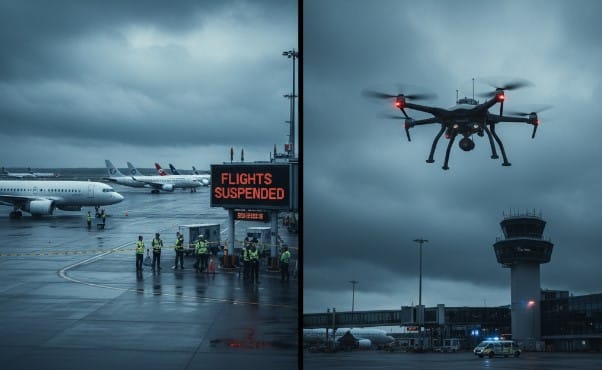
Copenhagen Airport Shutdown After Drone Sightings: What We Know, What It Means
✈️ Copenhagen Airport, Denmark’s largest and busiest air hub, faced a rare and unsettling disruption on 22 September 2025 when flights were halted after large drones were spotted near the airfield. The incident not only stranded travelers but also reignited global conversations about drone safety, aviation security, and how airports can adapt to new technological risks.
Why Was the Airport Closed?
At around 20:26 local time (18:26 GMT), Danish police ordered a full stop to all air traffic after reports confirmed two to three large drones flying dangerously close to the airport’s airspace.
Immediate Consequences
- 35+ flights diverted according to FlightRadar24 data.
- Thousands of passengers stranded in terminals or rerouted mid-air.
- Airlines scrambling to update passengers, many of whom had connections or important travel schedules.
A Passenger’s Perspective (Case Study)
Imagine being Anna, a business traveler from London. She was minutes away from landing in Copenhagen when her pilot announced the flight would instead divert to Malmö, Sweden. With no warning, her 1-hour meeting trip turned into a 10-hour ordeal.
Stories like Anna’s highlight how such incidents are not just “technical glitches” — they ripple into real lives, causing stress, delays, and financial costs.
Why Are Drones Such a Threat?
Unlike birds or small aircraft, drones can be controlled remotely and can carry heavy batteries or even harmful payloads. When they cross into restricted airspace:
- They risk colliding with aircraft engines or fuselage.
- They distract pilots during critical landing and takeoff phases.
- They require airports to halt all traffic for safety, no matter how small the sighting.
This isn’t the first case either. Heathrow and Gatwick airports in the UK both faced similar shutdowns in past years, costing airlines millions and inconveniencing passengers worldwide.
The Bigger Picture: Aviation Security in the Drone Age
Drone sightings at airports are becoming more frequent worldwide. Authorities are now forced to invest in:
- Drone detection systems (radar, RF scanners, AI-powered tools).
- Counter-drone technologies (jamming, interception drones).
- Stricter regulations for recreational and commercial drone users.
For passengers, this means we may see more robust security checks and longer travel advisories in the future.
Practical Tips for Travelers 🧳
If you ever face a sudden airport shutdown like this, here are steps you can take:
- Use flight-tracking apps like FlightRadar24 or airline apps for real-time updates.
- Know your passenger rights — in the EU, airlines must assist with rebooking or compensation depending on circumstances.
- Carry essentials in hand luggage — medication, chargers, snacks, and travel documents.
- Check travel insurance policies — many now include disruption due to drone or security incidents.
What Happens Next for Copenhagen?
Authorities are investigating where the drones came from and who operated them. Until confirmed, the question lingers: Was this a malicious act, a test, or simply reckless hobbyists?
Regardless, this incident sends a strong signal: airports worldwide must prepare for a future where air safety isn’t just about planes, but also drones.
Conclusion
The Copenhagen Airport shutdown is more than a temporary travel hiccup — it’s a wake-up call for modern aviation. Technology can make our lives easier, but it can also introduce new risks we must manage. For passengers, the lesson is simple: be informed, be prepared, and always have a backup plan.
🔑 Interactive Question for Readers:
If your flight were diverted because of a drone, how would you handle the unexpected delay — with patience, or frustration? Share your thoughts in the comments!