Introduction
If you’ve ever written a “how-to” post or explained a skill to your audience, you already have the foundation of an online course.
In today’s digital economy, education has moved online — and blogs are the perfect platforms to launch, market, and sell digital courses.
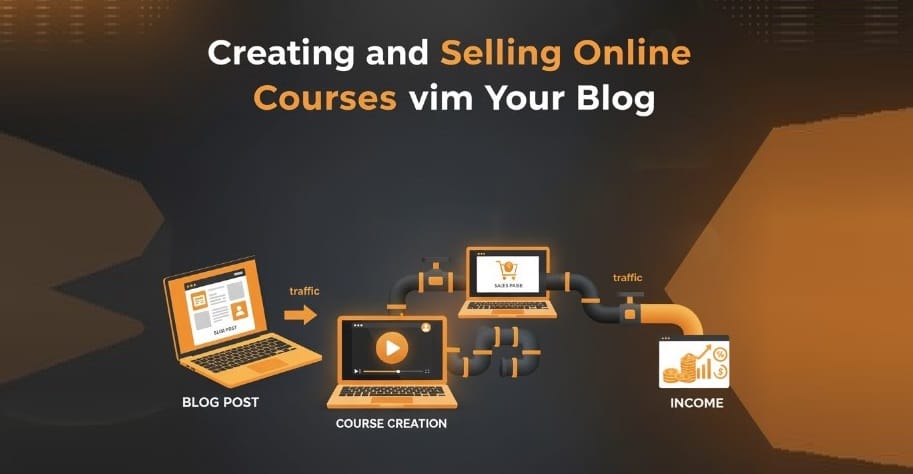
Whether you’re a blogger, freelancer, coach, or business owner, creating an online course allows you to monetize your knowledge, build a loyal audience, and generate passive recurring income — all from your blog.
This guide walks you through everything: from choosing your course topic to selling and scaling it successfully.
1. Why Sell Online Courses from Your Blog?
Online learning has exploded. Global e-learning revenue is projected to exceed $400 billion in the coming years — and blogs are at the heart of that growth.
Here’s why combining your blog and online course strategy works so well:
- Built-in audience: You already attract readers who trust your expertise.
- Content synergy: Blog posts educate; courses go deeper.
- SEO benefits: Your course landing pages can rank for high-value keywords.
- Long-term scalability: A single course can sell for years with minimal updates.
💡 Insight: Courses outperform ads or affiliate marketing when it comes to long-term profitability and brand building.
2. Choosing the Right Course Topic
Your course should solve a real problem your audience faces.
Start with your blog analytics — your most popular posts already reveal what people value most.
Ask yourself:
- What questions do readers ask repeatedly?
- Which of my posts generate the most comments or shares?
- What skill, system, or result can I teach better than others?
✅ Examples of profitable course topics:
- Blogging & SEO — “How to Build a Blog That Makes $1000/month”
- AI & Productivity — “Using ChatGPT to Automate Daily Workflows”
- Finance & Freelancing — “How to Build Passive Income as a Freelancer”
- Health & Lifestyle — “Digital Minimalism for a Focused Life”
🎯 Pro Tip: Focus on transformation. Your course should take your student from Point A (problem) to Point B (solution).
3. Planning and Structuring Your Course
Good courses aren’t about information overload — they’re about guided transformation.
Structure your content in modules and lessons that follow a logical progression.
Suggested Framework:
- Introduction – What they’ll learn and expected results.
- Foundation – Core concepts, basics, or mindset.
- Action Steps – Practical, step-by-step lessons.
- Advanced Insights – Strategies or real-world examples.
- Bonus Resources – Templates, PDFs, or cheat sheets.
- Conclusion – Call to action and ongoing support.
📘 Tip: Short videos (5–10 minutes each) keep learners engaged. Combine with downloadable materials to add value.
4. Tools and Platforms to Host Your Course
You don’t need coding skills to host a professional online course.
Here are reliable options for bloggers:
| Platform | Ideal For | Pricing Model |
|---|---|---|
| Teachable | Beginners, all-in-one hosting | Free & Paid plans |
| Thinkific | Advanced customization | Free + monthly plans |
| Podia | Creators with multiple digital products | Starts at $39/month |
| LearnDash (WordPress Plugin) | Self-hosted control & branding | One-time fee |
| Gumroad / Payhip | Easy setup for small courses | Commission-based |
| Kajabi | All-in-one business suite | Premium pricing |
💡 Pro Tip: If your audience lives on your blog, LearnDash or TutorLMS (WordPress plugins) give full control and branding, without redirecting traffic to external platforms.
5. Creating Engaging Course Content
Your content determines how much value your students perceive. Make your lessons interactive, visual, and actionable.
Best Practices:
- Use video + slides for easy comprehension.
- Add short quizzes at the end of modules.
- Include assignments or projects to boost engagement.
- Offer certificates of completion for credibility.
- Keep the language clear, friendly, and result-oriented.
🎥 Tools You Can Use:
- Loom or OBS Studio for screen recording.
- Canva for slide decks.
- Descript or CapCut for video editing.
- Google Docs / Notion for resource templates.
6. Pricing Your Online Course
Pricing depends on your niche, authority, and the transformation you promise.
Don’t undervalue your content — your audience pays for clarity and outcomes.
| Course Type | Ideal Price Range | Notes |
|---|---|---|
| Mini-course (1–2 hours) | $25–$75 | Great for beginners |
| Full course (3–6 hours) | $100–$300 | Best for bloggers & professionals |
| Premium mentorship course | $400–$1,000+ | Includes coaching or group calls |
💡 Pro Tip: Offer tiered pricing — e.g., Basic, Pro, and VIP plans — to attract both budget-conscious and high-value customers.
7. Marketing Your Course Through Your Blog
Your blog is your most powerful marketing channel.
Proven Course Promotion Strategies:
- Create SEO blog posts around your course topics and link to the sales page.
- Add call-to-action banners inside top-performing posts.
- Offer free resources (ebooks, checklists) that lead into your course funnel.
- Use email marketing — send a 3–part value series leading to a course launch.
- Share student testimonials and case studies for social proof.
- Host webinars or live Q&As to convert readers into buyers.
📩 Pro Tip: Offer a free mini-course or lesson to build trust before the sale.
8. Automating and Scaling Your Sales
Once your course sells consistently, automation helps you scale:
- Set up email funnels with platforms like ConvertKit or MailerLite.
- Create affiliate programs so others promote your course.
- Run retargeting ads to blog visitors who didn’t buy.
- Add upsells — like private coaching or memberships — for higher revenue per customer.
This automation lets you earn income even while you sleep — true digital freedom.
9. Mistakes to Avoid When Selling Courses
Avoid these common pitfalls:
- Waiting for perfection — launch your beta version first.
- Overloading your course with too much theory.
- Neglecting marketing — “build it and they will come” doesn’t work online.
- Ignoring feedback from early students.
- Underpricing premium content.
🧠 Remember: Feedback from your first 10 students is worth more than 100 hours of guessing.
10. Final Thoughts
Creating and selling online courses via your blog is more than a business model — it’s a long-term personal brand strategy.
It allows you to share your knowledge, serve your readers more deeply, and create a reliable income stream that compounds over time.
You don’t need a massive audience — you just need valuable expertise and a clear path to results.
Teach what you know. Sell what you love. Build what lasts.
Your blog isn’t just content — it’s the foundation of your digital education empire.