The Weight of Debt Fatigue
Paying off debt is a marathon, not a sprint. In the beginning, you feel motivated—budgeting apps, payoff trackers, and “debt snowball” plans keep you energized.
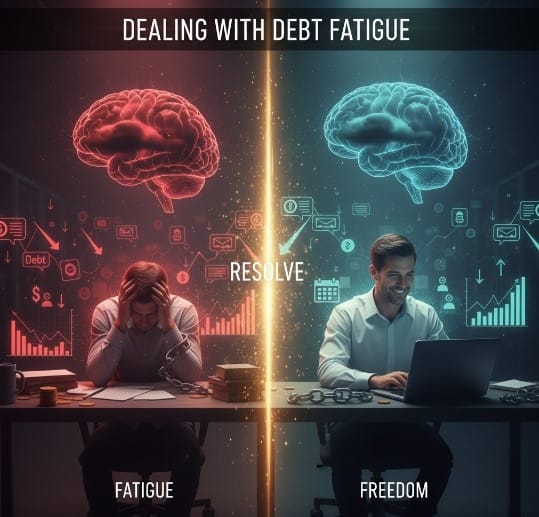
But months—or years—into the process, the excitement fades. The debt feels endless. That’s debt fatigue: the emotional exhaustion that comes with the long journey of repayment.
👉 And here’s the truth: it’s normal, but it doesn’t have to derail your progress.
Signs You May Be Experiencing Debt Fatigue
- You’re tired of tracking every expense.
- The “finish line” feels too far away.
- You start slipping back into old spending habits.
- Paying bills feels hopeless instead of empowering.
- You think: “What’s the point?”
Recognizing these signs early helps you reset before you spiral.
Why Debt Fatigue Happens
- Slow Progress: Debt repayment often takes years, not months.
- Lack of Wins: Without small milestones, it feels like you’re not moving.
- Emotional Drain: Constantly saying “no” to yourself leads to resentment.
- Life Pressures: Emergencies, inflation, or job stress add weight.
Debt isn’t just numbers—it’s emotional. And the longer it lingers, the heavier it feels.
Practical Strategies to Overcome Debt Fatigue
1. Celebrate Small Wins
Don’t wait until the debt is gone to feel proud.
- Celebrate every $500 or $1,000 milestone.
- Create visual trackers (charts, jars, sticky notes).
- Reward yourself with low-cost treats.
2. Reframe the Journey
Debt repayment = building financial strength, not punishment.
Shift focus from “what I can’t buy” → “what I’m gaining: freedom, resilience, and peace of mind.”
3. Adjust Your Strategy
If you’re losing momentum, try a new approach:
- Debt Snowball: Pay smallest debt first for motivation.
- Debt Avalanche: Target highest-interest debt to save money long-term.
- Hybrid Method: Combine both for balance.
4. Automate Where Possible
Set up auto-payments so progress happens without decision fatigue.
5. Allow Joy in the Present
Constant restriction leads to burnout.
- Budget a “fun fund,” even if small.
- Practice mindful spending—enjoy life while paying debt.
6. Seek Support
- Join debt-free communities online.
- Share your journey with a trusted friend.
- Consider financial counseling for accountability.
Real-Life Example
Ali had $20,000 in student loans. For two years, he made steady payments, but eventually, fatigue hit. He wanted to give up.
Instead, he switched to the snowball method, celebrated each $1,000 milestone, and joined a debt accountability group.
Result? He regained motivation and paid off his debt one year earlier than expected.
Future-Proof Your Finances
In 2025, with rising living costs and uncertain economies, debt fatigue may become more common. The key is resilience:
- Build emergency savings to avoid new debt.
- Diversify income (side hustles, freelancing).
- Focus on progress, not perfection.
Conclusion: Keep Going, Even Slowly
Debt fatigue is real—but it doesn’t define your journey. Progress, no matter how small, is still progress. By reframing, celebrating wins, and giving yourself grace, you can stay consistent and finally break free.
🔑 Question for You: What’s one small step you can take today to refresh your energy and motivation on your debt journey?
Light CTA:
If this article encouraged you, share it with someone who feels stuck in their debt journey. Sometimes, a reminder of progress is all we need.