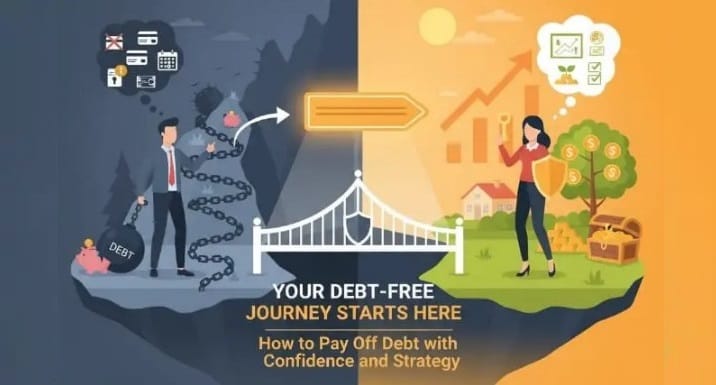
Introduction
Debt can feel overwhelming, stressful, and even paralyzing.
However, paying off debt is not just about cutting expenses — it’s about building a structured plan, maintaining confidence, and understanding your financial behavior.
This article explores strategies to tackle debt systematically, empowering you to take control of your finances and move confidently toward a debt-free life.
🧠 1. Understand Your Debt
The first step is to gain clarity on your financial situation:
- List all debts (credit cards, loans, student debt, personal loans)
- Note balances, interest rates, and minimum payments
- Identify high-interest debts that cost more over time
Understanding your debt gives you control and perspective, which is crucial for effective repayment.
💬 2. Choose a Repayment Strategy
There are several strategies to tackle debt — choose one that aligns with your personality and goals:
🔹 Debt Snowball Method
- Pay off smallest debts first while making minimum payments on larger debts
- Builds momentum and psychological wins
- Boosts motivation to continue
🔹 Debt Avalanche Method
- Focus on high-interest debts first
- Minimizes interest paid over time
- Requires discipline but is mathematically efficient
🔹 Hybrid Approach
- Combine both methods for balance — target small debts for wins and high-interest debts for financial efficiency
🌊 3. Budget Strategically
Budgeting is key to freeing money for debt repayment:
- Track income and expenses
- Allocate a fixed portion to debt repayment each month
- Cut unnecessary expenses without compromising well-being
- Automate payments to stay consistent
Consistency beats perfection — even small, regular contributions add up over time.
🌿 4. Build Confidence and Motivation
Debt repayment can feel emotional. Keep motivation high by:
- Setting milestones: Celebrate each debt payoff or reduction
- Visualizing freedom: Imagine life without debt stress
- Tracking progress: Use apps or spreadsheets to see tangible results
- Seeking accountability: Share goals with a trusted friend, partner, or financial advisor
Confidence comes from small wins and visible progress, reinforcing disciplined habits.
💡 5. Avoid Common Pitfalls
- Ignoring small debts: They accumulate and increase stress
- Taking on new debt: Avoid new credit until repayment is on track
- Lack of planning: Without structure, it’s easy to fall off track
- Emotional spending: Retail therapy or impulsive purchases can derail repayment
Being proactive and mindful ensures your debt-free journey stays on course.
🌟 6. Consider Professional Support
- Financial advisors can help design a repayment plan tailored to your situation
- Credit counseling services provide guidance on debt management and consolidation
- Therapists or coaches can help address emotional triggers tied to spending or debt stress
Professional support accelerates progress and reduces anxiety, making repayment more manageable.
🌟 Conclusion: Take Control and Start Today
Becoming debt-free is both a practical and psychological journey.
By understanding your debt, choosing a structured repayment strategy, budgeting intentionally, and maintaining motivation, you can pay off debt with confidence and strategy.
Debt-free living is not just a financial goal — it’s a path to emotional freedom, empowerment, and long-term financial security.