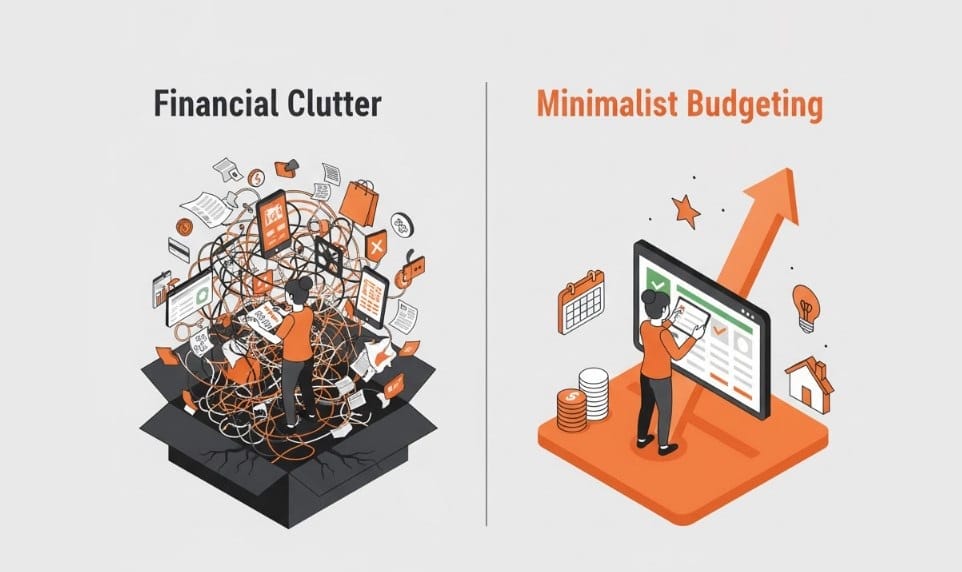
In today’s fast-paced world, financial clutter can be as stressful as physical clutter. Overcomplicated budgets, multiple accounts, and unnecessary subscriptions can make managing money overwhelming.
Minimalist budgeting simplifies your finances, reduces stress, and helps you focus on what truly matters.
Adopting minimalist strategies doesn’t mean restricting yourself—it’s about clarity, intention, and smarter financial choices.
1. Simplify Your Accounts
Too many bank accounts, credit cards, and investment platforms create confusion and inefficiency:
- Consolidate accounts where possible
- Keep one primary checking and savings account
- Streamline investment platforms
Fewer accounts mean less mental load and clearer tracking of income and expenses.
2. Automate Essentials
Automation is key to minimalist finance:
- Set up automatic bill payments for recurring expenses
- Automate savings and investments to reduce decision fatigue
- Use notifications for unusual spending rather than constant monitoring
Automation ensures essential financial tasks are handled without stress, leaving you free to focus on strategic goals.
3. Reduce Unnecessary Subscriptions and Expenses
Financial clutter often comes from recurring costs you don’t use:
- Audit monthly subscriptions: streaming services, apps, memberships
- Cancel or downgrade non-essential services
- Redirect saved money toward goals or investments
This creates a leaner, intentional spending structure.
4. Adopt the 80/20 Principle
Minimalist budgeting prioritizes what matters most:
- 80% of your income goes to essential living, savings, and investments
- 20% goes to discretionary spending, fun, and lifestyle choices
Focusing on the critical 20% that drives impact reduces financial stress and decision overload.
5. Track Key Metrics, Not Every Dollar
Detailed spreadsheets can be overwhelming. Minimalist budgeting focuses on high-level financial health:
- Net income vs. expenses
- Savings rate
- Debt reduction progress
- Investment growth
Tracking essential metrics provides clarity without micro-managing every purchase.
6. Build Financial Systems, Not Rules
Instead of rigid rules:
- Create repeatable systems for spending, saving, and investing
- Align actions with values rather than following strict categories
- Review systems periodically and adjust for life changes
Systems make budgeting sustainable and stress-free, reducing the emotional burden of money management.
7. Minimalism as a Mindset
Financial minimalism isn’t just practical—it’s psychological:
- Encourages intentional spending
- Reduces stress and decision fatigue
- Increases focus on long-term financial goals
- Aligns money management with personal values
A minimalist mindset transforms your finances from chaos to clarity, creating both freedom and control.
Conclusion
Decluttering your finances through minimalist budgeting is about simplicity, intentionality, and efficiency.
By consolidating accounts, automating essentials, reducing unnecessary spending, and focusing on what truly matters, you create a financial life that’s easier to manage, less stressful, and aligned with your goals.
Minimalist budgeting is not about restriction—it’s about creating space for growth, freedom, and clarity.