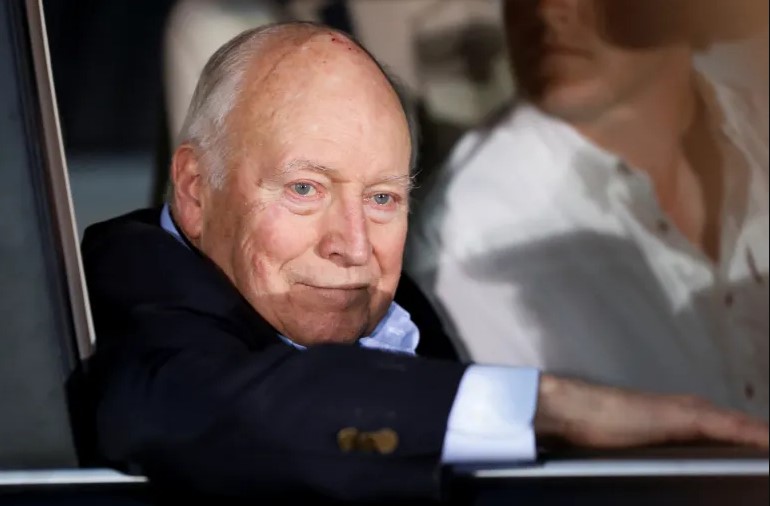
1. Early Life, Education & Formative Years
Richard Bruce “Dick” Cheney was born on January 30, 1941, in Lincoln, Nebraska. Wikipedia+2Encyclopedia Britannica+2 His family later moved, and he spent much of his youth in Casper, Wyoming. Encyclopedia Britannica+2National Park Service+2
Cheney initially attended Yale University but did not complete his studies there, later transferring to the University of Wyoming, where he earned a B.A. (1965) and M.A. (1966) in political science. study.com+3Encyclopedia Britannica+3history.defense.gov+3 He also had stints at Casper College and briefly pursued doctoral work at the University of Wisconsin. Encyclopedia Britannica+2history.defense.gov+2
Even in his early career, Cheney showed political ambition. He worked as a congressional intern, held various staff posts, and entered the federal political sphere via opportunities in the Nixon and Ford administrations. georgewbush-whitehouse.archives.gov+2history.defense.gov+2
2. Early Political Career & Rise to Prominence
Cheney’s major political breakthrough came in 1975, when President Gerald Ford appointed him White House Chief of Staff, making him one of the youngest in U.S. history to hold the role. Miller Center+3georgewbush-whitehouse.archives.gov+3Encyclopedia Britannica+3
In 1978, Cheney ran for Congress and was elected to represent Wyoming’s at-large congressional district in 1979. He served in the U.S. House of Representatives through six terms (1979–1989). biography.com+3Encyclopedia Britannica+3smu.edu+3
During his time in Congress, Cheney rose through party ranks, at one point becoming House Minority Whip. biography.com+1
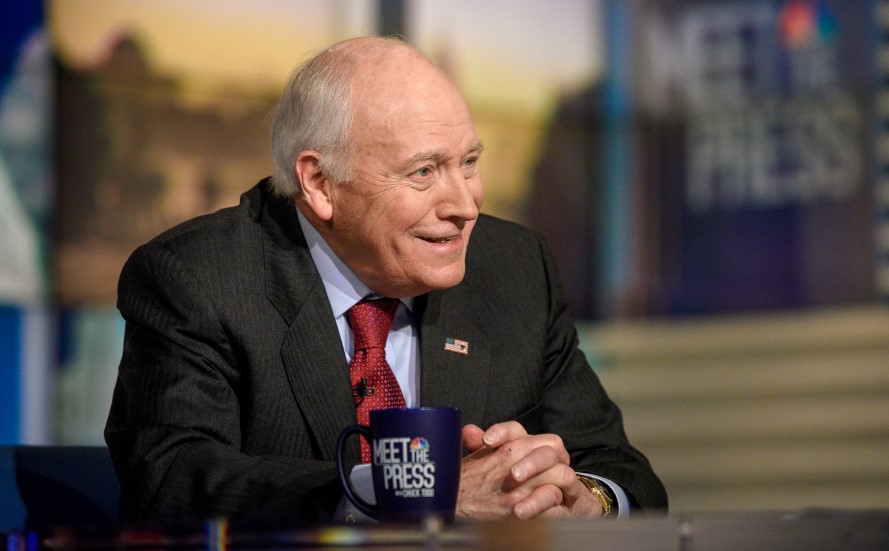
3. Secretary of Defense & Gulf War Leadership
In 1989, President George H. W. Bush nominated Cheney to be Secretary of Defense. After some political maneuvering and a Senate rejection of a prior nominee, Cheney assumed the position. georgewbush-whitehouse.archives.gov+3history.defense.gov+3Miller Center+3
As Defense Secretary (1989–1993), Cheney oversaw key military actions, notably Operation Just Cause (Panama, 1989) and Operation Desert Storm (Gulf War, 1991). Miller Center+2Encyclopedia Britannica+2 He navigated the end of the Cold War and shifting U.S. military strategy in a rapidly changing geopolitical environment. Miller Center+1
After the Bush term ended, Cheney exited public office for a period and entered the private sector.
4. The Private Sector Years: Halliburton & Corporate Power
From 1995 to 2000, Cheney served as Chairman and CEO of Halliburton, a major energy services firm. history.defense.gov+3Wikipedia+3Encyclopedia Britannica+3 His tenure at Halliburton later drew scrutiny, particularly over government contracts and potential conflicts of interest once Cheney reentered public office.
This corporate period earned him influence, connections, and financial clout — but also accumulated political baggage about transparency, corporate-government relationships, and accountability.
5. Vice Presidency (2001–2009): Power Behind the Scenes
Cheney joined George W. Bush’s presidential ticket in 2000, becoming the 46th Vice President in 2001 and serving two full terms until 2009. georgewbush-whitehouse.archives.gov+5Wikipedia+5georgewbush-whitehouse.archives.gov+5
5.1 Role & Influence
Although traditionally a ceremonial role, Cheney transformed the vice presidency into a power center. He oversaw national security, energy policy, intelligence, and counterterrorism operations. Many historians regard his vice presidency as the most powerful in U.S. history. Miller Center+4Wikipedia+4Encyclopedia Britannica+4
5.2 Post‑9/11 & the War on Terror
Following the September 11, 2001 attacks, Cheney was central to key decisions in U.S. national security: the establishment of Homeland Security, surveillance expansions, and policies on detention and interrogation. Miller Center+3Wikipedia+3Encyclopedia Britannica+3
Cheney strongly supported the 2003 invasion of Iraq, citing alleged weapons of mass destruction and threat from Saddam Hussein’s regime — claims that would later become highly controversial after WMDs were not discovered. Encyclopedia Britannica+2Wikipedia+2
5.3 Assertion of Executive Authority
Under his influence, the administration expanded executive powers, including controversial policies on surveillance (e.g. warrantless wiretapping), preemptive strikes, and indefinite detention at Guantánamo Bay. These policies stirred intense debate about civil liberties and constitutional boundaries.
6. Major Controversies & Incidents
Cheney’s career was far from unblemished — numerous events defined and challenged his legacy.
6.1 Hunting Accident of 2006
On February 11, 2006, Cheney accidentally shot Harry Whittington, a 78‑year-old attorney, while quail hunting in Texas. The incident received massive media attention, especially as Whittington suffered a heart attack due to embedded shot. Cheney publicly addressed the matter two days later. Wikipedia
6.2 Attempted Assassination (2007)
On February 27, 2007, a suicide attack at Bagram Air Base in Afghanistan targeted an area Cheney was visiting. The attack killed dozens but he emerged unharmed. Wikipedia
6.3 War Criticism & Iraq Fallout
The long-term consequences of the Iraq War — prolonged conflict, instability, civilian casualties — have cast a long shadow. Critics argue that Cheney’s hawkish policies lacked sufficient basis or oversight, and that the administration misused intelligence.
6.4 Executive Overreach & Civil Liberties
Cheney’s advocacy for expansive surveillance, reduced oversight of the executive, and enhanced interrogation tactics were seen by critics as eroding constitutional safeguards.
6.5 Health & Mortality
Cheney suffered five heart attacks over his life and underwent a heart transplant in 2012. People.com+2AP News+2 On November 3, 2025, Cheney passed away at age 84, reportedly from complications of pneumonia and cardiovascular disease. AP News+2People.com+2
7. Writings, Ideology & Post‑Office Engagement
7.1 Memoirs & Books
Cheney documented his perspectives and policies in In My Time: A Personal and Political Memoir (2011), co‑written with his daughter, Liz Cheney. Wikipedia He and Liz further co‑authored Exceptional: Why the World Needs a Powerful America (2015), arguing for strong U.S. global leadership. Wikipedia
7.2 Political Philosophy
Cheney was a staunch neoconservative: advocating strong U.S. presence abroad, preventive military power, and robust executive control. His philosophy embraced American exceptionalism — the idea that the U.S. holds a unique role in world leadership. Wikipedia+3Wikipedia+3Encyclopedia Britannica+3
Even after leaving office, Cheney remained politically active — particularly in foreign policy debates, security issues, and commentary. In the 2024 election cycle, he publicly criticized Donald Trump and expressed concerns about democratic institutions.
8. Legacy & Influence
8.1 Redefining the Vice Presidency
Cheney fundamentally changed expectations of the vice presidency. His expansive role set precedents for how future VPs might engage in governance.
8.2 National Security & War Doctrine
His impact is deeply felt in U.S. post‑9/11 security architecture: broad surveillance powers, the use of force doctrine, and structure of intelligence oversight.
8.3 Polarization & Public Perception
Cheney stood as a divisive figure: to supporters, a decisive patriot defending the nation; to critics, a symbol of unchecked power and controversial policies.
8.4 Enduring Debates
Issues Cheney helped bring forward remain central to American political discourse: war powers, privacy vs security, executive authority, and U.S. foreign policy.
9. Conclusion
Dick Cheney’s life was one of ambition, influence, and controversy. From his early years in Nebraska and Wyoming to corridors of power in Washington, he shaped key chapters of U.S. modern history. His legacy is complex — admired by some for firmness and conviction, condemned by others for perceived overreach.
As the U.S. and world reflect on his passing, the debates he stoked — about security, power, and governance — will persist. Cheney will be remembered not just as vice president, but as a force who sought to bend institutions to vision.