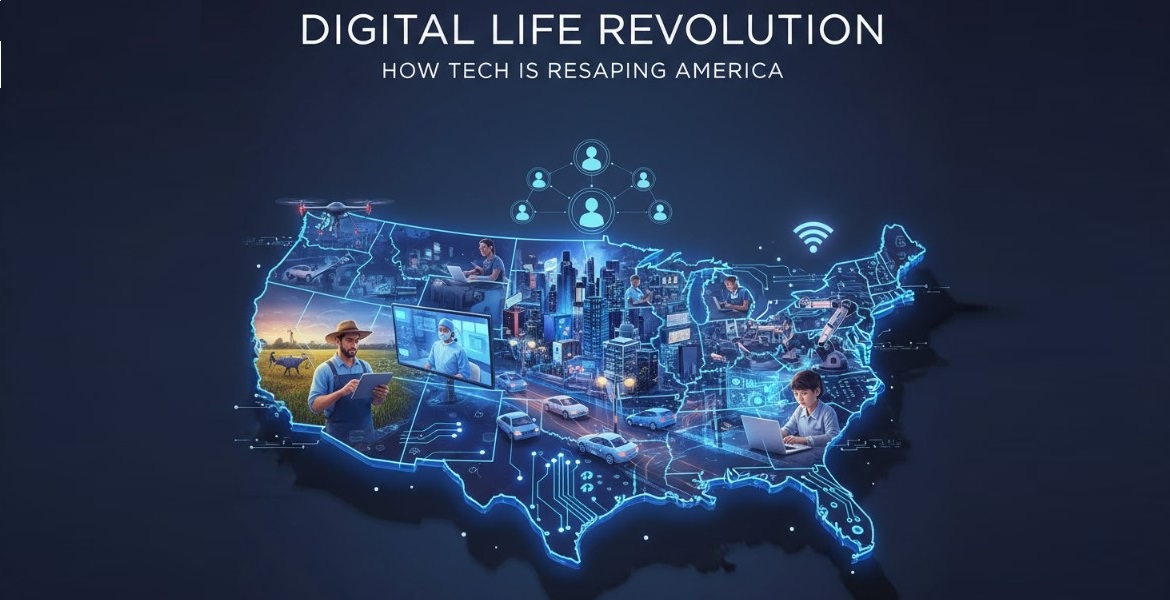
Over the past few years, the United States has witnessed one of the fastest transitions into a fully digital society. What used to be simple daily habits—checking email, scrolling through social media, or shopping online—has evolved into a complete digital lifestyle that influences how Americans work, communicate, learn, and maintain their well-being.
Today, technology isn’t just a tool. It’s a core part of the American day-to-day experience.
But what does that really mean for people? And how is this shift affecting life across the country?
Let’s break down the real impact of digital life in America right now.
1. Post-Pandemic America: A Permanent Digital Shift
The COVID-19 pandemic didn’t just change routines; it accelerated a nationwide digital transformation. Practically overnight, millions of Americans moved to remote work, online schooling, and virtual services.
What started as a temporary solution has now become a permanent lifestyle:
- Remote and hybrid work models are the new normal.
- Virtual health visits (telehealth) have become mainstream.
- Digital platforms shape shopping, finance, entertainment, and even government services.
For many Americans, digital life isn’t a choice anymore—it’s the default setting.
2. Work-Life Balance in a Tech-Driven World
With laptops and smartphones always nearby, boundaries between personal and professional life are thinner than ever.
Benefits:
- More flexibility for families and parents
- Less time spent commuting
- Ability to work from anywhere
Challenges:
- Increased screen fatigue
- Difficulty disconnecting after hours
- Pressure to stay “always online”
This new reality has sparked a national conversation:
How do we stay productive without sacrificing mental health?
3. The Rise of AI in Everyday Life
Artificial intelligence is no longer futuristic—it’s everywhere in American homes:
- Smart assistants like Alexa and Google Home
- AI-driven personalized ads
- Automated recommendations on Netflix, Amazon, and YouTube
- AI tools that help with scheduling, writing, and managing finances
For many people, AI has improved efficiency and made daily tasks easier.
For others, it raises questions about privacy, data security, and digital dependence.
4. Digital Well-Being: A Growing Concern
As technology becomes more present, Americans are becoming more aware of its psychological effects.
Common issues include:
- Doom-scrolling on social media
- Reduced attention span
- Sleep disruption from late-night screen time
- Comparison culture and digital pressure
This has led to an increase in:
- Digital detox trends
- Mindfulness apps
- Screen-time management tools
- A stronger push for mental health awareness
America is trying to find a healthier balance between staying connected and staying human.
5. The “Digital Divide” Still Exists
While the United States is highly connected, not everyone benefits equally from this digital revolution.
Challenges include:
- Rural areas with poor internet access
- Low-income families without modern devices
- Elderly individuals struggling with new technologies
The digital divide is now considered a social issue, because access to technology affects education, job opportunities, and economic stability.
6. Technology and Aging: A Surprising Positive Impact
Recent American studies show that older adults who regularly use digital tools experience better cognitive health and reduced loneliness.
Digital engagement helps seniors:
- Stay in touch with family
- Access telehealth services
- Learn new skills
- Keep their minds active
This challenges the old belief that technology “damages the brain.”
In fact, for many older Americans, it’s becoming a lifeline.
7. The Future of Digital Life in the U.S.
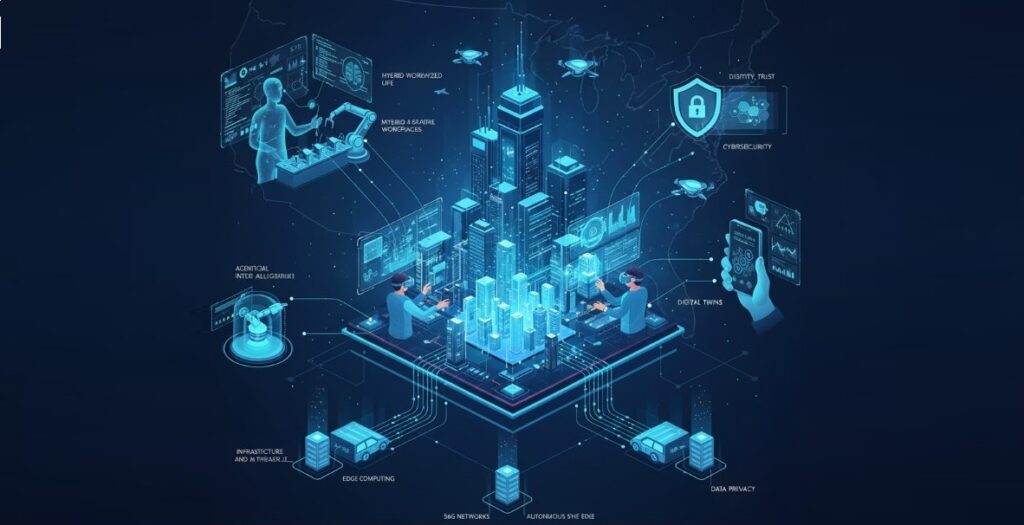
Looking ahead, the American digital experience will continue to evolve with:
- Smarter AI assistants
- More immersive VR/AR environments
- Automated homes and workplaces
- Expansion of 5G and faster internet
- AI-powered education and healthcare
The line between physical and digital life will grow even thinner, creating new opportunities—but also new responsibilities.
Conclusion: A New American Lifestyle
Digital life in the United States is no longer a trend—it’s a cultural shift. From work to relationships to health, technology is shaping the modern American identity.
The challenge now is finding balance: using digital tools to enhance life, not control it.
As the country moves further into this digital era, one thing is clear:
The future of America is hybrid—part physical, part digital, and constantly evolving