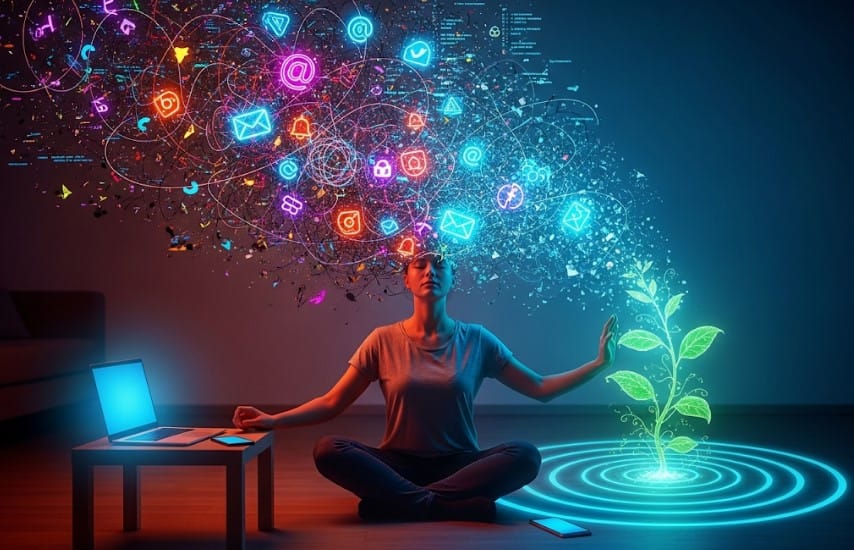
📱 Digital Overload and Mental Health: Causes, Effects & How to Combat It
In 2025, technology is more integrated into our daily lives than ever before. Smartphones, laptops, social media platforms, and endless apps are always within reach. While these tools help us stay connected and productive, they also create a new challenge: digital overload.
Constant notifications, multitasking across devices, and the pressure to always be “online” can take a serious toll on our mental health. Let’s dive into the causes, effects, and—most importantly—how to combat digital overload for a healthier, more mindful life.
🌐 What Is Digital Overload?
Digital overload happens when our brains are overwhelmed by the sheer amount of digital input we process daily—emails, messages, news, and social feeds. Instead of helping us feel connected, technology starts to drain our energy and focus.
Think about it: how many times have you opened your phone for one quick check, only to find yourself scrolling 30 minutes later? That’s digital overload in action.
🧠 Causes of Digital Overload
- Information Overload
We consume more information in a single day than our grandparents did in weeks. News, updates, and notifications never stop. - Multitasking Pressure
Switching between tasks—answering emails, joining Zoom calls, checking Slack—fragments attention and makes concentration harder. - Social Media Traps
Platforms are designed to keep us scrolling, often prioritizing addictive content over meaningful connection. - Always-On Culture
Many workplaces expect instant replies, blurring boundaries between work and personal life. - Fear of Missing Out (FOMO)
The pressure to stay updated with everything—trends, news, and social events—creates anxiety.
⚠️ Effects of Digital Overload on Mental Health
- Anxiety and Stress 😰: Constant alerts trigger a fight-or-flight response, keeping our minds on edge.
- Poor Sleep Quality 😴: Screen exposure—especially before bed—disrupts melatonin production and natural sleep cycles.
- Decreased Focus 🎯: Overstimulation reduces our ability to concentrate on deep, meaningful work.
- Burnout 🔥: Overuse of technology contributes to mental exhaustion, similar to work-related burnout.
- Loneliness 💔: Ironically, being hyperconnected online can reduce the quality of face-to-face connections.
🌿 How to Combat Digital Overload
- Set Tech Boundaries
- Define screen-free hours (e.g., mornings and before bedtime).
- Use “Do Not Disturb” mode during deep work.
- Prioritize Mindful Consumption
- Follow fewer, high-quality news sources.
- Be intentional: check social media with purpose, not habit.
- Take Regular Digital Breaks
- Practice the 20-20-20 rule: every 20 minutes, look 20 feet away for 20 seconds.
- Go for short walks or stretch breaks without your phone.
- Create Tech-Free Zones at Home
- No phones at the dinner table or in the bedroom.
- Replace evening scrolling with reading, journaling, or meditation.
- Leverage Tech to Fight Tech
- Use screen-time trackers to monitor usage.
- Try focus apps like Freedom, Forest, or RescueTime to stay disciplined.
✨ Final Thoughts
Digital overload is one of the biggest challenges of modern life, but it’s not something we’re powerless against. By setting boundaries, practicing mindful tech habits, and prioritizing offline time, we can regain control over our mental health and restore balance.
Remember: technology should serve you—not the other way around. When you manage your digital environment wisely, you open space for better focus, stronger relationships, and improved well-being in 2025 and beyond. 🌿💡