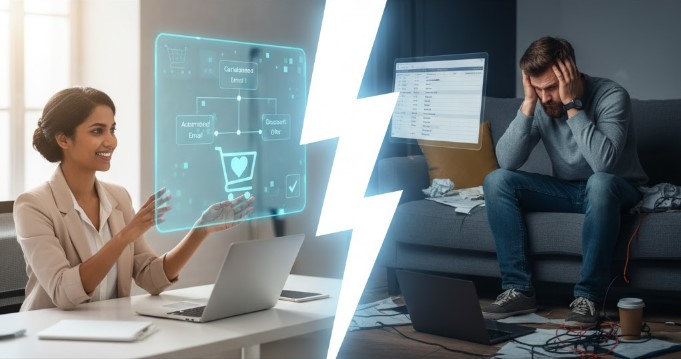
In the fast-paced world of e-commerce, shopping cart abandonment remains one of the biggest challenges for online retailers. Studies show that, on average, 70% of shoppers leave items in their cart without completing the purchase. The good news? Email automation provides a powerful, cost-effective solution to recover lost sales, increase revenue, and strengthen customer relationships.
This guide explores the strategies, tools, and best practices for using email automation for cart recovery in 2025.
1. Understanding Cart Abandonment
Before you can recover abandoned carts, it’s important to understand why they happen. Common reasons include:
- Unexpected shipping costs or taxes
- Complicated checkout processes
- Distractions or delays during shopping
- Hesitation or indecision
By addressing these pain points with targeted, automated email sequences, you can nudge customers back to complete their purchase.
2. The Power of Email Automation
Email automation allows you to send timely, personalized messages without manual effort. Key advantages include:
- Timely follow-ups: Automated emails are sent immediately after cart abandonment, increasing the likelihood of recovery.
- Personalization: Emails can include customer names, items left in the cart, and tailored recommendations.
- Scalability: Whether you have 10 or 10,000 abandoned carts, automation manages outreach consistently.
- Analytics: Track open rates, click-through rates, and conversions to optimize performance.
3. Crafting Effective Cart Recovery Emails
Step 1: Timing Matters
- First email: Send within 1–3 hours after abandonment. This catches customers while the intent to buy is still fresh.
- Second email: Send 24 hours later with a gentle reminder.
- Third email: Optional final reminder within 48–72 hours, sometimes including an incentive like free shipping or a small discount.
Step 2: Personalize the Content
- Address the customer by name.
- Include the items left in the cart with images.
- Use language that emphasizes value and urgency.
Step 3: Include a Clear Call-to-Action (CTA)
- Use a button like “Complete Your Purchase” or “Return to Your Cart.”
- Ensure it links directly to the abandoned cart for a seamless experience.
Human Experience Example:
A small online boutique implemented a three-step cart recovery email sequence. Within the first month, cart recovery rates increased by 18%, directly boosting revenue without additional ad spend.
4. Advanced Strategies
Segment Customers
- Identify repeat buyers versus first-time shoppers and tailor messaging accordingly.
- High-value items may warrant a slightly more personal touch or a small incentive.
Use Dynamic Content
- Include product recommendations based on abandoned items.
- Show limited stock alerts to create urgency.
Integrate Multi-Channel Follow-Ups
- Pair email automation with SMS or push notifications for higher recovery rates.
- Use retargeting ads for added visibility.
Test and Optimize
- A/B test subject lines, email copy, timing, and incentives.
- Monitor which sequences yield the highest conversion.
5. Best Email Automation Tools for Cart Recovery in 2025
Some popular platforms include:
- Klaviyo: Advanced automation, personalization, and analytics.
- Shopify Email: Seamless integration with Shopify stores for simple workflows.
- Omnisend: Multi-channel automation (email, SMS, push).
- ActiveCampaign: Sophisticated segmentation and AI-powered recommendations.
Choose a tool that fits your business size, budget, and integration needs.
6. Key Metrics to Track
To measure success and improve your cart recovery campaigns, focus on:
- Open Rate: Are customers opening the emails?
- Click-Through Rate (CTR): Are they returning to the cart?
- Conversion Rate: Are abandoned carts being completed?
- Revenue Recovered: Direct impact on sales from automation.
7. Final Thoughts
Cart recovery via email automation is no longer optional — it’s a critical revenue strategy for e-commerce businesses in 2025. By implementing timely, personalized, and data-driven automated emails, you can:
- Recover lost sales
- Strengthen customer relationships
- Increase revenue without extra marketing spend
The key is to combine strategy, personalization, and analytics to continuously optimize your campaigns. With the right system in place, even casual browsers can turn into loyal customers.