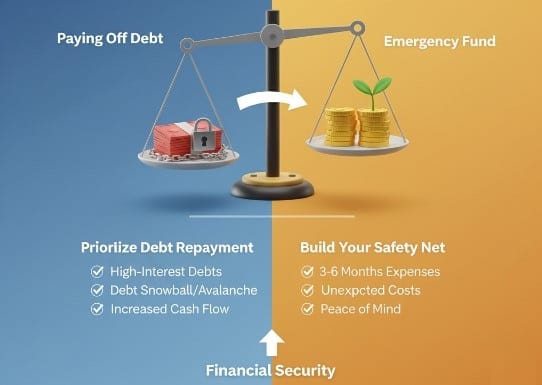
Introduction: The Debt Dilemma vs. Life’s Curveballs
Imagine this: you’ve finally committed to crushing your debt. You’ve cut expenses, built a budget, and are throwing every extra dollar at your credit card balance. Then—boom—your car breaks down or a medical bill lands in your mailbox. Suddenly, your debt plan feels like it’s slipping away.
This is where an emergency fund comes in. But here’s the tough question: Should you really save for emergencies while still buried in debt?
The answer isn’t always black-and-white. Let’s break it down so you can strike the right balance between paying off what you owe and protecting yourself from life’s unexpected twists.
Why an Emergency Fund Matters 🚨
An emergency fund is like financial armor. It shields you from:
- Unexpected medical costs 🏥
- Car or home repairs 🚗🔧
- Job loss or reduced income 📉
- Unplanned travel or family emergencies ✈️
Without a cushion, people often turn to credit cards or high-interest loans when emergencies happen—undoing months of debt progress.
💡 Case in point: A recent survey by Bankrate found that nearly 60% of adults couldn’t cover a $1,000 emergency without borrowing. For someone already in debt, this becomes a vicious cycle.
The Balancing Act: Save and Pay Off Debt
So, how do you choose between saving and paying down debt? Here’s a practical approach:
Step 1: Build a Starter Emergency Fund 🪙
Start with a mini-fund—usually $500 to $1,500, depending on your lifestyle and dependents. This won’t cover every crisis but will keep small emergencies from derailing your debt plan.
Step 2: Focus Aggressively on Debt 💳
Once your starter fund is set, channel your energy into debt repayment. Use strategies like the Snowball Method (smallest balances first) or the Avalanche Method (highest interest first).
Step 3: Expand Your Fund After Debt Payoff 🌱
When your high-interest debt is gone, build your emergency fund to 3–6 months of expenses. This is your long-term safety net against bigger disruptions like job loss.
Practical Tips to Save While Tackling Debt
1. Automate Micro-Savings 🤖
Set up a small automatic transfer ($10–$25 weekly) into a separate savings account. You’ll hardly notice it, but it adds up fast.
2. Use “Found Money” Wisely 🎁
Tax refunds, bonuses, or side-hustle cash? Split it:
- 70% toward debt
- 30% toward your emergency fund
3. Cut & Redirect Expenses ✂️➡️
Cancel unused subscriptions, cook more meals at home, or downgrade your phone plan. Even $50/month can fund emergencies while accelerating debt freedom.
4. Consider Side Income Streams 💼
Freelancing, part-time gigs, or selling unused items can create extra cash that goes straight into your financial buffer.
Real-Life Example 🌍
Take Sarah, a 29-year-old teacher with $18,000 in student loans. She started by saving $1,000 in an online savings account. A few months later, her car battery died. Instead of putting it on her credit card, she used her emergency fund and stayed on track with her loan payments.
This small buffer gave her confidence—and momentum—to continue her debt-free journey without sliding backward.
The Emotional Side of Emergency Funds ❤️
Debt repayment isn’t just about numbers—it’s emotional. Having even a modest emergency fund reduces anxiety, builds resilience, and keeps you from feeling like one bad day could ruin your progress.
Think of it as peace of mind insurance.
Conclusion: Security + Strategy = Success
Paying off debt without an emergency fund is like walking a tightrope without a safety net. By setting aside even a modest cushion, you protect your progress and your sanity.
Your journey to financial freedom doesn’t need to be a sprint. It’s about building stability, resilience, and confidence along the way.
🔑 Interactive Question: If you’re paying off debt right now, how much would give you peace of mind for an emergency fund—$500, $1,000, or more? Share your thoughts in the comments! 👇
Light CTA
📩 Want a clear roadmap to financial freedom? Subscribe to our Money Reset Newsletter and get exclusive guides, templates, and tools to build wealth stress-free.