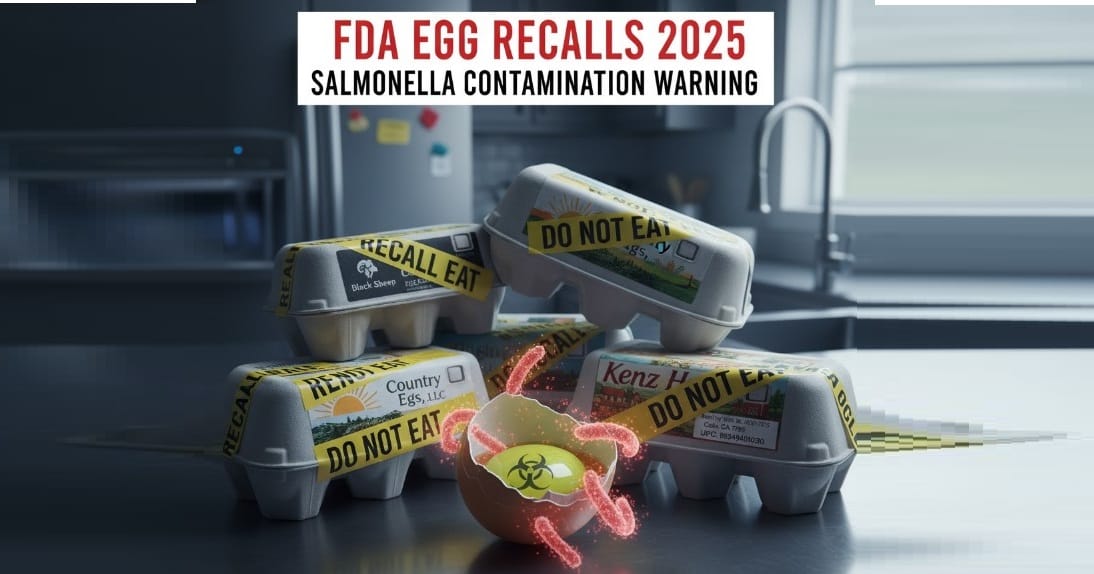
FDA Egg Recalls 2025: What Happened, Brands Affected, and How to Stay Safe from Salmonella Contamination
Introduction
In a major food safety alert, the U.S. Food and Drug Administration (FDA) has announced multiple egg recalls across the United States in 2025 after detecting Salmonella contamination in several large-scale production facilities.
The recalls, which span multiple states and brands, have triggered national concern, with millions of eggs pulled from store shelves and public warnings issued. If you’ve purchased eggs recently, it’s crucial to check your brand, plant code, and sell-by date to ensure your household is safe.
This article explains why the FDA issued these recalls, which brands and locations are affected, and the health precautions you should take immediately.
What Triggered the FDA’s Egg Recalls?
The FDA’s ongoing investigations found traces of Salmonella Enteritidis — a common bacterial contaminant associated with raw or undercooked eggs — in several processing plants across the U.S.
Samples collected from these facilities tested positive for multiple strains of Salmonella, prompting voluntary and mandatory recalls under Class I, the most serious classification, indicating a reasonable probability of severe health risks.
Egg Brands Affected by the 2025 Recalls
1. Black Sheep Egg Company (Arkansas)
- Products: Free-range large brown eggs (12-count & 18-count cartons)
- UPC Codes: 860010568507 and 860010568538
- Best-by Dates: August 22 – October 31, 2025
- Reason for Recall: Environmental samples at the facility tested positive for seven Salmonella strains.
- Distribution: Sold in Arkansas, Texas, and neighboring states.
- Status: Class I recall, with no confirmed illness reports to date.
“Out of caution, we are advising consumers to discard affected products immediately,” the FDA stated in its public notice.
2. August Egg Company (California)
- Products: Multiple private-label brands including Clover, Nulaid, Simple Truth, Raley’s, O Organics, Sun Harvest, and Marketside.
- Plant Codes: P-6562 and CA-5330 (printed near the USDA mark of inspection on the carton).
- Sell-By Dates: March 4 – June 19, 2025.
- Distribution: Nationwide across major retailers and grocery chains.
- Reported Cases: At least 79 confirmed Salmonella infections and 21 hospitalizations across 11 states, according to the CDC.
- Status: Voluntary recall; active outbreak investigation continues.
3. Country Eggs, LLC (California & Nevada)
- Products: Large brown cage-free eggs sold under Sunshine Yolks, Omega-3 Golden Yolks, Misuho, Nagatoshi Produce, and Nijiya Markets.
- Sell-By Dates: July 1 – September 18, 2025.
- Distribution: California, Nevada, and select western retailers.
- Reason for Recall: Routine testing identified potential contamination at the packing facility.
- Illnesses Reported: 92 suspected cases linked to the affected batches.
Understanding Salmonella and Its Dangers
Salmonella is a bacteria that can cause serious gastrointestinal illness known as salmonellosis. In mild cases, symptoms develop within 12–72 hours of consumption and may include:
- Nausea and vomiting
- Diarrhea (sometimes bloody)
- Abdominal cramps
- Fever and chills
For infants, elderly individuals, pregnant women, and immunocompromised people, infection can be life-threatening, leading to dehydration or bloodstream infections.
According to the CDC, approximately 1.35 million Salmonella infections occur each year in the U.S., with 26,500 hospitalizations and 420 deaths—often linked to contaminated eggs, poultry, or produce.
How to Check If Your Eggs Are Part of the Recall
To verify your eggs, check:
- The brand name printed on the carton.
- The plant code (starts with “P-” or “CA-”) near the USDA shield.
- The sell-by or best-by date range listed above.
- The UPC code, if available.
If your eggs match any of these details, do not consume them. Dispose of them or return them to the retailer for a full refund.
Tip: Even if the eggs look or smell fine, Salmonella contamination cannot be detected by sight or smell. Always rely on FDA and retailer notices.
What to Do If You Have Recalled Eggs
- Discard or return the eggs safely—do not attempt to cook or eat them.
- Clean contaminated surfaces: sanitize refrigerators, counters, and containers with hot soapy water or disinfectant.
- Wash your hands thoroughly after handling eggs.
- Monitor your health: if symptoms of food poisoning appear, contact your healthcare provider.
- Stay informed: check FDA.gov/recalls and CDC.gov/outbreaks for updates.
Why Are Egg Recalls Becoming More Common?
Several factors contribute to the rise in egg recalls:
- Expanded FDA surveillance and testing programs post-pandemic.
- Large-scale centralized production facilities that can spread contamination quickly.
- Complex supply chains that make early detection harder.
- Higher consumer reporting rates, aided by digital traceability and QR code scanning systems.
These recalls highlight the fragility of industrial food systems and the importance of strict hygiene, refrigeration, and transparent tracking from farm to table.
How to Protect Yourself from Salmonella Year-Round
- Always cook eggs until both yolk and white are firm (160°F / 71°C).
- Avoid consuming raw or lightly cooked eggs, especially in dressings, desserts, or protein shakes.
- Refrigerate eggs promptly—never store them at room temperature.
- Wash hands, utensils, and surfaces after handling eggs.
- Consider purchasing pasteurized eggs for recipes requiring raw eggs.
FDA and CDC Response
The FDA continues to inspect processing plants, test environmental samples, and coordinate with state health departments to trace infection sources. Meanwhile, the CDC is tracking cases linked to the outbreaks and issuing guidance for healthcare providers.
In its latest update, the FDA emphasized:
“Consumers should stay alert to ongoing recall expansions. Food safety is a shared responsibility — from farms and producers to retailers and home kitchens.”
Conclusion
The 2025 FDA egg recalls underscore the ongoing importance of vigilance and transparency in food safety. With several major brands affected and confirmed cases of Salmonella illness, every household must take precautions.
If you’ve purchased eggs recently, check your cartons immediately and follow recall instructions. Discarding or returning potentially contaminated eggs can prevent serious illness — and even save lives.
In a food system as vast as America’s, the message is simple but urgent:
Stay informed, stay safe, and always verify what’s in your fridge.