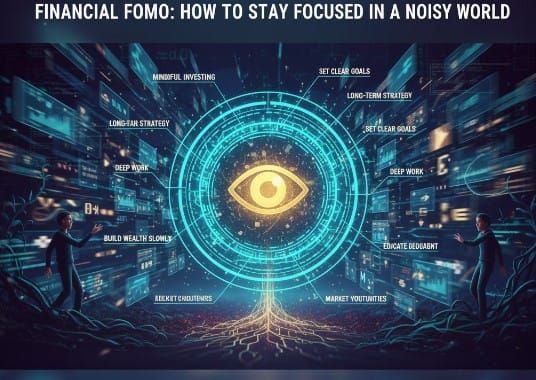
Introduction: The Modern Challenge of Financial FOMO
Everywhere you look—social media, news headlines, and group chats—there’s someone buying the latest crypto, investing in trending stocks, or launching a side hustle. It’s easy to feel left behind. This fear of missing out on financial opportunities, or Financial FOMO, can drive impulsive decisions, stress, and even losses.
In this article, we’ll explore what Financial FOMO is, why it’s so common in today’s digital world, and actionable strategies to stay focused on your own financial journey.
What is Financial FOMO?
Financial FOMO is the anxious feeling that you’re missing out on money-making opportunities, causing impulsive actions like:
- Chasing “hot” investments without research.
- Jumping into trends because “everyone else is doing it.”
- Comparing your financial progress to others online.
- Making short-term decisions that hurt long-term goals.
💡 Example Story: During a crypto surge, Alex bought tokens solely because friends were profiting. When the market corrected, he faced losses that could have been avoided with a calm, research-driven strategy.
Why Financial FOMO Happens
- Information Overload: Social media and financial news amplify hype and urgency.
- Herd Mentality: Seeing peers succeed triggers emotional pressure to act.
- Short-Term Thinking: Instant gratification often outweighs long-term planning.
- Comparison Culture: Social proof makes us doubt our own financial strategies.
The Consequences of Chasing Every Trend
- Impulse Decisions: Acting on emotions instead of rational analysis.
- Increased Risk: Higher likelihood of losses in volatile markets.
- Stress and Anxiety: Constant worry about missing opportunities.
- Missed Long-Term Goals: Short-term hype distracts from steady wealth-building strategies.
How to Stay Focused in a Noisy World
1. Define Your Financial Goals
Set clear, measurable objectives for savings, investments, and spending. Ask: Does this opportunity help me reach my goals?
2. Create a Financial Plan
A structured plan provides clarity and discipline, making it easier to ignore distractions.
3. Limit Exposure to Hype
Reduce time spent scrolling social media or financial forums during peak hype cycles.
4. Focus on Research and Education
Understand any investment or opportunity before committing. Knowledge empowers confidence over fear.
5. Diversify and Stick to Your Strategy
A well-diversified portfolio reduces risk and prevents panic decisions during market noise.
💡 Tip: Maintain a “decision checklist” for any investment: does it align with goals, risk tolerance, and research? Only proceed if all boxes are checked.
Real-Life Applications
- Investing: Consistent, long-term contributions to diversified funds outperform chasing trending stocks.
- Spending: Avoid impulsive purchases promoted as “limited time” deals.
- Entrepreneurship: Focus on building your business steadily rather than jumping on every trend.
💡 Example Story: Emma focused on a simple, consistent investment plan while ignoring social media hype. Over five years, her portfolio grew steadily, and she avoided the stress of chasing every trend.
Conclusion: Mastering Financial FOMO
Financial FOMO is inevitable in today’s noisy world—but it doesn’t have to control your decisions. By setting goals, planning strategically, and focusing on research, you can make rational financial choices and avoid the pitfalls of hype-driven decisions.
🔑 Interactive Question: Have you ever made a financial decision driven by FOMO? How could applying a structured plan have changed the outcome?
💡 CTA: Take a step today: define one clear financial goal and commit to decisions that align with it, ignoring the noise around you.