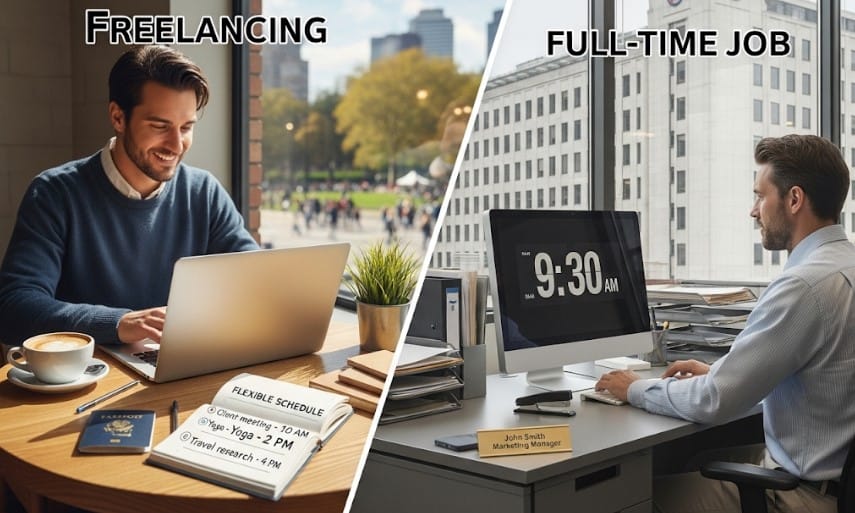
💼 Freelancer vs. Full-Time Job — Which One Offers More Freedom?
In today’s fast-changing work landscape, more people are asking themselves: Should I stay in a full-time job or become a freelancer? Both paths offer opportunities, but they also come with challenges. One of the biggest debates is freedom — freedom of time, money, and lifestyle. Let’s break it down so you can decide which option fits your goals.
1️⃣ Freedom of Time ⏰
- Freelancers:
Freelancers have more control over their schedules. You can work early mornings, late nights, or whenever you feel most productive. Want a mid-week vacation? It’s possible. However, deadlines and client expectations still apply, so “total freedom” often means managing your time wisely. - Full-Time Jobs:
Employees typically follow fixed hours, usually 9–5. While this creates stability and routine, it limits flexibility. Vacation time is pre-approved, and unexpected breaks aren’t always possible.
👉 Verdict: Freelancers win when it comes to flexible time, but discipline is key.
2️⃣ Financial Freedom 💰
- Freelancers:
Income can fluctuate. Some months bring in more money than a full-time salary, while others may feel dry. The upside is unlimited earning potential — your income depends on your skills, marketing, and clients. - Full-Time Jobs:
A steady paycheck and benefits like health insurance, retirement plans, and paid leave make financial life predictable. But salaries are capped, and promotions often take years.
👉 Verdict: Full-time jobs offer stability; freelancing offers potential growth but with risk.
3️⃣ Freedom of Location 🌍
- Freelancers:
Most freelance work is remote, meaning you can work from home, a café, or even while traveling. Digital nomads thrive in this lifestyle. - Full-Time Jobs:
Some jobs allow remote or hybrid work, but many still require office presence. Relocation or travel usually depends on company policies.
👉 Verdict: Freelancers clearly have more location freedom.
4️⃣ Freedom of Choice 🎯
- Freelancers:
You decide which projects to take, which clients to work with, and even what industries to focus on. This creative control can be very fulfilling. - Full-Time Jobs:
Your role and tasks are largely set by the employer. Even if you want to innovate, there are limitations. Job security sometimes comes at the cost of autonomy.
👉 Verdict: Freelancers win in creative and professional freedom.
5️⃣ Work-Life Balance ⚖️
- Freelancers:
The freedom can backfire. Without boundaries, some freelancers overwork, blur personal life, or burn out. Success requires building routines and saying “no” to certain projects. - Full-Time Jobs:
Clear work hours can make it easier to separate personal and professional life. Once the day ends, you’re (usually) done. But long commutes or stressful workplaces can take a toll.
👉 Verdict: Both paths can support balance — but it depends on your discipline and environment.
✨ Final Thoughts
So, which one offers more freedom — freelancing or a full-time job?
- If you value flexibility, control, and unlimited growth, freelancing might be your path.
- If you prioritize stability, structure, and financial security, a full-time job may be better.
The truth is: freedom looks different for everyone. Some even blend both worlds — keeping a stable job while freelancing on the side. Ultimately, the right choice depends on your personality, goals, and lifestyle.
🚀 Tip: Experiment. Try freelancing part-time before going all in. That way, you’ll know if the freedom it offers truly matches your needs.