Why Bloggers Are Turning into Store Owners
Blogging used to be just about sharing ideas, building an audience, and maybe earning a little ad revenue. But in 2025, the game has changed.
More bloggers are transforming their platforms into full-fledged online stores. Why? Because audiences no longer just want content — they want solutions. And if you can provide those solutions through physical or digital products, you can multiply your income.
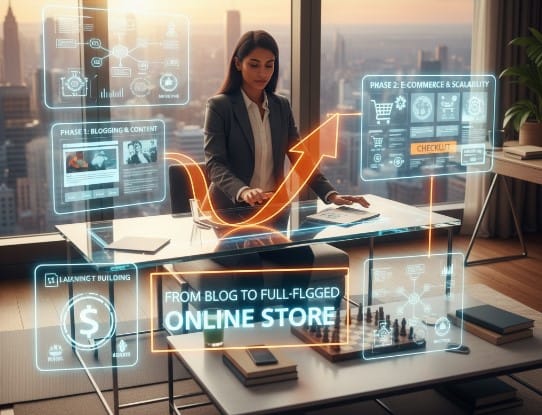
Think of your blog as the foundation and your online store as the next floor of the building. One supports the other, and together they create a sustainable business.
Story: How Emma Turned Recipes into Revenue
Emma started a healthy food blog in 2022. She built a loyal audience who loved her gluten-free recipes. Instead of only running ads or affiliate links, she launched:
- A line of gluten-free baking mixes
- A digital cookbook
- A meal-planning membership
Within 18 months, her blog had evolved into a thriving online store that generated more income than her old day job.
👉 Lesson: Your audience is already telling you what they need — your job is to listen and turn it into a product.
Step 1: Identify What to Sell
Your blog topics often hint at the best product ideas. Ask:
- What problems does my audience face?
- What products or tools do I already recommend?
- Could I create a physical, digital, or hybrid product that solves these problems?
Examples:
- Finance blog → Budgeting templates, financial courses
- Fitness blog → Workout programs, branded gear
- Lifestyle blog → Merch, curated subscription boxes
Step 2: Choose Your Store Model
There are multiple ways to go from blog to store:
- Digital Products (eBooks, templates, courses) – high profit, easy to scale.
- Print-on-Demand (merch, mugs, shirts) – no inventory needed.
- Dropshipping – sell products from suppliers without storing stock.
- Physical Products – more effort, but big brand potential.
👉 Pro Tip: Many bloggers start with digital products because they’re low-cost and easy to launch.
Step 3: Pick the Right Platform
Since you already have a blog, your store should integrate smoothly. Top options include:
- Shopify – great for scaling and full e-commerce features.
- WooCommerce (WordPress) – perfect if you want to keep everything inside your blog.
- Gumroad / Podia – best for selling digital products.
Ask yourself: Do I want a store-first platform, or a blog-first platform with store add-ons?
Step 4: Design for Conversion
A blog layout and a store layout aren’t the same. For your store, focus on:
- Clear product pages with benefits and reviews
- Visible CTAs (Buy Now, Add to Cart)
- Trust signals like secure checkout badges
- Mobile optimization (over 70% of purchases now happen on mobile)
👉 Action Step: Audit your blog. Is it easy for readers to discover and buy your products in under 3 clicks?
Step 5: Drive Traffic (Beyond Blogging)
Your content still brings organic traffic, but stores need conversion-focused marketing:
- Email marketing – nurture readers into customers
- SEO for products – rank not just posts, but product pages
- Social media & influencer collabs – showcase products in action
- Retargeting ads – bring back readers who didn’t buy the first time
Step 6: Scale with Systems
Once you’ve launched, scale by:
- Automating delivery of digital products
- Outsourcing customer support
- Adding upsells and bundles
- Launching limited-time promotions
Think beyond one product. Stores grow when they become ecosystems of products that complement each other.
Future of Blog-to-Store Conversions (2025–2030)
- AI-driven personalization – showing product recommendations based on browsing behavior.
- Content-commerce hybrid – blogs and stores will merge seamlessly into one user experience.
- Community-driven products – bloggers will co-create with their audiences to launch new offers.
- Sustainability-first e-commerce – audiences will increasingly buy from creators who align with ethical values.
Conclusion: Your Blog Is Just the Beginning
Your blog gave you a voice. Your store gives you a business.
The transition from blog to store doesn’t happen overnight — but if you listen to your readers, solve their problems with products, and create a smooth buying journey, you can transform your blog into a thriving online business.
🔑 Interactive Question: If you could sell one product to your readers tomorrow, what would it be — and why?
Light CTA (evergreen):
If this article sparked ideas, share it with a blogger friend. The future of blogging is more than writing — it’s building a business.