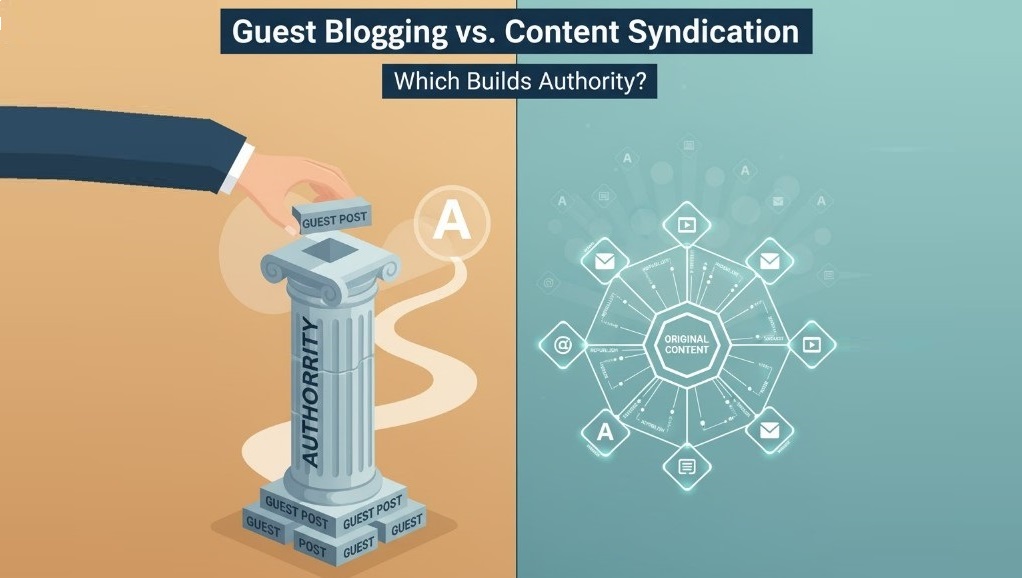
Introduction: Authority in the Modern Content Landscape
In 2025, content isn’t just about traffic — it’s about credibility, visibility, and influence.
Two strategies often surface for building authority: guest blogging and content syndication.
“Authority is currency online,” says Leah Cohen, a digital marketing strategist.
“The right approach can position you as a thought leader — even in a crowded niche.”
But which method actually works best today? Let’s break it down.
1. What is Guest Blogging?
Guest blogging is the practice of writing content for another site or publication within your niche.
Benefits:
- Builds backlinks for SEO (if done strategically)
- Positions you as an expert in front of a targeted audience
- Expands your professional network
Human example:
Markus, a fintech blogger, contributed an article on a top finance blog in 2024. Within two weeks, his newsletter subscribers increased by 18%, and he secured one paid consulting client directly from the post.
2. What is Content Syndication?
Content syndication involves republishing your existing content on third-party platforms, often with attribution and links back to your site.
Benefits:
- Quickly increases reach without creating new content
- Can drive traffic from audiences outside your immediate network
- Amplifies thought leadership through established platforms
Human example:
Jade, a productivity blogger, syndicated her top-performing post to Medium and LinkedIn Pulse. The post garnered 12,000 views and 300 new newsletter subscribers in the first week.
3. Guest Blogging vs Content Syndication: Key Differences
| Aspect | Guest Blogging | Content Syndication |
|---|---|---|
| Content Creation | Original content | Republishing existing content |
| Authority Impact | High — builds expertise and backlinks | Moderate — builds visibility but less SEO value |
| Traffic Potential | Targeted traffic from relevant audience | Broader, sometimes untargeted reach |
| Time Investment | High — requires research and personalization | Low — often just republishing |
| Networking | Excellent — opens doors to collaborations | Limited — mostly exposure-based |
4. SEO Implications
Guest Blogging:
- Provides high-quality backlinks that improve domain authority
- Drives organic traffic when placed on reputable sites
- Requires careful outreach to avoid spammy practices
Content Syndication:
- Must use canonical tags or proper attribution to avoid duplicate content penalties
- Great for brand visibility but less for SEO authority
- Works well in combination with guest blogging
Pro Tip: Combine both strategies: guest post on authoritative blogs and syndicate selected posts to platforms like Medium, LinkedIn, or industry newsletters.
5. Human Experiences: Lessons from Real Bloggers
5.1 The Authority Builder
Sophia, a health and wellness writer, guest-blogged on three high-traffic wellness sites in 2024.
- Outcome: She received multiple speaking invitations and built a small coaching business.
“The effort was high, but the authority payoff was massive.”
5.2 The Syndication Success
Ethan, a marketing blogger, syndicated his content across LinkedIn, Quora, and niche newsletters.
- Outcome: He grew his email list by 25% and secured affiliate deals.
“I didn’t write new content, but my visibility exploded.”
5.3 Combined Approach
Leah, a B2B SaaS content creator, writes original guest posts monthly and syndicates them to Medium and LinkedIn.
- Outcome: SEO benefits from backlinks, authority from guest posts, and extra visibility from syndication.
6. Which Builds Authority Faster?
- Guest blogging is stronger for establishing thought leadership and credibility in your niche.
- Content syndication is better for scaling visibility and reaching broader audiences.
Strategy Tip: Use guest blogging to build authority, then syndicate selectively to amplify reach.
7. Best Practices for 2025
7.1 For Guest Blogging
- Target high-authority websites in your niche
- Personalize your pitch and research the audience
- Include actionable insights, not just promotion
7.2 For Content Syndication
- Always use canonical links to avoid SEO penalties
- Syndicate only your highest-performing content
- Include a call-to-action to drive readers to your blog
8. Measuring Success
To understand which approach works best for your blog:
- Track referral traffic from guest posts
- Monitor email list growth from syndicated content
- Measure engagement: comments, shares, mentions
- Evaluate authority: backlinks, media mentions, and collaborations
Human Insight:
Markus notes: “SEO and visibility are measurable, but authority is felt through opportunities and partnerships.”
9. Combining Both for Maximum Impact
A hybrid strategy is most effective:
- Write guest posts on top-tier blogs to establish authority.
- Syndicate the best-performing posts to Medium, LinkedIn, and niche platforms to maximize exposure.
- Repurpose content into emails, slides, or social posts to reinforce credibility.
In 2025, authority is multi-channel: it’s about creating, amplifying, and being referenced across the web.
Conclusion: Build Authority Intentionally
Guest blogging and content syndication are complementary strategies.
- Guest blogging: deeper authority, SEO benefits, and networking.
- Content syndication: wider visibility, list growth, and repeated impressions.
By combining both, bloggers can establish expertise, amplify reach, and accelerate monetization, even in competitive niches.
“Authority isn’t given — it’s published, referenced, and shared,” says Leah Cohen.
“Use every channel smartly — then watch opportunities follow.”