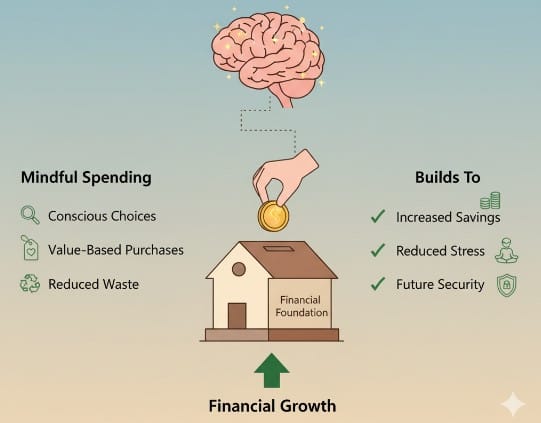
Mindful spending isn’t about strict deprivation or denying yourself small joys. It’s a deliberate approach to money that replaces impulse with intention, reactions with routines, and worry with control. In 2025—when subscription services, “buy now” buttons, and rapid lifestyle inflation make it easy to lose track—practicing mindful spending is one of the fastest ways to create a stable, lasting financial foundation.
This article explains the psychology behind mindful spending, shows real-life examples, and gives practical, step-by-step actions you can apply today to transform how you spend and save.
What is Mindful Spending?
Mindful spending means making purchase decisions with awareness and purpose. It’s about asking simple questions before every transaction:
- Do I need this?
- Does this align with my values or goals?
- Will this purchase move me toward a stronger financial future or away from it?
Instead of reacting to marketing triggers or emotional impulses, mindful spenders design habits and systems that support long-term priorities—whether that’s building an emergency fund, paying down debt, or saving for a home.
Why Mindful Spending Matters More Than Ever
H3: Small Decisions, Big Outcomes
Daily micro-decisions—coffee runs, impulse buys, auto-renewed subscriptions—compound. A seemingly harmless $5 or $15 purchase repeated monthly becomes a major annual expense. Mindful spending transforms hundreds of small leaks into meaningful savings.
H3: Emotional Resilience and Financial Health
Spending is often emotional. Anxiety, boredom, or social comparison can drive purchases. Mindful spending trains the brain to pause, reducing emotional spending and strengthening financial resilience.
Case Study: From Habit-Driven Spending to a Solid Safety Net
Meet Leila, a 31-year-old project manager.
- Problem: Leila lived paycheck-to-paycheck despite a steady salary. She had multiple subscriptions and frequent online shopping habits triggered by social feeds.
- Approach: Leila committed to a 90-day experiment in mindful spending. She tracked every expense, canceled unused subscriptions, and instituted a 48-hour rule for non-essential purchases.
- Outcome: After three months Leila freed up £320/month—she placed this into a high-yield savings account and paid down a credit card. Within a year she had a three-month emergency fund and felt far less financial anxiety.
Lesson: Small, consistent mindful adjustments created large, sustainable improvements.
The Science Behind Why Mindful Spending Works
- Attention & Awareness: Neuroscience shows that conscious attention changes habits. Tracking and reflecting create new neural pathways that reduce automatic spending.
- Delay & Friction: Introducing a short delay (e.g., 24–72 hours) increases the chance you’ll rethink impulse buys. That pause reduces impulsive dopamine-driven purchases.
- Value Alignment: When spending is tied to personal values (family, security, learning), purchases are more satisfying and less likely to be regretted.
Practical Steps to Practice Mindful Spending (Actionable)
1. Track Everything for 30 Days 🧾
Use an app (YNAB, Mint, or a simple spreadsheet) and log every transaction. Awareness is the foundation of change.
How to do it: Export bank statements, categorize transactions, and review weekly.
2. Implement the 48-Hour Rule ⏳
For non-essential purchases, wait 48 hours before buying. Often the impulse fades and you avoid buyer’s remorse.
3. Audit Subscriptions Quarterly 🔎
Many subscriptions renew silently. Review and cancel services you don’t actively use. Consider family plans or cheaper alternatives.
4. Budget With Purpose (Not Punishment) 🎯
Use a values-based budget: give every pound a job (essentials, savings, investments, fun). The 50/30/20 rule is a starting point—customize it to your goals.
5. Create “Savings Goals” Instead of “No-Spend” Rules
Replace deprivation with purpose. Save for a specific goal (trip, emergency fund, home deposit). Goals make sacrifices feel meaningful.
6. Automate Good Habits 🤖
Automate transfers to savings, retirement accounts, and bill payments. Automation reduces decision fatigue and protects savings from impulse.
7. Use Cash or a Prepaid Card for Discretionary Spending
When you physically separate discretionary money, you create natural friction that curbs impulse buys.
8. Plan for “Joy Money”
Allocate a small, guilt-free monthly amount for treats. This reduces the urge to splurge unexpectedly.
How to Handle Emotional Spending
- Identify triggers: Track mood before purchases—boredom, stress, social envy.
- Replace behavior: Swap shopping with a short walk, journaling, or a call to a friend.
- Set micro-goals: When you resist an impulse, reward yourself in a non-financial way to reinforce the behavior.
Tools & Resources to Make Mindful Spending Easier
- Apps: YNAB, Mint, Emma, PocketGuard (spending tracking and budgeting).
- Subscription managers: Truebill, Bobby (identify recurring payments).
- Savings builders: High-yield savings accounts, round-up features (Monzo/Starling/Klarna features or others depending on region).
- Books & courses: “Atomic Habits” by James Clear for habit design; behavioral finance courses to learn decision-making.
Mindful Spending and Bigger Financial Goals
Mindful spending is the lever that accelerates larger goals: debt freedom, investing, and financial independence. When you reduce waste and align spending with values, you free up capital for saving and investing—compounding benefits over time.
Example: Redirecting £200/month into an investment with a 6% annual return grows significantly over 10–20 years versus spending that money on fleeting purchases.
Common Mindful Spending Myths (and Reality)
- Myth: Mindful spending means never having fun.
Reality: It’s about intentional enjoyment—spending on what matters and cutting what doesn’t. - Myth: Small savings don’t matter.
Reality: Compound effects of small monthly savings are massive over time. - Myth: Mindful spending requires willpower alone.
Reality: It’s habit design—use systems, automation, and environment tweaks to succeed.
Next-Level Strategies (For People Who Want to Accelerate)
- Value-based spending plan: Reallocate funds monthly to match values (education, health, family).
- Quarterly financial check-ins: Review goals, reallocate funds, and celebrate milestones.
- Public accountability: Share progress with a friend or community to increase follow-through.
- Periodic ‘spend freezes’: Try 7–14 day freezes once per quarter to reset habits and evaluate wants vs needs.
Conclusion
Mindful spending is more than a budgeting technique—it’s a lifestyle shift that creates long-term stability, reduces anxiety, and accelerates your financial goals. By combining awareness, small behavioral changes, and systems like automation and budgeting, you can build a resilient financial foundation that withstands life’s surprises.
🔑 Interactive Question: What one spending habit would you change today if it meant saving an extra £100–£300 per month? Share below and let’s learn from each other!
Call to Action (CTA)
Ready to try mindful spending? Start today with a 30-day spending audit—download a free tracking template (CSV/Google Sheets) and a 48-hour rule checklist to get you started. If you want, I’ll create the downloadable template tailored to your currency and goals—tell me which country/currency you use and I’ll build it for you.