Introduction
Minimalism is often associated with decluttering your home and living simply—but it’s also a powerful financial strategy.
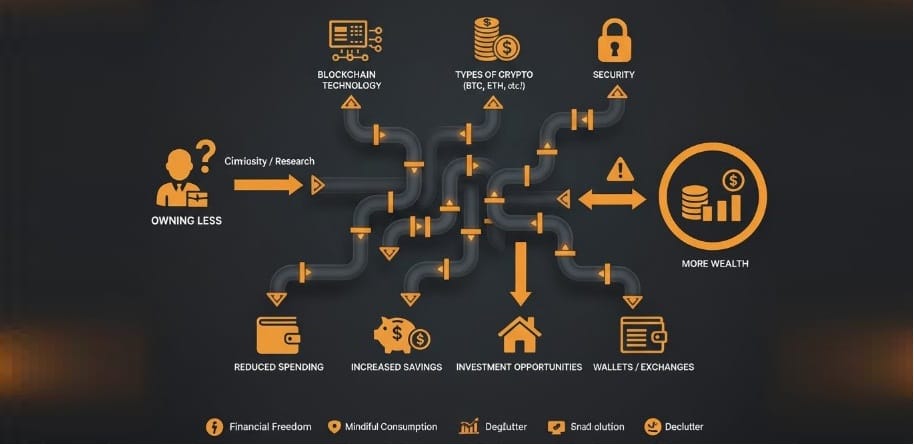
By owning less, you reduce unnecessary expenses, focus on what truly matters, and create opportunities to build wealth, save, and invest.
This guide explores how minimalism and money intersect, and why embracing simplicity can lead to long-term financial freedom.
1. The Connection Between Minimalism and Wealth
Minimalism encourages conscious choices—both in lifestyle and spending.
Financial Benefits:
- Reduced Spending: Fewer possessions mean fewer purchases and lower maintenance costs.
- Increased Savings: Less consumption frees up money for investments or emergency funds.
- Clarity and Focus: Fewer distractions allow better financial decision-making.
- Long-Term Wealth: Smart, intentional spending supports wealth accumulation over time.
💡 Example: Choosing a quality, multi-purpose wardrobe instead of fast fashion saves hundreds—or thousands—of dollars annually.
2. Reducing Expenses Without Sacrificing Quality of Life
Minimalism isn’t about deprivation—it’s about prioritizing value.
Practical Tips:
- Audit monthly expenses and cut unnecessary subscriptions.
- Buy durable, multipurpose products instead of cheap, disposable ones.
- Focus on experiences rather than material items.
- Avoid impulse purchases by waiting 24–48 hours before buying.
💡 Pro Tip: Ask yourself: “Will this purchase bring long-term value or temporary satisfaction?”
3. Embracing a Minimalist Mindset
The mindset shift is just as important as the physical decluttering.
Key Principles:
- Intentionality: Spend and invest consciously.
- Quality over Quantity: Choose better, fewer items.
- Contentment: Avoid comparing yourself to others’ lifestyles.
- Sustainability: Less consumption benefits both your wallet and the environment.
⚖️ Mindset Tip: Financial minimalism is about living below your means to create opportunities for wealth growth.
4. Minimalism and Budgeting
A minimalist approach to money makes budgeting simpler and more effective.
Strategies:
- Track all income and expenses to identify waste.
- Automate savings and investments to ensure consistent growth.
- Use a zero-based budget to allocate every dollar purposefully.
- Limit lifestyle inflation—even as income rises, maintain spending discipline.
💡 Example: Saving $500 a month consistently can accumulate over $30,000 in 5 years with basic interest or investment growth.
5. Investing the Savings
Minimalism creates surplus funds that can be directed toward wealth-building.
Opportunities:
- Stock market investments (ETFs, mutual funds)
- Real estate (rental properties, REITs)
- Digital income streams (blogging, courses, affiliate marketing)
- Retirement accounts (401(k), IRA, or equivalent)
⚡ Pro Tip: Automate investments to make your money work while you maintain a minimalist lifestyle.
6. Simplifying Financial Decisions
Owning less reduces decision fatigue, which can lead to better money management.
Examples:
- Fewer shopping choices save time and mental energy.
- Simplified investments reduce stress and errors.
- Streamlined lifestyle encourages intentional financial goals.
💬 Insight: Less clutter equals clearer financial priorities, which directly supports wealth accumulation.
7. Minimalism and Digital Wealth
Minimalism isn’t limited to physical possessions—it applies to digital consumption and business as well.
Applications for Bloggers or Digital Entrepreneurs:
- Focus on one monetization strategy at a time (ads, digital products, courses).
- Limit tools and subscriptions to essentials.
- Reduce content overload; prioritize high-quality output.
⚡ Tip: Digital minimalism ensures maximum ROI from both time and money.
8. Common Pitfalls to Avoid
❌ Confusing minimalism with extreme frugality
❌ Ignoring long-term investments in pursuit of cutting costs
❌ Hoarding items or cash without purpose
❌ Focusing solely on money without balancing life satisfaction
✅ Rule of Thumb: Minimalism is about intentional living—spending and saving wisely, not deprivation.
9. Final Thoughts
Minimalism and money go hand in hand: owning less can free up resources, reduce stress, and create opportunities to build wealth and financial freedom.
Live intentionally. Spend consciously. Invest consistently.
The less you own, the more control and freedom you have to grow your wealth and live a fulfilled life.