Introduction: Aging in the Digital Age
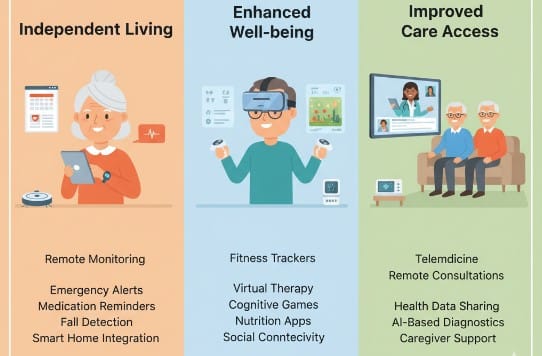
Aging is no longer just about slowing down — it’s about living longer, healthier, and more independently. Thanks to smart health technology, elderly people today can monitor their well-being, stay connected with loved ones, and even detect medical issues before they become emergencies.
From wearable devices to AI-driven health apps, technology is reshaping how seniors experience aging. Far from being intimidating, smart health tech is becoming a lifeline for independence and dignity.
Let’s explore how these innovations are empowering the elderly — and what it means for families, caregivers, and society as a whole.
Why Smart Health Tech Matters for Seniors
For many elderly individuals, challenges like mobility limitations, chronic illnesses, and isolation can reduce quality of life. Smart technology offers solutions by:
- Increasing independence: Seniors can manage health without constant assistance.
- Enhancing safety: Wearables and sensors detect falls, heart irregularities, or unusual activity.
- Improving connection: Video calls, reminders, and apps keep them linked to family and caregivers.
👉 Example: Evelyn, 78, uses a smartwatch that monitors her heart rhythm. When it detected an irregular heartbeat, her doctor was alerted, preventing a serious complication.
Key Smart Health Technologies Empowering the Elderly
1. Wearable Health Devices
Smartwatches and fitness trackers go beyond counting steps:
- Monitor heart rate, blood oxygen, and sleep patterns.
- Detect falls and send alerts to emergency contacts.
- Remind seniors to take medication on time.
🔹 Pro Tip: Choose wearables with large displays and simple interfaces for senior-friendly use.
2. Smart Home Health Systems
Smart homes are becoming health hubs:
- Voice assistants can remind seniors to take medication.
- Smart pill dispensers track usage and prevent missed doses.
- Motion sensors alert caregivers if unusual inactivity is detected.
3. Telehealth & Remote Monitoring
Video consultations allow seniors to connect with doctors without traveling. Paired with remote monitoring tools, doctors can access real-time data like blood pressure or glucose levels.
👉 Case study: Harold, 82, living in a rural area, now uses telehealth to manage diabetes. His glucose monitor syncs directly with his doctor, reducing hospital visits by half.
4. AI-Powered Health Apps
AI is helping seniors stay proactive about their health:
- Chatbots answer medical questions 24/7.
- Predictive algorithms spot early warning signs of disease.
- Personalized exercise and diet plans keep seniors active.
Benefits Beyond Health
Reduced Caregiver Stress
Smart health tech eases the burden on families and caregivers, providing peace of mind with instant updates.
Social Connection
Video calls, virtual fitness classes, and even VR experiences help combat loneliness — one of the most pressing issues for elderly well-being.
Cost Savings
By preventing hospitalizations and enabling early interventions, these technologies can significantly reduce healthcare costs for families and healthcare systems.
Challenges to Consider
1. Digital Literacy
Not all seniors are comfortable with new tech. Training and intuitive design are essential.
2. Privacy & Security
Health data is sensitive. Devices must prioritize encryption and privacy compliance.
3. Accessibility & Cost
High-tech solutions can be expensive. Making them affordable and widely available remains a key challenge.
Conclusion: A Smarter, Healthier Future for Aging
Smart health technology is no longer just a trend — it’s a revolution in how we age. By empowering elderly individuals with independence, safety, and dignity, these innovations redefine what it means to grow older.
The future isn’t about technology replacing human care. It’s about technology supporting humans — giving seniors, families, and caregivers the tools to live better, longer lives.
🔑 Which smart health technology do you think will have the biggest impact on elderly care in the next 5 years? Share your thoughts below.
✅ Light CTA: Want more insights into how technology is shaping our future? Subscribe to our Tech for Life Newsletter for weekly updates on AI, health innovations, and digital well-being.