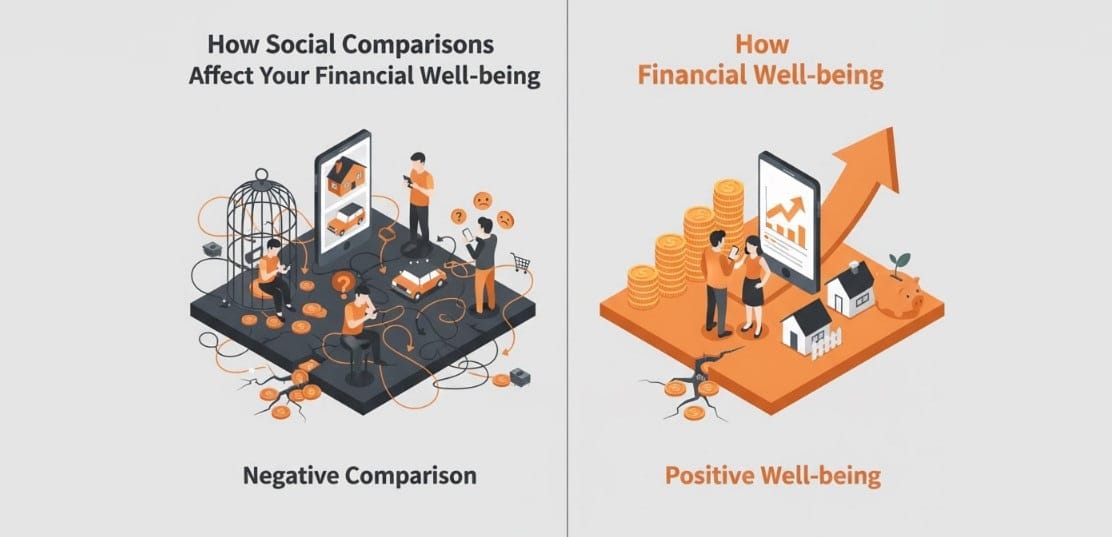
It’s human nature to compare ourselves to others. Social comparison helps us understand our place in the world — or at least it did in small communities.
Today, social media and hyper-connected lifestyles make comparison constant. Every post, story, and video can trigger thoughts like:
- “They’re earning more than me.”
- “I’ll never be able to afford that.”
- “Everyone else seems financially ahead.”
This constant measuring can subtly undermine your financial well-being.
1. The Psychology Behind Social Comparison
Social comparison theory, a well-studied psychological concept, explains that we evaluate ourselves by measuring against others.
While healthy in moderation, overexposure can create:
- Envy — seeing someone else’s success triggers dissatisfaction
- Shame — feeling “less than” due to others’ achievements
- Anxiety — worrying about financial inadequacy
This emotional load often leads to poor financial choices and self-sabotage.
2. The Emotional Cost of Comparing Finances
Constant comparison impacts your mental health and behavior:
- Stress and Anxiety: Fear of falling behind or being “less successful.”
- Financial Jealousy: Competing with others instead of focusing on your goals.
- Impulse Spending: Trying to “keep up” with peers or trends.
- Avoidance: Ignoring your finances to escape uncomfortable truths.
These consequences can affect both short-term spending and long-term wealth building.
3. Social Media: The Amplifier of Comparison
Social media platforms highlight curated successes:
- Luxury vacations, cars, and homes
- Entrepreneurial wins and income claims
- Trendy lifestyles and experiences
This constant exposure creates unrealistic benchmarks.
You end up comparing your behind-the-scenes to someone else’s highlight reel — a recipe for stress and poor financial choices.
4. Behavioral Consequences
Social comparison can distort financial decisions:
- Overconsumption: Spending to match others’ perceived lifestyle.
- Debt accumulation: Borrowing to maintain appearances.
- Risky investments: Following trends without due diligence.
- Delayed financial planning: Focusing on competition instead of personal goals.
The hidden cost is not just money — it’s reduced clarity, autonomy, and emotional resilience.
5. Recognizing When Comparison Is Harmful
Signs that social comparison is affecting your financial well-being:
- Constantly checking others’ financial achievements
- Feeling anxious or inadequate after seeing others’ posts
- Making spending decisions based on peers’ behavior
- Feeling stuck or demotivated about your own financial goals
Awareness is the first step toward reclaiming your financial mindset.
6. Strategies to Protect Your Financial Well-being
1. Define Your Own Financial Success
Focus on your values and goals instead of others’ milestones.
2. Limit Social Media Exposure
Curate feeds to include content that educates or inspires, not stresses you.
3. Celebrate Small Wins
Track progress privately — even small achievements matter.
4. Reframe Comparison
Use it as inspiration, not as judgment. Ask:
“What can I learn from this?” rather than “Why am I behind?”
5. Practice Mindfulness
Pause before spending, investing, or making decisions. Recognize emotional triggers linked to comparison.
7. Building a Healthy Money Mindset
True financial well-being comes from:
- Awareness of emotional triggers
- Aligning financial decisions with values, not peer pressure
- Rebuilding a sense of security independent of external validation
- Measuring progress against yourself, not others
When you stop comparing, your financial decisions become more intentional, less reactive, and more sustainable.
Conclusion
Social comparisons are natural, but when unchecked, they silently erode financial well-being.
By creating boundaries, practicing awareness, and focusing on personal goals, you can protect your money mindset and emotional health.
Real financial freedom is measured not by how you stack up to others, but by how well you manage, grow, and appreciate what you have.