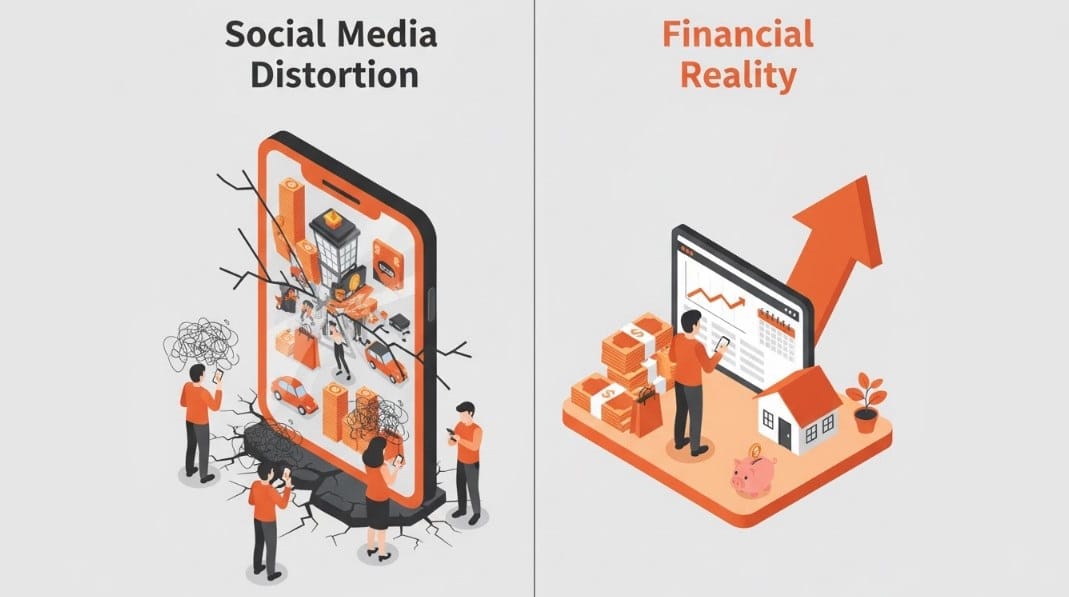
We live in a world where our sense of success is shaped by what we scroll through.
Luxury vacations, new cars, designer outfits, and “six-figure entrepreneurs” dominate our feeds—creating an illusion that everyone else is richer, happier, and more successful than we are.
But behind every highlight reel is a hidden story.
Social media doesn’t just distort how we see others—it reshapes how we see ourselves and our financial reality.
1. The Rise of the Digital Wealth Illusion
On platforms like Instagram, TikTok, and YouTube, wealth isn’t just shown—it’s performed.
Creators display luxury as proof of success, and the algorithm rewards it with engagement.
The result?
A distorted version of financial normalcy, where everyday stability feels like failure.
We forget that:
- Many “luxury lifestyles” are funded by debt, sponsorships, or borrowed items.
- Aesthetics replace authenticity—success becomes a performance.
- Financial stress hides behind curated perfection.
We don’t compare our real life to other people’s real life.
We compare our reality to their highlight reel.
2. The Psychology of Financial Comparison
Humans are wired for comparison.
Social media amplifies that instinct 24/7.
Every scroll becomes a micro-comparison—triggering emotional and neurological responses tied to envy, inadequacy, and motivation.
This phenomenon, known as “social comparison theory,” shows that constant exposure to others’ curated wealth:
- Decreases satisfaction with your own life
- Increases spending to “keep up”
- Creates chronic anxiety and shame around money
When wealth becomes a visual competition, authentic financial goals are replaced by performative ones.
3. The Hidden Cost: Emotional Spending and Lifestyle Inflation
Social media doesn’t just affect how you think about money—it changes how you use it.
Seeing constant displays of affluence leads to emotional spending—purchasing not for utility, but for validation.
This drives lifestyle inflation, where:
- You earn more, but never feel richer
- You spend more, to maintain an online image
- You lose clarity about what truly fulfills you
The danger isn’t just debt—it’s emotional disconnection from what money actually means to you.
4. The Algorithmic Trap: How Platforms Exploit Financial Insecurity
Social media thrives on emotionally charged content.
Posts that trigger envy, fear, or desire get more engagement—because those emotions keep us scrolling.
This creates a feedback loop:
- You see exaggerated wealth →
- You feel behind →
- You consume more →
- The algorithm feeds you more of the same.
In other words, your insecurity becomes data.
The system profits when you feel financially inadequate.
5. The “Fake It Till You Make It” Economy
There’s a growing industry built on appearing successful.
From rented Lamborghinis to fake brand sponsorships, many online creators invest more in looking rich than in being financially secure.
This creates what psychologists call “status anxiety”—a persistent worry about not looking successful enough.
The problem?
The line between authentic growth and digital illusion becomes blurred.
And when success is measured by optics, financial health quietly erodes behind the scenes.
6. The Emotional Fallout: Financial Shame and Paralysis
When your self-worth is tied to comparison, no number feels like enough.
Symptoms of digital financial distortion include:
- Avoiding your bank balance out of guilt
- Feeling like your progress is never enough
- Equating likes and followers with success
- Chasing quick money fixes instead of long-term strategy
Financial shame thrives in silence—and social media reinforces that silence by making vulnerability look like weakness.
7. Reconnecting with Real Financial Values
To escape this distortion, you must reclaim your definition of success.
Start by asking:
- What does enough look like for me?
- What financial milestones actually align with my values?
- How much of my desire for wealth is emotional, not practical?
Grounding yourself in emotional awareness protects you from digital illusion.
True wealth isn’t loud—it’s calm, quiet, and deeply personal.
8. Building a Conscious Relationship with Social Media
Here’s how to build a healthier financial mindset in a digital world:
- Curate Your Feed Intentionally
Follow creators who promote financial education, transparency, and authenticity. - Practice Digital Detoxing
Regular breaks reduce comparison fatigue and recalibrate your self-worth. - Create Before You Consume
Focus on building your own goals and projects before scrolling others’. - Track Emotional Spending
Notice if purchases are triggered by online influence or internal desire. - Celebrate Quiet Progress
Real wealth often happens offline—like paying off debt or creating stability.
9. The Future of Digital Wealth Awareness
The next evolution of financial literacy isn’t just about budgets or investing—it’s about emotional digital awareness.
Understanding how algorithms, content, and psychology interact allows you to:
- Spend consciously
- Build wealth aligned with your identity
- Stay mentally free in a world built to monetize your attention
Social media isn’t inherently toxic—it’s how we engage with it that determines its power over us.
10. Final Reflection: Defining Wealth on Your Own Terms
True wealth is freedom—freedom from comparison, anxiety, and emotional manipulation.
When you stop measuring success by what others post, you begin to experience financial peace on your own terms.
The richest people online aren’t always those with the most followers—they’re the ones who know when to log off.
Real financial confidence doesn’t need validation.
It needs clarity, boundaries, and peace.