(And What It Means for Connection, Creativity, and Self-Expression in 2025)
🌍 Introduction: When Culture Went Digital
Once upon a time, culture was defined by geography — the languages we spoke, the food we shared, and the rituals that tied us to a place.
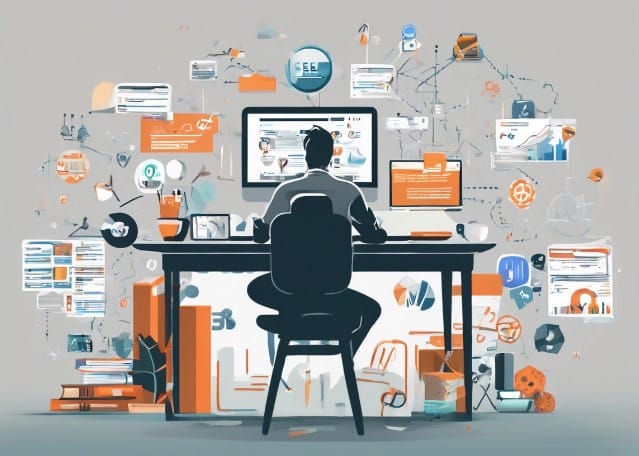
But in 2025, culture lives everywhere — and nowhere. It streams through our screens, scrolls through our feeds, and is shaped by algorithms that decide what we see and who we connect with.
Technology hasn’t just changed how we live; it’s rewired how we express who we are.
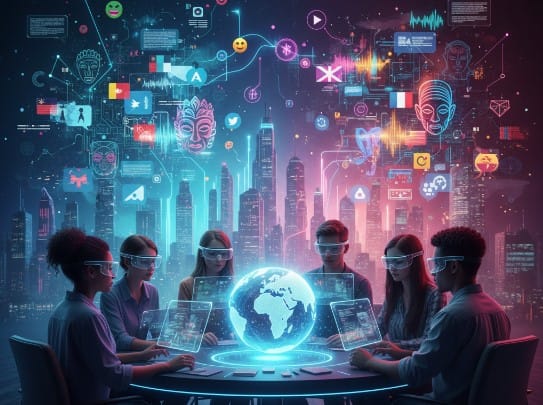
From TikTok trends to global gaming communities and AI-generated art, we now belong to cultures not of place, but of participation.
💬 1. The Rise of “Digital Tribes”
Social media has turned the internet into a mosaic of micro-cultures — what sociologists now call digital tribes.
- Gamers, eco-minimalists, crypto traders, and digital nomads all form identity hubs where people share values, humor, and language.
- Platforms like Reddit, Discord, and TikTok amplify these tribes — allowing ideas to spread across borders in seconds.
- A Gen Z student in Morocco can share memes, slang, and music with someone in Brazil, shaping a global youth identity in real time.
🔹 Example: The global “Clean Girl” aesthetic or “Cottagecore” movement — born online — has become part of real-world fashion and lifestyle, blurring the boundary between digital trends and offline identity.
🧠 2. Algorithms and the New Cultural Gatekeepers
In the past, editors, teachers, and elders curated cultural knowledge.
Today, algorithms decide what content rises and what vanishes.
- AI-driven feeds on platforms like YouTube and Instagram personalize reality, showing each of us a slightly different version of culture.
- This personalization creates comfort but also fragmentation — we consume tailored content bubbles that reinforce our worldview.
- In 2025, even search results and music playlists are unique fingerprints of digital identity.
While this can empower creativity, it also raises questions:
Are we curating our culture — or are algorithms curating us?
🎨 3. The AI Renaissance: Creativity Without Borders
AI tools like ChatGPT, Midjourney, and Runway have unlocked a new era of creativity.
Anyone can now generate music, art, or storytelling with a few prompts.
- AI democratizes creation — turning cultural consumers into co-creators.
- Yet it also challenges traditional definitions of authenticity, authorship, and originality.
- A 2025 survey by Adobe found that 68% of Gen Z creators use AI tools weekly to enhance their digital projects.
🔹 Example: The viral “AI fashion week” in New York featured digital designers who had never sewn a real garment. The culture they built was virtual — but influential.
Technology isn’t killing creativity; it’s decentralizing it.
Culture now evolves at the speed of code.
🌐 4. Globalization vs. Localization
Technology connects billions, but it also raises the question — are we losing local identity?
- Streaming platforms expose audiences to global stories, yet regional languages and traditions risk fading.
- In response, creators are reclaiming local digital voices — from Indigenous TikTok educators to rural content collectives.
- The future of cultural identity will likely be hybrid: local roots expressed through global tools.
🔹 Example: The explosion of Korean pop culture (K-pop, K-dramas, K-beauty) shows how local creativity, when amplified by technology, can become a global movement.
💡 5. Digital Ethics and Identity Ownership
As our identities move online, data becomes cultural currency.
Who owns the digital version of you — your photos, art, voice, or even your AI likeness?
- Deepfakes, voice cloning, and synthetic media blur personal boundaries.
- Governments and tech companies are now defining “digital identity rights” — a legal frontier of cultural ethics.
- Protecting one’s digital persona will soon be as vital as protecting intellectual property.
In this sense, privacy and cultural sovereignty are the next big human rights topics of the digital age.
🧭 6. Redefining Belonging in a Virtual World
The digital world creates infinite communities — but also new loneliness.
Belonging is no longer about shared location, but shared attention.
- Online, people find acceptance in niche spaces — from fandoms to mental health circles.
- Yet virtual connection doesn’t always translate to emotional intimacy.
- The challenge for 2025 and beyond: how to stay digitally connected without becoming emotionally disconnected.
✨ Conclusion: Technology as a Cultural Mirror
Technology doesn’t erase culture — it amplifies who we already are.
It reveals our creativity, biases, dreams, and divisions.
The digital age is not replacing identity — it’s remixing it.
The key is balance: to use technology as a bridge, not a boundary.
As culture evolves through screens and algorithms, the most human act remains the same — to tell our stories, share our values, and stay authentically connected.
🔑 Interactive Question:
How has technology shaped your cultural identity — made it more connected, more creative, or more confusing?
💬 CTA (Call-to-Action)
Culture is evolving faster than ever — and technology is leading the change.
👉 Join our free newsletter to explore how AI, digital work, and global creativity are shaping the next era of human identity.