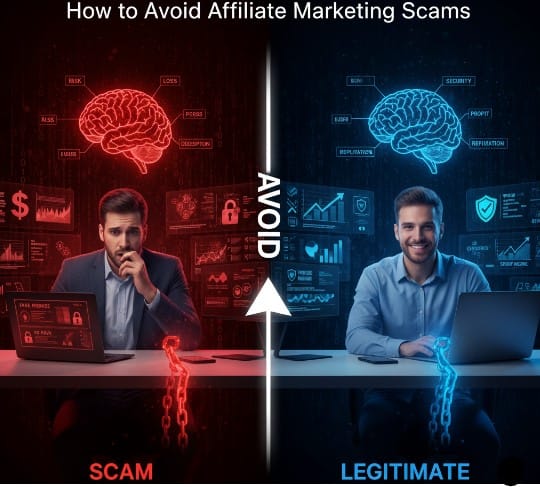
The Dark Side of Affiliate Marketing
Affiliate marketing is one of the most popular ways to earn money online. But with its growth comes a shadow side: scam programs that promise quick riches but deliver nothing.
From fake networks to programs that never pay, scams can destroy trust and waste precious time. Learning to spot them early is key to building long-term success.
Story: The $200 Lesson
Ahmed, a beginner blogger, signed up for an “exclusive affiliate program” that promised $500 commissions. The catch? He had to pay $200 upfront for “access.”
He never got a payout. The company vanished, and so did his money.
It was a painful lesson—but it taught him to research before joining.
Red Flags: How to Spot Affiliate Scams
1. Upfront Fees
Legit affiliate programs are free to join. If they charge you to promote their product, it’s likely a scam.
2. Overpromising Results
If a program says: “Make $10,000 in your first week—guaranteed!” 🚩 That’s not affiliate marketing—that’s manipulation.
3. No Real Product or Service
Some scams are just pyramid schemes disguised as “affiliate programs.” If there’s no genuine product/service being sold, run.
4. Unclear or Missing Payment Terms
Legit programs are transparent: they tell you commission rates, payment methods, and payout schedules. Scams? They avoid details.
5. Lack of Online Reputation
Search for reviews, testimonials, and forum discussions. If no one reputable talks about the program, it may not exist for long.
6. Shady or Unprofessional Website
Broken links, vague promises, or no company details = 🚩. A professional brand invests in a trustworthy platform.
Where to Find Safe Affiliate Programs
- Established Networks: ShareASale, CJ Affiliate, Impact, Rakuten, PartnerStack.
- Direct Brand Programs: Hosting companies, SaaS tools, online courses.
- Trusted Recommendations: Learn from bloggers, marketers, and communities with proven track records.
Practical Tips to Protect Yourself
✅ Research before joining—Google “[Program Name] + scam/review.”
✅ Stick with programs aligned to your niche and trusted by other creators.
✅ Test the product yourself if possible—your credibility depends on it.
✅ Don’t chase “too good to be true” payouts.
✅ Build multiple affiliate partnerships—never rely on one.
Why Avoiding Scams Protects Your Brand
Your readers and followers trust you. If you recommend shady products, you’ll lose credibility fast. In the digital world, trust is more valuable than commissions.
Protecting yourself from scams isn’t just about your wallet—it’s about your long-term reputation.
Conclusion: Choose Wisely, Grow Safely
Affiliate marketing is powerful, but only if you partner with the right programs. By learning to spot red flags and sticking with reputable offers, you’ll protect your income, time, and most importantly—your audience’s trust.
🔑 Question for You: Before joining your next affiliate program, what’s one step you’ll take to double-check its legitimacy?
Light CTA:
If this guide saved you from a scam, share it with another blogger or marketer. Together, we can make affiliate marketing safer and smarter.