Introduction
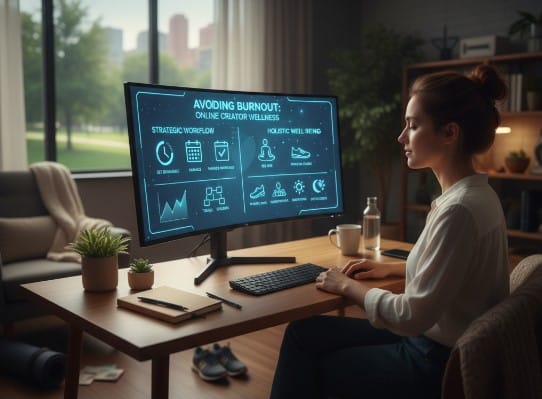
Working online or creating content offers flexibility, freedom, and income potential—but it can also lead to burnout if boundaries, self-care, and productivity strategies are neglected.
Burnout affects mental health, creativity, and income, making it crucial to recognize early signs and implement sustainable habits. This guide provides actionable strategies to stay energized, productive, and inspired in 2025 and beyond.
1. Recognize the Signs of Burnout
Early recognition allows you to address burnout before it worsens.
Common Signs:
- Chronic fatigue or lack of motivation
- Reduced creativity and quality of work
- Feeling overwhelmed or anxious about deadlines
- Ignoring self-care and personal time
Example:
- A freelance writer starts skipping meals, working late into the night, and struggles to finish articles.
Actionable Tip:
- Keep a weekly journal noting energy levels, mood, and productivity to identify patterns.
2. Set Clear Work Boundaries
Working online often blurs the line between personal and professional life.
Strategies:
- Define work hours and stick to them
- Create a dedicated workspace separate from personal areas
- Communicate boundaries to clients or collaborators
Example:
- A YouTuber blocks off 9 a.m.–5 p.m. for content creation, leaving evenings for rest and hobbies.
Actionable Tip:
- Use calendar tools to schedule breaks and downtime, ensuring work doesn’t spill into every hour.
3. Prioritize Tasks and Focus on High-Impact Work
Overloading yourself with low-value tasks can drain energy quickly.
Strategies:
- Identify tasks that directly contribute to income or growth
- Delegate or automate repetitive tasks like social media posting or email responses
Example:
- A blogger uses automation tools to schedule posts and focuses on content that drives traffic and affiliate revenue.
Actionable Tip:
- Implement the 80/20 rule (Pareto Principle): 20% of activities generate 80% of results. Focus on those first.
4. Take Regular Breaks and Digital Detoxes
Continuous screen time contributes to physical and mental exhaustion.
Strategies:
- Follow the Pomodoro Technique: work 25–50 minutes, then take a 5–10 minute break
- Schedule full digital detox days weekly or monthly
- Engage in offline hobbies like reading, walking, or exercising
Example:
- A freelance designer spends an hour each morning outdoors before starting work, boosting creativity and energy.
Actionable Tip:
- Set phone and social media limits using apps like Forest, Freedom, or Screen Time to avoid endless scrolling.
5. Focus on Health and Well-being
Mental and physical health directly impact productivity and creativity.
Strategies:
- Maintain regular sleep schedules
- Eat nutritious meals and stay hydrated
- Incorporate physical activity into your routine
- Practice mindfulness or meditation for stress management
Example:
- A content creator starts each day with a 15-minute meditation and a short walk, improving focus and reducing anxiety.
Actionable Tip:
- Treat self-care as essential work rather than optional downtime.
6. Manage Client and Audience Expectations
Unrealistic expectations can create stress and pressure.
Strategies:
- Clearly communicate timelines, deliverables, and boundaries
- Avoid overcommitting to multiple clients or projects simultaneously
Example:
- A freelancer sets clear weekly deliverables with clients, leaving buffer time for unexpected delays or creative blocks.
Actionable Tip:
- Use contracts or agreements to formalize expectations, reducing stress and potential conflicts.
7. Connect with Supportive Communities
Isolation is common in online work and content creation.
Benefits:
- Encouragement, accountability, and advice
- Opportunities to share challenges and celebrate wins
- Networking for collaboration and inspiration
Example:
- A YouTuber joins a content creator Discord group to exchange ideas, find motivation, and reduce feelings of isolation.
Actionable Tip:
- Participate in peer groups or online communities aligned with your niche or interests.
8. Schedule Creative and Personal Projects
Focusing solely on paid work can stifle creativity and motivation.
Strategies:
- Dedicate time to personal projects or experimentation
- Explore hobbies unrelated to work to recharge creativity
Example:
- A blogger experiments with short stories unrelated to their niche, which boosts overall writing creativity.
Actionable Tip:
- Schedule 1–2 hours per week for personal projects or skill development to maintain inspiration and motivation.
Conclusion
Avoiding burnout as an online worker or content creator requires intentional routines, boundaries, self-care, and community support. By recognizing early signs, prioritizing high-impact work, taking breaks, and nurturing health, you can maintain energy, creativity, and long-term success.
🔑 Interactive Question:
Which burnout-prevention strategy could you implement this week to feel more energized and motivated in your work?
CTA:
Start implementing these burnout-prevention strategies today—set clear boundaries, take breaks, and prioritize well-being to stay motivated and productive in the long term.