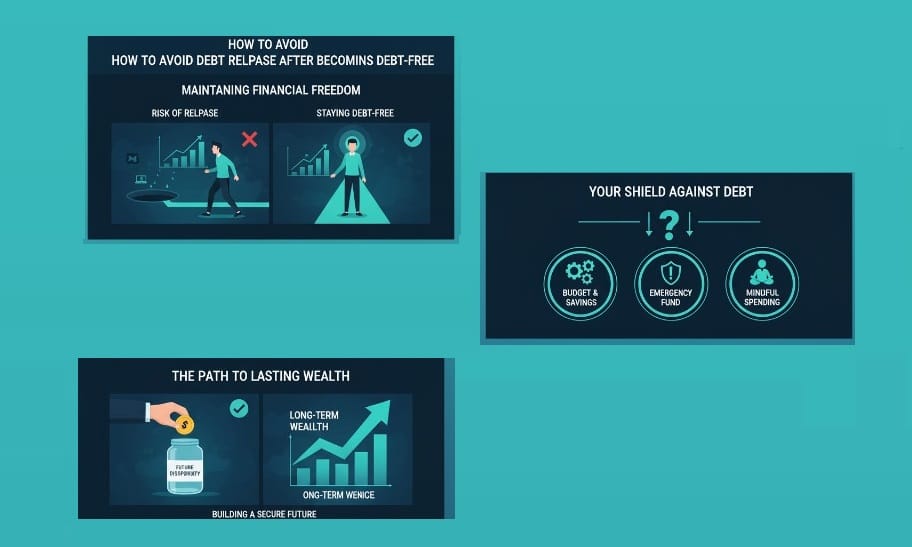
Paying off debt is an incredible achievement, but for many, the real challenge begins after becoming debt-free. Without proper habits and financial planning, it’s easy to fall back into debt, undoing months or even years of effort.
This article explores practical strategies to avoid debt relapse, build lasting financial stability, and maintain a healthy relationship with money.
Why Debt Relapse Happens
Even after becoming debt-free, several factors can lead to falling back into debt:
- Lifestyle Inflation
- When income increases, spending often rises too. Without discipline, new expenses can accumulate quickly.
- Lack of Emergency Fund
- Unexpected expenses like car repairs, medical bills, or home maintenance can push you back into borrowing.
- Impulse Spending
- Emotional spending or retail therapy can erode savings.
- Poor Financial Habits
- Ignoring budgeting, tracking expenses, or financial planning increases vulnerability.
Case Study: Avoiding Debt Relapse
Meet Maya, a 34-year-old teacher:
- Maya paid off $25,000 in credit card debt over three years.
- Without a plan for maintaining her finances, she almost overspent during a vacation and holiday season.
- By creating a realistic budget, building an emergency fund, and setting spending limits, she avoided slipping back into debt.
Key takeaway: Long-term financial freedom requires intentional habits and planning beyond debt repayment.
Step 1: Maintain a Budget
- Continue tracking income and expenses, even after paying off debt.
- Allocate funds for essentials, savings, and discretionary spending.
- Use apps like YNAB, Mint, or PocketGuard to monitor financial health.
Step 2: Build and Protect an Emergency Fund
- Aim for 3–6 months of living expenses in a high-yield savings account.
- This fund acts as a financial buffer against unexpected costs.
Step 3: Practice Mindful Spending
- Pause before purchases and ask: “Do I truly need this, or is it an impulse?”
- Focus on value-driven purchases that align with your long-term goals.
Step 4: Avoid Lifestyle Inflation
- When income rises, resist the urge to upgrade everything immediately.
- Prioritize saving, investing, and meaningful spending over luxury upgrades.
Step 5: Automate Savings and Investments
- Automate transfers to savings accounts, retirement funds, or investment accounts.
- Automation removes the temptation to spend excess income and ensures long-term growth.
Step 6: Continue Financial Education
- Read books, blogs, and attend webinars about personal finance.
- Staying informed helps you make better decisions and avoid common pitfalls.
Step 7: Set Financial Goals
- Short-term goals: building a vacation fund, purchasing a new home, or investing.
- Long-term goals: retirement planning or passive income streams.
- Goals provide direction and purpose, reducing the likelihood of unnecessary spending.
Bonus Tips
- Track Your Progress – Regularly review net worth and savings growth.
- Celebrate Milestones Wisely – Reward yourself without overspending.
- Seek Support – Financial advisors, communities, or accountability partners help maintain discipline.
- Use Cash Envelopes – For discretionary spending, limiting overspending risk.
Conclusion
Becoming debt-free is only the beginning of your financial journey. By maintaining a budget, building an emergency fund, practicing mindful spending, and avoiding lifestyle inflation, you can enjoy long-term financial freedom and prevent debt relapse.
🔑 Interactive Question for Readers:
What strategies have you used to stay debt-free after paying off loans or credit cards? Share your experience and tips below!