Introduction
If you’re running an online store, you already know how hard it can be to attract new customers. But did you know the easiest way to grow your revenue might be to simply increase the value of each order?
That’s where upselling and cross-selling come in.
When done right, these strategies not only raise your average order value (AOV) but also enhance the customer experience by helping shoppers find products that genuinely fit their needs.
In this guide, we’ll explore how to create upsell and cross-sell offers that actually work — without annoying your customers or hurting your brand’s reputation.
💡 What Are Upselling and Cross-Selling?
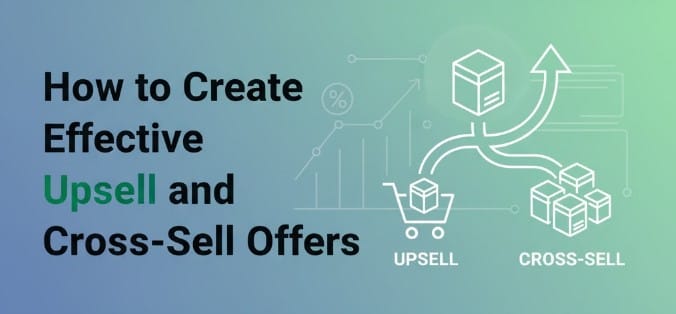
Although they often go hand-in-hand, upselling and cross-selling are two distinct strategies:
🔹 Upselling:
Encouraging customers to purchase a higher-end version of the product they’re considering.
Example: Suggesting a laptop with more storage or a premium plan with extra features.
🔹 Cross-Selling:
Recommending complementary products that enhance the main purchase.
Example: Offering a phone case and screen protector when someone buys a smartphone.
Both techniques aim to increase customer satisfaction and order value by providing relevant, helpful suggestions.
💰 Why Upselling and Cross-Selling Work
These techniques are backed by consumer psychology and behavioral economics.
Here’s why they’re so effective:
🧠 1. Leverages the Buyer’s Momentum
Once customers are in “buy mode,” they’re more open to adding related or upgraded items.
❤️ 2. Improves Customer Experience
Helpful recommendations make shopping smoother and more satisfying.
💸 3. Increases Average Order Value (AOV)
Every additional item or upgrade increases your total revenue per transaction.
🤝 4. Builds Trust
When done with genuine care, these offers show customers that your brand understands their needs — not just their wallets.
⚙️ How to Create Effective Upsell and Cross-Sell Offers
🔹 Step 1: Understand Your Customer Journey
Before suggesting anything, identify where and when in the buying process customers are most receptive.
Common touchpoints include:
- Product pages
- Shopping cart
- Checkout page
- Post-purchase email
Each stage requires a different approach.
Example: On a product page, offer a premium version. During checkout, suggest accessories.
🔹 Step 2: Match Relevance with Intent
Relevance is everything. Customers ignore irrelevant offers.
✅ Good Example:
Customer buys a camera → You offer a tripod or memory card.
❌ Bad Example:
Customer buys a blender → You offer sunglasses.
The offer must feel natural and helpful, not random or forced.
🔹 Step 3: Offer Clear Value
Customers must see the benefit of upgrading or adding items.
Ways to show value:
- Display “before vs after” comparisons
- Use bundled savings (“Buy together and save 15%”)
- Highlight better features or results
🧩 Example:
“Upgrade to our Pro Plan and get 2x faster processing + priority support.”
🔹 Step 4: Use the Right Timing and Placement
Where you show the offer can make or break the sale.
Best places to upsell or cross-sell:
- Product pages → suggest premium versions
- Cart or checkout → show add-ons or accessories
- Thank-you page or follow-up email → offer complementary products post-purchase
🧠 Tip: Test placements — sometimes a subtle “Complete the Look” section works better than an intrusive pop-up.
🔹 Step 5: Personalize Your Offers
Use customer data and behavior to tailor recommendations.
Personalization examples:
- Show “frequently bought together” items
- Recommend based on past purchases or browsing history
- Use customer segmentation (e.g., returning vs new buyers)
Tools like Shopify’s “Product Recommendations”, ReConvert, or LimeSpot can automate this process.
🔹 Step 6: Make It Easy to Accept
Even the best offer fails if the user experience is clunky.
✅ Simplify the upsell process:
- Add one-click “Add to Cart” buttons
- Use clear visuals and pricing
- Avoid redirecting to new pages unnecessarily
Example: Amazon’s “Add both to Cart” is the gold standard for frictionless cross-selling.
🎯 Examples of Effective Upsell and Cross-Sell Offers
| Type | Example | Why It Works |
|---|---|---|
| Upsell | “Upgrade to Premium for 20% more power.” | Clear added value |
| Cross-Sell | “Add matching shoes to complete your outfit.” | Complements the main product |
| Bundle | “Buy a phone + case + charger and save 10%.” | Simplifies decision-making |
| Post-Purchase Offer | “Loved your planner? Get refills at 15% off!” | Builds loyalty and repeat sales |
💬 The Psychology Behind Upselling and Cross-Selling
🧭 Anchoring Effect
When you show the high-priced item first, the standard version feels like a better deal — or customers might go for the upgrade if the difference is small.
🎁 Reciprocity
If your offer feels helpful and generous (like saving time or money), customers feel more inclined to accept it.
⏰ Urgency & Scarcity
Time-limited or low-stock add-ons can boost conversions.
Example: “Add this item now — only 3 left in stock!”
🪄 Social Proof
Show what others are buying.
Example: “Customers who bought this also bought…”
📊 How to Measure Success
Track these key metrics to understand what’s working:
| Metric | Description | Goal |
|---|---|---|
| Average Order Value (AOV) | Average revenue per order | Increase over time |
| Upsell Conversion Rate | % of users accepting the upsell | Aim for 10–20% |
| Cross-Sell Rate | % of users adding suggested items | 5–15% typical range |
| Customer Satisfaction | Feedback on relevance | Positive sentiment |
Use A/B testing to experiment with offers, placement, and design.
⚠️ Common Mistakes to Avoid
- ❌ Offering irrelevant products
- ❌ Being too pushy or using aggressive pop-ups
- ❌ Overcomplicating checkout
- ❌ Ignoring post-purchase upselling opportunities
- ❌ Forgetting to track and optimize
Remember: your goal is value enhancement, not hard selling.
🚀 Advanced Strategies
🧮 1. Bundle Smartly
Group high-demand items with slow-moving inventory to move stock and boost sales.
🤖 2. Use AI Tools
AI-powered recommendation engines (like Clerk.io or Nosto) can predict the most relevant upsells automatically.
🎯 3. Email Upsells
Send personalized follow-ups like:
“You bought X last week — here’s something to make it even better.”
🛍️ 4. Subscription Add-ons
Offer recurring upsells like refills, replacements, or service extensions.
🌟 Conclusion
Upselling and cross-selling aren’t just sales tactics — they’re customer experience enhancers when done thoughtfully.
By offering relevant, valuable, and well-timed recommendations, you can:
- Boost your average order value 💰
- Strengthen customer relationships 🤝
- Increase satisfaction and retention 💎
Start small, test consistently, and always prioritize what benefits your customer.
Because when they win — you win too.