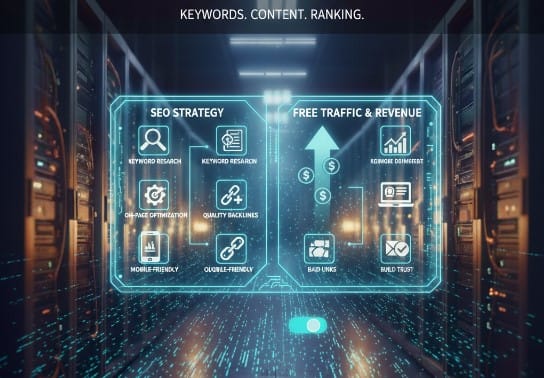
Introduction: Why Free Traffic Beats Paid Ads
Affiliate marketing can feel like a constant battle between investing money in ads and finding ways to get free clicks. Paid ads can burn through your budget fast, especially if you’re still testing products. But there’s a smarter long-term strategy: SEO (Search Engine Optimization).
By ranking your content in Google, you can drive free, consistent traffic to your affiliate links without spending a dollar on ads. In 2025, SEO is more competitive than ever — but also more rewarding if you do it right. Let’s break down exactly how to make it work. 🚀
Step 1: Choose the Right Keywords (Go Beyond “Best X”)
Too many affiliates only target obvious keywords like “best laptops” or “top weight loss products”. Those are ultra-competitive.
👉 How to Do It Smarter:
- Use free tools like Google Keyword Planner, Ubersuggest, or AnswerThePublic.
- Target long-tail keywords (e.g., “best budget laptops under $500 for students 2025”).
- Think about user intent: Are they researching, comparing, or ready to buy?
💡 Mini Example: Instead of writing “Best Running Shoes”, target “Best Running Shoes for Flat Feet in 2025”. Less competition + higher conversion rates.
Step 2: Create Content That Solves Problems
Google rewards helpful, people-first content. If your blog post or video genuinely solves a problem, you’ll climb the rankings.
👉 What Works Best:
- Comparison posts: “Product A vs Product B – Which is better?”
- How-to guides: Tutorials that show solutions while linking to tools.
- Listicles & reviews: Honest reviews with pros, cons, and experiences.
💡 Pro Tip: Don’t just write — add charts, screenshots, or short demo videos to keep readers engaged longer.
Step 3: Optimize On-Page SEO
Good keywords aren’t enough — your page needs to be structured for Google to understand it.
👉 Quick SEO Checklist:
- Put the keyword in your title, URL, meta description, and first paragraph.
- Use H2 & H3 headings with related keywords.
- Add internal links to other posts on your site.
- Use alt text for images.
Step 4: Build Backlinks (The Free Way)
Backlinks = other sites linking to your content. They’re like votes of confidence for Google.
👉 Free Strategies:
- Guest post on blogs in your niche.
- Answer questions on Quora or Reddit, linking back naturally.
- Reach out to bloggers for link swaps or collaborations.
- Create shareable infographics and offer them free to other sites.
💡 Case Study: One affiliate marketer created a free “budget calculator tool” and offered it to bloggers. In return, he earned 50+ backlinks in under three months.
Step 5: Don’t Forget About YouTube SEO 🎥
Google owns YouTube — and videos rank fast. Creating short tutorials or reviews with affiliate links in the description is one of the fastest ways to drive traffic.
👉 Tips for Ranking on YouTube:
- Use your keyword in the video title and description.
- Add timestamps and captions.
- Encourage likes, comments, and shares (engagement = ranking boost).
Step 6: Capture Traffic for the Long Term
Free traffic is great, but you don’t want people to visit once and disappear.
👉 How to Keep Them:
- Build an email list with a freebie (checklist, guide, template).
- Use a pop-up or inline opt-in form on your blog.
- Keep sending valuable content + affiliate links over time.
Conclusion: SEO = Free Traffic That Scales
Affiliate marketing is not about quick wins. Paid ads may bring instant results, but SEO builds lasting, compounding traffic that costs nothing once you rank. By mastering keywords, creating helpful content, and building backlinks, you can turn your blog or channel into a traffic machine — and your affiliate links into steady passive income.
🔑 What’s the biggest SEO challenge you’ve faced so far in your affiliate journey — finding keywords, creating content, or building backlinks?
✅ Light CTA
👉 Want to master SEO for affiliate marketing? Subscribe to our Affiliate Growth Newsletter for weekly strategies, keyword hacks, and case studies that show you how to rank higher and earn more.