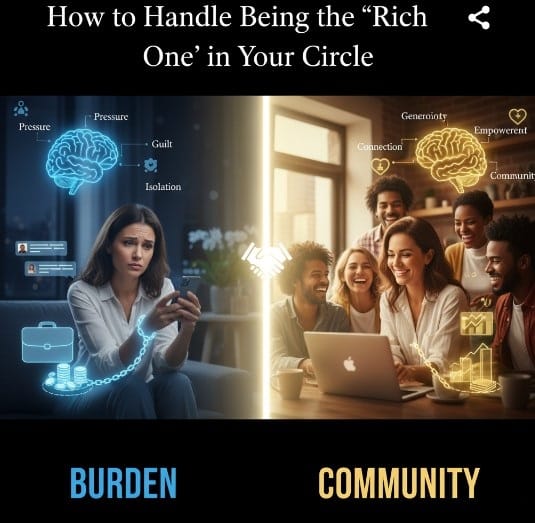
The Silent Struggle of Being “The Rich One”
Money changes relationships—even when nobody talks about it.
If you’ve ever been labeled the “rich one” in your circle, you know the hidden challenges: friends expecting you to pick up the bill, the guilt of having more, or the awkwardness of declining expensive requests.
It’s a role many never expect, yet it comes with its own emotional toll.
Why Being the “Rich One” Feels Complicated
- Unspoken Expectations
Friends may assume you can “always afford it,” putting pressure on you to spend more. - Guilt and Shame
Even if you’ve worked hard for your money, you may feel guilty when others struggle. - Fear of Resentment
You worry friends might envy you—or worse, distance themselves. - Identity Shifts
When your financial situation changes, it can feel like you have changed in their eyes too.
A Relatable Example
Take Daniel, who landed a high-paying job in his late twenties. Suddenly, dinners out turned into him covering the check “because you can afford it.” At first, he didn’t mind—but after months, resentment built up.
The turning point came when he realized: money doesn’t define friendship, but silence about money can break it. He started setting clear but kind boundaries, which actually strengthened his relationships.
How to Handle This Role With Grace
1. Acknowledge the Difference—Without Making It Awkward
It’s okay to admit: “I’m in a different spot financially, but I still value doing things we all enjoy.” This normalizes the gap without shame.
2. Set Financial Boundaries Early
- If friends suggest expensive trips, offer alternatives: “How about a weekend getaway instead of a week abroad?”
- Don’t let generosity become obligation.
3. Practice “Selective Generosity”
Covering dinner now and then? Great. Being expected to fund group activities? Draining. Give in ways that feel joyful, not resentful.
4. Don’t Downplay Your Success
Hiding or pretending to “have less” to fit in creates dishonesty. Be proud of your achievements, but humble in how you share them.
5. Cultivate Friendships Beyond Money
Suggest low-cost or free activities: hikes, potlucks, game nights. Remind your circle that connection matters more than the price tag.
6. Guard Against Resentment
If you start feeling used, pause. Ask: “Am I giving because I want to, or because I feel I have to?” Adjust accordingly.
The Emotional Balance
Being the “rich one” is less about your bank account and more about emotional navigation. It’s about balancing generosity with boundaries, pride with humility, and closeness with honesty.
Remember: true friends value who you are, not what you can buy.
Future-Proofing Friendships in 2025
As income gaps widen in today’s economy, more people will face this dynamic. The healthiest relationships will be those that talk openly about money instead of letting assumptions breed tension.
Conclusion: Wealth Doesn’t Have to Equal Distance
Having more money than your friends doesn’t have to create guilt or divide. With empathy, honesty, and healthy boundaries, you can keep friendships strong—without letting wealth become the elephant in the room.
🔑 Question for You: Have you ever felt like the “rich one” in your circle—and how did you handle the unspoken expectations?
Light CTA:
If this article resonated, share it with someone navigating financial differences in friendships. Sometimes, the best gift is perspective.