Introduction
The rise of online shopping has made e-commerce one of the most accessible and scalable digital income streams. Bloggers and digital entrepreneurs can leverage their platforms to launch stores selling physical products, digital goods, or dropshipping items.
A well-executed e-commerce store not only generates revenue but can also become a stable, long-term digital business.
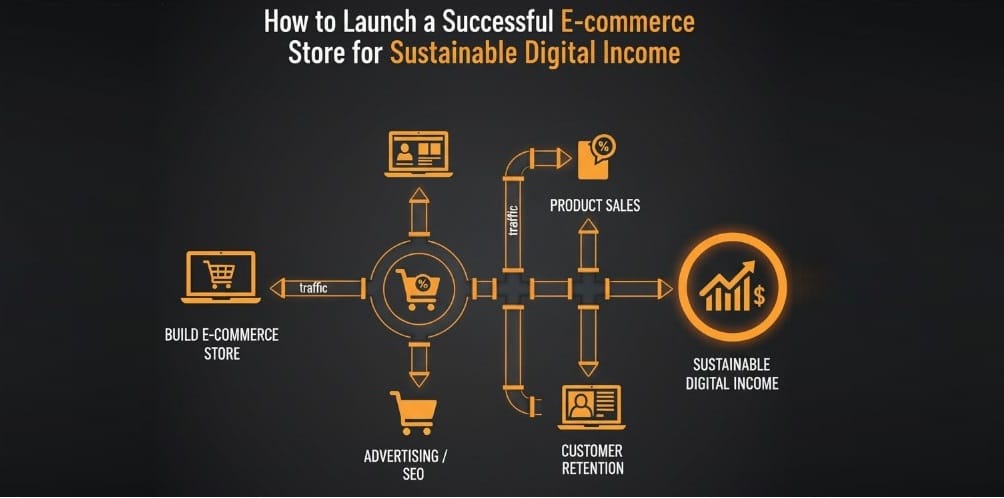
In this guide, we’ll explore step-by-step strategies to plan, launch, and grow your e-commerce store for sustainable income.
1. Understanding E-commerce as Digital Income
E-commerce is a form of digital income because it allows you to sell products online and reach a global audience without a physical storefront.
Key benefits for bloggers and online entrepreneurs:
- Low overhead with digital products or dropshipping
- Scalable revenue as your traffic grows
- Multiple income streams: physical goods, digital downloads, memberships
- Ability to integrate with existing blog audiences
💡 Example: A productivity blogger selling planners, digital templates, and AI tool guides can generate income directly from readers without leaving the blog platform.
2. Choosing Your Niche and Product
The foundation of a successful e-commerce store is a focused niche. Choose products that align with your blog and audience.
Steps to Identify Your Niche:
- Analyze your blog content to see what topics resonate most.
- Research demand using tools like Google Trends or Ahrefs.
- Validate your idea with surveys or social media polls.
- Decide between physical products, digital products, or dropshipping.
Popular E-commerce Products for Bloggers:
- Digital templates, ebooks, and courses
- Branded merchandise or print-on-demand items
- Niche tools, software, or subscriptions
- Curated bundles or exclusive resources
💡 Pro Tip: Start with one product line, perfect it, then expand gradually.
3. Setting Up Your E-commerce Platform
Choosing the right platform ensures smooth operations and a professional storefront.
Popular Options:
| Platform | Best For | Notes |
|---|---|---|
| Shopify | All-in-one hosted store | Easy setup, scalable, lots of integrations |
| WooCommerce (WordPress) | Bloggers with WordPress sites | Full control, flexible, wide plugin ecosystem |
| BigCommerce | Growing stores | Enterprise-level features, scalable |
| Gumroad / Podia | Digital products | Simple setup, handles payments and downloads |
| Printful / Printify | Print-on-demand | Integrates with Shopify, Etsy, or WooCommerce |
⚙️ Pro Tip: For bloggers, WooCommerce is ideal because it integrates directly with your existing content and audience.
4. Designing Your Store for Conversions
Your e-commerce store should be user-friendly, visually appealing, and optimized for sales.
Best Practices:
- Clean, mobile-friendly design
- Clear product images and descriptions
- Simple navigation and search functionality
- Highlight featured products or bestsellers
- Add trust signals: reviews, guarantees, secure checkout
- Use strong call-to-actions: “Buy Now,” “Get Instant Access”
💡 Pro Tip: Test different layouts and placements using heatmaps or A/B testing to boost conversions.
5. Marketing Your E-commerce Store
Even the best store won’t sell without strategic marketing.
Proven Strategies:
- Blog Integration: Promote products naturally within relevant posts.
- Email Marketing: Send product announcements, offers, or content-driven upsells.
- Social Media: Share demos, tips, or behind-the-scenes content.
- SEO Optimization: Target product-related search terms to attract organic traffic.
- Paid Ads: Google Ads or Facebook campaigns can drive targeted traffic quickly.
- Collaborations: Partner with influencers or bloggers in similar niches.
💡 Pro Tip: Use your blog as the main traffic driver for your e-commerce store, leveraging trust and authority.
6. Pricing and Profit Margins
Set prices that are competitive but sustainable. Consider production cost, platform fees, and audience willingness to pay.
Pricing Tips:
- Digital products: high margin, low overhead
- Physical products: account for shipping, handling, and returns
- Dropshipping: factor in supplier costs and shipping times
- Bundle or upsell for higher transaction value
📈 Example: Selling an ebook for $29 with minimal cost per unit can yield 90–95% profit margin, while a physical planner might net 40–50% after costs.
7. Managing Operations and Customer Experience
Efficient operations ensure your customers have a smooth experience.
Key Areas:
- Inventory & fulfillment: For digital products, delivery is automatic. For physical products, streamline shipping and packaging.
- Customer support: Quick response to inquiries builds trust and repeat customers.
- Order tracking: Keep customers informed via automated notifications.
- Returns & refunds: Clear policies reduce disputes and improve reputation.
💡 Pro Tip: Automate as much as possible to save time and reduce errors.
8. Scaling Your E-commerce Business
Once your store is generating sales, focus on growth.
Strategies:
- Expand product lines with complementary items
- Launch premium products or subscriptions
- Implement loyalty programs or referral incentives
- Collaborate with other creators or brands
- Invest in marketing campaigns to reach new audiences
💬 Insight: Scaling isn’t just about more traffic—it’s about increasing revenue per visitor through upsells, bundles, and higher-value offerings.
9. Common Mistakes to Avoid
❌ Selling products unrelated to your audience
❌ Ignoring mobile optimization
❌ Neglecting product descriptions and images
❌ Overcomplicating checkout process
❌ Failing to track metrics and conversions
✅ Rule of Thumb: Focus on niche alignment, user experience, and analytics to build a sustainable business.
10. Final Thoughts
Launching an e-commerce store can transform your blog into a digital business with consistent revenue.
With a clear niche, strong product offerings, and smart marketing, bloggers can generate sustainable income while maintaining flexibility and authority in their field.
Plan strategically, serve your audience, and scale thoughtfully.
Your e-commerce store is not just a revenue stream—it’s the foundation of your digital income empire.