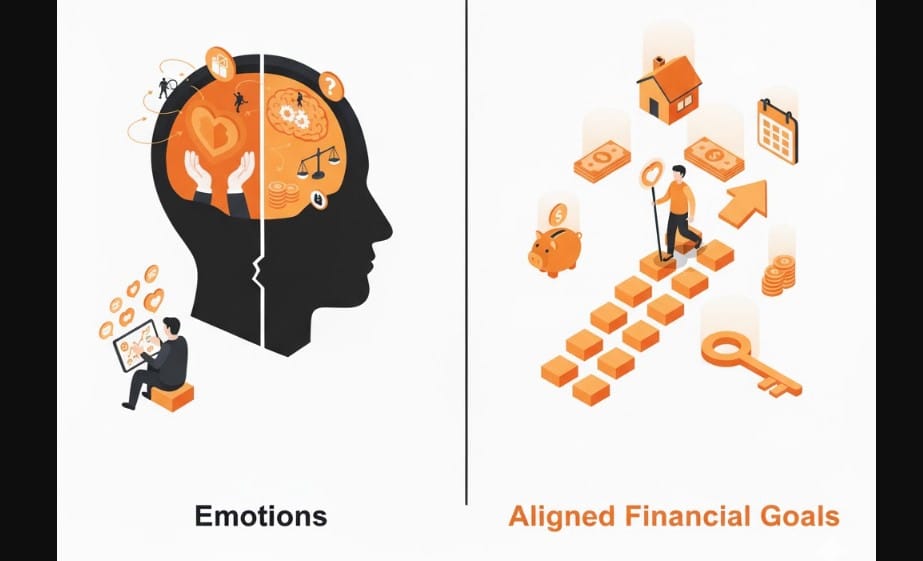
Most people set financial goals around numbers — how much to earn, save, or invest.
But few stop to ask the deeper question:
“Why do I want this goal in the first place?”
When your goals aren’t emotionally aligned, you end up chasing targets that don’t fulfill you — even if you achieve them.
Emotionally aligned financial goals blend logic with purpose. They reflect your values, emotional needs, and long-term vision — not just external expectations or financial trends.
1. The Problem with Traditional Goal Setting
Traditional financial advice focuses on what to achieve:
- Save X amount by age 30
- Invest X% of your income
- Reach X net worth
While these goals are useful, they often miss the why — the emotional driver that fuels discipline and consistency.
When your goals are disconnected from your deeper values, they feel like pressure, not purpose.
This leads to burnout, guilt, and sometimes financial avoidance.
To build lasting success, your money goals must align emotionally with who you are and what truly matters to you.
2. Understanding Emotional Alignment in Finance
Emotional alignment means your financial choices reflect your authentic values — not fear, status, or comparison.
Here’s what alignment looks like in practice:
| Misaligned Goals | Emotionally Aligned Goals |
|---|---|
| “I need to make six figures to feel secure.” | “I want consistent income that gives me freedom and peace.” |
| “I should invest in crypto because everyone is.” | “I invest in things I understand and believe in.” |
| “I’ll save aggressively because I fear the future.” | “I’ll save intentionally because I value stability.” |
Alignment transforms money from a stress source into a tool for expression and freedom.
3. Step 1: Identify Your Core Money Emotions
Start by exploring your emotional relationship with money.
Ask yourself:
- What emotions come up when I think about money — fear, guilt, pride, or joy?
- What financial experiences shaped how I feel about security and success?
- What kind of emotional life do I want money to support?
Your emotional answers are your compass.
They help you set goals that feel right instead of look impressive.
4. Step 2: Connect Goals to Personal Values
Financial goals become meaningful when they’re tied to your personal values.
For example:
- If you value freedom, focus on building passive income or flexible work options.
- If you value growth, prioritize investing in education or skill-building.
- If you value connection, save for shared experiences — not just possessions.
When your goals reflect your values, they naturally motivate you. You’re no longer forcing discipline — you’re following purpose.
5. Step 3: Redefine Success Emotionally
Wealth isn’t only about numbers. It’s about how money makes you feel — secure, peaceful, empowered, or generous.
Ask yourself:
“What emotional outcome do I want from this financial goal?”
Examples:
- Save not just for “retirement,” but for peace of mind.
- Pay off debt not just for “freedom,” but for self-respect.
- Grow income not just for “status,” but for security and creative freedom.
When you attach emotional meaning to your goals, every financial decision gains clarity and depth.
6. Step 4: Balance Emotion with Strategy
Emotion without structure leads to chaos. Structure without emotion leads to burnout.
The goal is balance.
Combine both sides:
- Heart: Why this goal matters to you.
- Mind: The specific, measurable steps to achieve it.
For example:
Emotion: “I want to feel calm and independent.”
Strategy: “I’ll build an emergency fund of 3–6 months to reduce financial anxiety.”
The alignment between feeling and framework creates sustainable motivation.
7. Step 5: Create an “Emotionally Informed” Money Plan
Here’s a simple framework to keep your goals aligned:
| Step | Question to Ask | Action Example |
|---|---|---|
| 1. Awareness | What emotion drives this goal? | “I want to feel stable.” |
| 2. Alignment | Does this goal reflect my values? | “I value simplicity, so I’ll automate my savings.” |
| 3. Structure | How can I measure progress? | “I’ll track monthly spending in categories that matter to me.” |
| 4. Reflection | How do I feel as I progress? | “I feel more peace than pressure — this goal fits.” |
Check in quarterly — not just with your finances, but with your emotions.
8. The Emotional ROI of Aligned Goals
When your goals align emotionally, your Return on Investment goes beyond money.
You gain:
- Clarity — no more chasing trends or external validation.
- Consistency — emotional alignment keeps you disciplined.
- Confidence — your financial path feels authentic.
- Peace — you trust your relationship with money.
That’s emotional wealth — the kind that no market fluctuation can take away.
Conclusion
Financial freedom isn’t just about having enough — it’s about feeling enough.
When your money goals align with your emotions and values, wealth becomes a form of self-expression, not self-protection.
You move from chasing success to living with intention.
Because the best financial plan isn’t just smart — it’s emotionally true.