Introduction
Working from home offers freedom, flexibility, and the ability to design your workspace exactly how you like. However, without a well-structured home office, freelancers can struggle with distractions, poor ergonomics, and decreased productivity.
In 2025, setting up an efficient home office goes beyond a desk and chair. It involves ergonomics, technology, organization, and mindset. This guide will walk you through everything you need to create a home office that maximizes focus, creativity, and output.
1. Choose the Right Space
- Dedicated Workspace: Avoid working from your bed or couch. A dedicated room or corner signals your brain that it’s work time.
- Natural Light: Position your desk near a window to boost mood, focus, and vitamin D intake.
- Minimize Distractions: Choose a quiet area away from TV, kitchen noise, or high-traffic zones.
Actionable Tip:
Even a small corner with a clear desk, good lighting, and storage can serve as a highly effective home office.
2. Invest in Ergonomic Furniture
- Desk: Adjustable-height desks allow you to alternate between sitting and standing.
- Chair: Choose a chair with lumbar support, adjustable height, and breathable fabric.
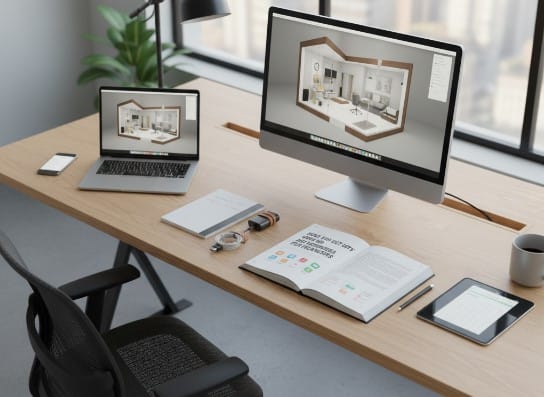
- Monitor & Laptop Setup: Screen at eye level reduces neck strain. Consider a monitor stand or docking station.
Example:
Many freelancers use sit-stand desks to prevent fatigue and improve circulation during long work hours.
Actionable Tip:
Invest in ergonomics early; it reduces long-term health issues like back pain and repetitive strain injuries.
3. Optimize Technology & Tools
- High-Speed Internet: Essential for video calls, uploading content, and smooth workflow.
- Quality Webcam & Microphone: For client calls, webinars, or content creation.
- Dual Monitors: Increase productivity by reducing constant tab switching.
- Cable Management: Keep cords organized to avoid clutter and distractions.
Actionable Tip:
Use apps like RescueTime or Notion integrated into your workflow to track tasks and productivity.
4. Personalize for Comfort & Focus
- Lighting: Use soft, adjustable lighting to reduce eye strain.
- Plants: Indoor plants improve air quality and enhance mood.
- Temperature & Ventilation: Keep the space comfortable to avoid fatigue.
- Decor: Minimal yet inspiring decor can boost creativity without cluttering your space.
Actionable Tip:
Incorporate small personal touches that make the office feel welcoming and motivating.
5. Organize Your Workflow
- Desk Layout: Keep essential tools within reach; store rarely used items elsewhere.
- Storage Solutions: Use shelves, drawers, and organizers to maintain a clutter-free space.
- Task Management: Digital tools like Trello, Asana, or Notion help track projects, deadlines, and priorities.
- Routine: Establish a consistent schedule to separate work time from personal time.
Example:
Freelancers who use a morning routine and end-of-day shutdown ritual report higher focus and less stress.
6. Implement Mental Boundaries
- Work Hours: Define clear start and end times to prevent overwork.
- Breaks: Use techniques like Pomodoro to schedule short breaks and prevent fatigue.
- Disconnect: Avoid checking work emails or Slack outside designated hours.
Actionable Tip:
Treat your home office like a professional environment — mentally transitioning in and out of work mode improves productivity and prevents burnout.
🔚 Conclusion
A well-structured home office in 2025 is a blend of ergonomics, technology, organization, and personal comfort. By designing a space that supports focus, creativity, and health, freelancers can maximize productivity while maintaining a healthy work-life balance.
🔑 Interactive Question:
What’s the one feature you think makes the biggest difference in a productive home office — ergonomic furniture, technology setup, or organization?
Light CTA:
Create your ideal home office today — enhance focus, comfort, and efficiency to thrive as a freelancer in 2025.