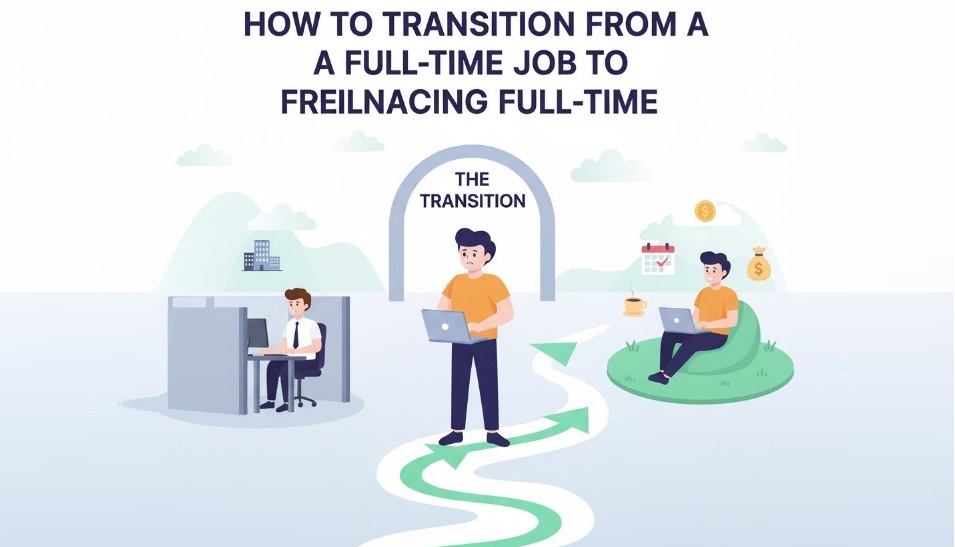
Introduction: The Leap from Employee to Entrepreneur
You’ve probably imagined it—the freedom to set your own schedule, choose your clients, and work from anywhere.
Freelancing full-time is a dream for many professionals, but making the leap from a stable 9–5 job to independent work can be intimidating.
The truth? Success doesn’t come from quitting overnight—it comes from strategic preparation and gradual transition.
In this guide, you’ll learn how to move from full-time employment to full-time freelancing smoothly, confidently, and financially secure.
1. Assess Your Readiness
Before quitting, take a realistic look at where you stand. Freelancing requires more than skill—it requires mindset, discipline, and financial planning.
Ask Yourself:
- Do I have marketable skills clients are willing to pay for?
- Am I comfortable working independently and managing uncertainty?
- Can I stay productive without external supervision?
💡 Pro Tip: Freelancing gives you freedom—but also full responsibility. Make sure you’re ready to handle both.
2. Build Your Freelance Skills and Portfolio While Employed
Don’t wait until after quitting to start freelancing.
Use your free time to build experience, clients, and confidence while still working your day job.
How to Start:
- Take small side projects through platforms like Upwork, Fiverr, or Toptal.
- Create a portfolio website showing your best work.
- Ask early clients for testimonials to build social proof.
💡 Strategy: Treat your early freelance work as your “soft launch” into independence.
3. Identify a Profitable Niche
Generalists struggle to stand out. To succeed as a full-time freelancer, you need a clear, profitable niche that aligns with your expertise and demand trends.
Find Your Focus:
- Combine your strongest skills with market needs.
- Research which niches are growing in 2025 (e.g., AI writing, UX design, data analysis, digital marketing).
- Position yourself as an expert in one area, not a “jack of all trades.”
💡 Pro Tip: Specialization allows you to charge higher rates and attract loyal clients faster.
4. Create a Financial Safety Net
Freelancing income fluctuates, especially in the first few months.
To avoid panic or early burnout, you need financial stability before quitting.
What to Do:
- Save at least 3–6 months of living expenses.
- Pay off or reduce high-interest debt.
- Estimate your minimum monthly income goal.
- Open a separate business bank account for freelance income.
💡 Tip: Money buys time—and time buys freedom to grow your freelance career properly.
5. Set Up a Business Foundation
Treat your freelance work like a business from day one.
Checklist:
- Choose a business name and domain.
- Create a professional website and portfolio.
- Set up invoicing tools like PayPal, Wise, or Wave.
- Learn basic tax and legal requirements in your country.
💡 Pro Tip: Use tools like Bonsai or AND.CO to manage contracts, proposals, and payments.
6. Build a Client Pipeline Before You Quit
One of the most common mistakes new freelancers make is quitting without clients lined up.
Start Building Relationships Early:
- Tell trusted contacts you’re taking freelance work.
- Join online communities or LinkedIn groups in your niche.
- Offer free consultations or audits to attract initial clients.
💡 Strategy: Aim to have at least 2–3 consistent clients before leaving your full-time job.
7. Plan Your Exit Strategically
Once you’ve built some savings, experience, and client relationships—it’s time to plan your transition carefully.
Smart Exit Steps:
- Choose a target quit date (3–6 months ahead).
- Inform your employer professionally and respectfully.
- Offer to freelance for them after leaving (many do this successfully).
- Prepare mentally for an adjustment period—both financially and emotionally.
💡 Pro Tip: Don’t burn bridges—your old job might become your first client or referral source.
8. Set Up Routines and Boundaries
After quitting, many freelancers struggle with structure.
Without clear routines, productivity and motivation can drop quickly.
Establish:
- Regular working hours and breaks.
- A dedicated workspace free from distractions.
- A daily task system using Notion, Trello, or ClickUp.
💡 Tip: Structure gives freedom meaning. Discipline sustains long-term success.
9. Price Your Services Confidently
When transitioning to full-time freelancing, it’s essential to charge professionally, not “beginner” rates.
Undervaluing your services can lead to burnout and stress.
Set Fair Rates:
- Research market averages for your field.
- Charge for value delivered, not just time spent.
- Review rates quarterly and adjust as your skills and demand grow.
💡 Pro Tip: Confident pricing signals expertise—cheap rates signal inexperience.
10. Keep Marketing Consistent
The biggest difference between a part-time and full-time freelancer is constant marketing.
Never stop promoting your services, even when busy.
Ways to Market Yourself:
- Publish portfolio updates and case studies.
- Post regularly on LinkedIn, X (Twitter), or Instagram.
- Maintain an email list of leads or past clients.
- Ask happy clients for referrals or testimonials.
💡 Strategy: Marketing isn’t a one-time action—it’s your ongoing engine for growth.
11. Prepare for Emotional and Mental Challenges
Freelancing brings freedom—but also uncertainty.
Some months may be busy, others quiet.
Learning to manage stress and self-motivation is crucial.
Stay Mentally Strong:
- Set realistic goals and celebrate progress.
- Network with other freelancers for support.
- Take breaks and maintain work-life balance.
💡 Tip: Freedom feels best when you protect your mental well-being.
12. Keep Learning and Adapting
Freelancing evolves fast. To stay competitive, invest in continuous learning.
Growth Habits:
- Take online courses (e.g., Coursera, Udemy, LinkedIn Learning).
- Stay updated with industry trends and tools.
- Experiment with new services or passive income ideas (like digital products).
💡 Pro Tip: Every skill you add increases your earning potential.
Conclusion: Freedom Comes from Preparation
Transitioning from a full-time job to freelancing isn’t about taking a leap of faith—it’s about taking calculated, confident steps.
By preparing financially, building a client base, and developing the right habits, you can create a freelance career that offers both freedom and stability.
Start small, plan smart, and when the time is right—take the leap knowing you’re ready.
Your new career as a full-time freelancer awaits. 🚀
Bonus: Your Freelance Transition Checklist
✅ Build portfolio and secure first clients
✅ Save 3–6 months of expenses
✅ Create business systems (invoicing, contracts, communication)
✅ Set clear work routines and boundaries
✅ Keep learning and marketing consistently
💡 Final Thought: Don’t wait for the “perfect moment.” Start preparing today—your freelance future depends on the steps you take now.