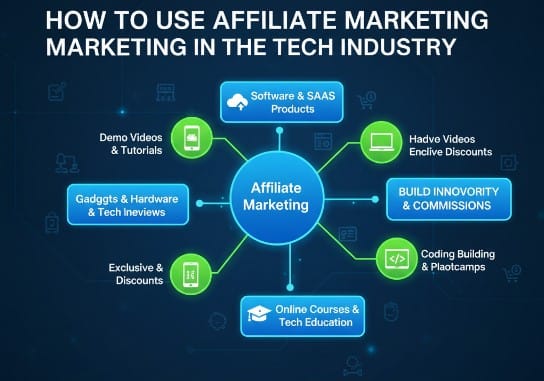
Introduction – Tech Meets Affiliate Marketing
The tech industry has always been at the forefront of innovation—but in 2025, it’s also becoming one of the most profitable spaces for affiliate marketing. With new SaaS products, AI-powered tools, gadgets, and cloud services launching daily, consumers and businesses are hungry for trusted recommendations.
If you’ve ever thought about combining your passion for tech with affiliate marketing, now is the perfect time. In this guide, we’ll break down practical strategies, real examples, and proven methods to help you succeed in the tech niche.
1. Why Affiliate Marketing Works So Well in Tech
- High demand & constant innovation → New software, apps, and devices are released every month.
- Recurring commissions → Many SaaS tools offer monthly or annual recurring affiliate payouts.
- Educated buyers → Tech audiences research before buying, making them receptive to detailed content.
- Evergreen potential → Tutorials, comparisons, and reviews stay relevant for years.
💡 Example: A blogger promoting cloud storage tools like Dropbox or Google Workspace can earn recurring commissions as long as users keep their subscriptions.
2. Choosing the Right Tech Products to Promote ⚙️
Not every product will convert. Focus on:
- SaaS & cloud tools (project management, CRM, AI tools)
- Software licenses (VPNs, antivirus, design software)
- Tech gadgets (wearables, smart home devices, productivity hardware)
- B2B solutions (enterprise software, automation platforms)
👉 Pro tip: Look for affiliate programs that offer recurring commissions (10–40%) instead of one-time payouts.
3. Content Strategies That Work in the Tech Industry
a) Comparison Articles
Tech buyers love to compare.
- Example: “Notion vs. Trello vs. Asana: Which Project Management Tool Wins in 2025?”
b) Tutorials & How-To Guides
Show users how to solve problems with tech tools.
- Example: “How to Use AI to Automate Your Marketing in 3 Steps.”
c) Video Reviews & Demos
YouTube and TikTok are goldmines for demonstrating products.
d) Case Studies & Success Stories
Share real-life examples of businesses improving with specific tools.
- Example: “How a Small Startup Grew 3x Faster Using [Tool Name].”
4. Building Trust Before Selling 🤝
The tech audience is skeptical—so building credibility is key:
- Test products personally before recommending.
- Provide screenshots, walkthroughs, or demo videos.
- Be transparent: highlight both pros and cons.
💡 Case Example: A reviewer who admits a tool’s limitations but still shows where it excels earns far more trust than one who overhypes it.
5. Platforms to Promote Tech Affiliate Products
- Blog/Website → SEO-driven articles that rank on Google.
- YouTube → Reviews, tutorials, and comparisons.
- LinkedIn → B2B SaaS promotion.
- Reddit & Tech Communities → Share guides where your audience already hangs out.
- E-mail Automation → Build a list and recommend tools over time.
6. Example Tech Affiliate Funnel 🚀
Let’s say you’re promoting a VPN software:
- Blog post: “Why You Need a VPN in 2025 (and the Best Options).”
- Free guide lead magnet: “Top 5 Online Security Tips.”
- Capture emails → send weekly content on digital privacy.
- Include your VPN affiliate link in emails and blog posts.
This way, you’re educating first, selling second—which always works better in tech.
7. Tools to Make You More Effective as a Tech Affiliate
- SEMRush / Ahrefs → Find profitable keywords in tech niches.
- Canva / Descript → Create videos and infographics.
- Pretty Links → Manage and cloak affiliate links.
- ConvertKit / ActiveCampaign → Automate email sequences.
Conclusion – Tech Affiliate Marketing is the Future 🌐
Affiliate marketing in the tech industry is booming, and it’s not slowing down anytime soon. By focusing on educational content, real-world case studies, and trusted recommendations, you can tap into an audience that’s eager to invest in digital tools and gadgets.
Whether you’re a blogger, YouTuber, or LinkedIn professional, the opportunities in 2025 are endless.
🔑 Interactive Question: Which tech product or SaaS tool would you feel confident recommending as an affiliate today—and why?