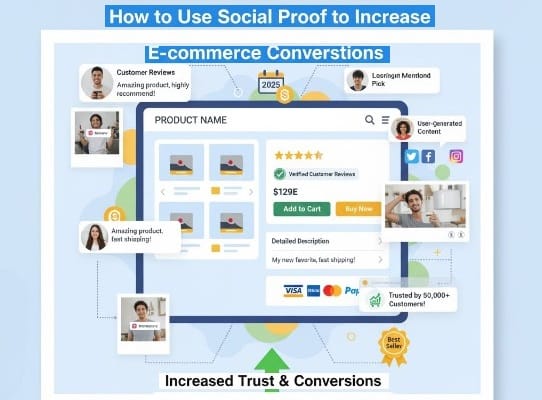
Introduction: Why Social Proof Is Your Secret Sales Weapon
Imagine walking into a restaurant and seeing it empty versus full of happy diners. Which one would you choose? That’s social proof in action.
In e-commerce, social proof helps potential customers trust your brand and increases the likelihood they’ll complete a purchase. In 2025, savvy online stores understand that reviews, testimonials, and user-generated content are more influential than flashy ads.
This guide will show you how to leverage social proof effectively, turning browsers into buyers, and creating a loyal customer base — without spending a fortune.
1. What Is Social Proof and Why It Works
Social proof is the psychological phenomenon where people look to others’ behavior to guide their own decisions.
In online stores, it can take the form of:
- Customer reviews and ratings
- Testimonials and case studies
- User-generated photos and videos
- Trust badges and endorsements
Why it works:
- Reduces perceived risk
- Builds trust instantly
- Creates a sense of belonging and community
Example:
A small apparel brand featured 5-star reviews and customer photos on their homepage. Conversion rates increased by 25% within a month.
2. Leverage Customer Reviews Effectively
Customer reviews are the backbone of social proof.
Best Practices:
- Show star ratings near the product title
- Display reviews prominently on product pages
- Include photos and videos from real customers
- Respond to reviews, even negative ones, to show credibility
Example:
A skincare brand noticed that products with at least 10 reviews sold significantly better than new listings without reviews.
Pro Tip: Encourage reviews by sending follow-up emails after purchase and offering incentives like discounts or loyalty points.
3. Use Testimonials and Case Studies
Testimonials give your brand a human voice and validate your claims.
- Highlight how your product solved a problem
- Include a customer photo, name, and location for authenticity
- Use case studies for more complex or high-ticket products
Example:
A small B2B e-commerce store selling ergonomic chairs showcased a testimonial from a home office user detailing improved posture and comfort. This helped potential buyers visualize the benefits.
4. Showcase User-Generated Content (UGC)
UGC is one of the most powerful forms of social proof because it shows real people enjoying your product.
- Encourage customers to share photos/videos with a branded hashtag
- Feature UGC on your product pages, social media, and emails
- Offer small incentives like discounts or recognition
Example:
A small jewelry brand reposted Instagram photos from happy customers. Not only did sales increase, but engagement and brand loyalty skyrocketed.
Pro Tip: Highlight a mix of UGC and professional images to maintain polish while keeping authenticity.
5. Highlight Numbers and Achievements
Numbers communicate trust and popularity effectively:
- “Over 10,000 happy customers”
- “Rated 4.8/5 by 500+ reviewers”
- “Top-selling product in 2025”
Example:
A small coffee brand displayed:
“Join 15,000+ coffee lovers who start their day with our blends.”
This simple statistic helped increase subscriptions and repeat orders.
6. Use Trust Badges and Endorsements
Trust badges show visitors your store is safe and credible:
- Payment security icons (Visa, Mastercard, PayPal)
- Money-back guarantee badges
- Press mentions or influencer endorsements
Example:
An electronics store saw a 10–15% lift in conversions after adding secure payment badges and media mentions to product pages.
7. Leverage Social Proof in Email Marketing and Ads
Don’t limit social proof to your website:
- Include reviews or testimonials in newsletters
- Feature UGC in paid social ads
- Use “most popular” or “best-seller” tags in campaigns
Example:
A skincare brand included a short review in a promotional email:
“I’ve tried dozens of serums, but this one really works!” — Emily R.
Click-through rates and conversions increased significantly.
8. Combine Scarcity and Social Proof
Scarcity amplifies the power of social proof. When people see that a product is popular and in limited supply, they’re more likely to act quickly.
Example Phrases:
- “50 customers purchased in the last 24 hours”
- “Only 3 left in stock!”
Pro Tip: Ensure your scarcity indicators are genuine — false urgency erodes trust.
9. Monitor, Test, and Refine
Social proof isn’t a one-time setup. Use analytics to see:
- Which reviews or testimonials drive conversions
- Which UGC performs best on product pages
- How trust badges impact cart abandonment
Pro Tip: Run A/B tests on different placements, styles, or wording to maximize effectiveness.
Conclusion: Social Proof Turns Browsers Into Buyers
In 2025, e-commerce success isn’t just about traffic — it’s about trust, credibility, and validation. Social proof does that for you, effortlessly influencing decisions and boosting conversions.
Even a small store can leverage reviews, testimonials, UGC, and trust signals to compete with the biggest brands.
🔑 Interactive Question: What type of social proof could you implement on your product pages today — reviews, UGC, or trust badges — to instantly increase conversions?
CTA: Start by adding one form of social proof to your top-selling product today. Track conversions over 30 days and refine as you go — small changes create big results.