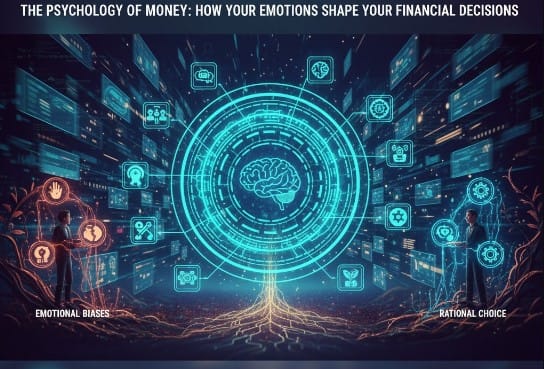
Introduction: Why Money Is More Emotional Than Logical
Money isn’t just numbers—it’s deeply tied to our emotions, values, and past experiences. From fear and greed to pride and insecurity, our feelings shape every financial decision we make. Understanding the psychology of money is key to building a healthier relationship with wealth and making smarter financial choices.
In this article, we’ll explore how emotions influence your finances, share relatable examples, and provide actionable strategies to make decisions driven by logic rather than impulse.
How Emotions Influence Financial Decisions
Your emotions often operate below conscious awareness, guiding behavior in ways you may not realize:
- Fear: Avoiding investments or oversaving to feel “safe.”
- Greed: Chasing high returns or trending assets without research.
- Stress: Impulsive purchases or poor financial planning.
- Pride: Overspending to impress others or keep up with peers.
💡 Example Story: Mark avoided investing in stocks for years because he feared losing money. When he finally invested, he overreacted to small market drops, selling at a loss—classic emotional decision-making.
Behavioral Patterns That Affect Money Management
- Loss Aversion: The pain of losing money feels stronger than the joy of gaining. This can lead to overly conservative or reactionary behavior.
- Overconfidence: Believing you “know best” can cause risky investments or ignoring expert advice.
- Anchoring: Fixating on a reference point, like a stock’s past high, can distort decisions.
- Herd Mentality: Following trends or social pressure rather than your personal plan.
💡 Tip: Awareness of these patterns is the first step to breaking them.
Practical Strategies to Manage Emotions in Finance
1. Set Clear Goals
Define your short-term and long-term financial objectives. Goals act as a rational framework for decision-making.
2. Build a Financial Plan
A structured budget, investment strategy, and emergency fund provide stability and reduce impulsivity.
3. Automate Decisions
Automating savings, investments, and bill payments removes emotional interference from routine financial actions.
4. Pause Before Big Decisions
Take 24–48 hours to evaluate major purchases or investments without emotional pressure.
5. Reflect on Past Mistakes
Keep a “financial journal” to track decisions, outcomes, and emotional triggers. Learning from past behavior helps avoid repeating errors.
💡 Pro Tip: Emotional awareness is as important as financial literacy. Understanding your money mindset can improve every financial decision.
Real-Life Applications
- Investing: Diversified, automated contributions reduce the impact of fear and greed.
- Spending: Implementing a 24-hour rule prevents impulsive purchases driven by excitement or stress.
- Debt Management: Structured repayment plans prevent emotional overspending while reducing stress.
💡 Example Story: Lisa automated her retirement contributions and monthly bills. Even during market volatility or unexpected expenses, she maintained her plan, showing how systems can neutralize emotional decisions.
Conclusion: Mastering the Psychology of Money
Your emotions will always influence money—but you can control the outcomes by combining self-awareness with structured financial strategies. Understanding the psychology of money empowers you to make rational, goal-aligned decisions while reducing stress, regret, and impulsive behavior.
🔑 Interactive Question: Which financial emotion—fear, greed, stress, or pride—has impacted your decisions the most, and how could awareness change your approach?
💡 CTA: Take a small step today: track one financial decision you made this week and reflect on the emotional factors that influenced it. Awareness leads to smarter money choices.