Introduction
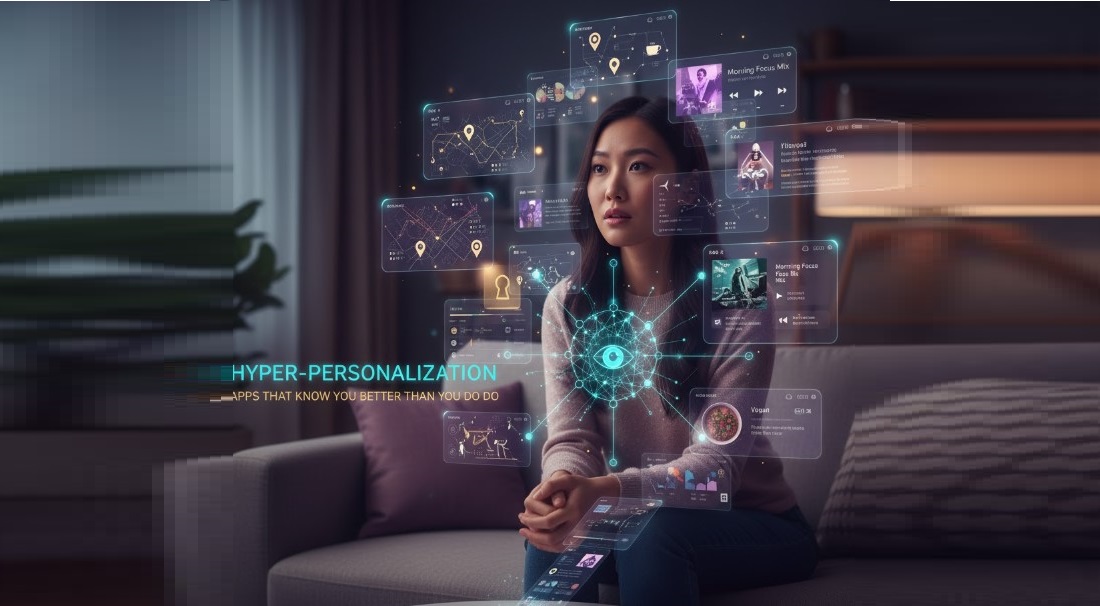
In today’s digital world, users expect more than just good design — they expect apps that understand and anticipate their needs. This is where hyper-personalization, powered by artificial intelligence (AI), steps in. By analyzing user data, preferences, and behavior in real time, AI-driven apps deliver uniquely tailored experiences that boost satisfaction, engagement, and retention.
What Is Hyper-Personalization?
Hyper-personalization goes beyond basic customization. While traditional personalization might greet you by name or recommend popular items, hyper-personalization uses AI, machine learning, and predictive analytics to create experiences that feel almost intuitive.
It involves:
- Real-time behavioral tracking
- AI-driven content recommendations
- Predictive insights into user needs
- Contextual adaptation based on time, location, and mood
How Mobile Apps Use AI for Hyper-Personalization
🧩 1. Behavior Analysis
AI models track and interpret how users interact with an app — from scroll depth and tap frequency to dwell time. This data reveals intent and helps tailor future interactions.
🎯 2. Predictive Recommendations
Apps use machine learning to anticipate what users will want next — whether it’s a song, product, or piece of content. Think of Spotify’s Discover Weekly or Netflix’s “Because You Watched…” lists.
💬 3. Dynamic Content and Messaging
AI adapts in-app messages, offers, and notifications to each user’s behavior pattern. For example, e-commerce apps can offer discounts just when a user hesitates to buy.
🌐 4. Context-Aware Personalization
Modern AI systems factor in contextual data like time of day, device type, and location to adjust app behavior dynamically — for example, suggesting nearby restaurants or adjusting screen brightness automatically.
Benefits of Hyper-Personalization
- Higher Engagement: Tailored content keeps users interested longer.
- Increased Conversions: Relevant offers and timing drive sales and actions.
- Improved Retention: Personalized experiences foster loyalty.
- Better Insights: Developers gain a deeper understanding of user intent.
Real-World Examples
- Spotify: Uses AI to generate playlists that reflect each user’s listening mood.
- Netflix: Personalizes movie covers and recommendations using deep learning.
- Amazon: Suggests products based on browsing, purchase history, and similar users.
- Duolingo: Adjusts lesson difficulty based on learner performance patterns.
Challenges and Ethical Concerns
While hyper-personalization improves user experience, it raises concerns about:
- Data privacy and consent
- Algorithmic bias
- User autonomy — when apps “decide” too much for the user
Balancing personalization with transparency and privacy is crucial for long-term trust.
The Future of Hyper-Personalized Apps
With advancements in on-device AI, federated learning, and privacy-preserving analytics, hyper-personalization will become smarter and safer. Tomorrow’s apps will not just react — they’ll proactively assist, helping users make decisions and achieve goals effortlessly.
✅ Conclusion
Hyper-personalization represents the next frontier in user experience. By combining data, AI, and human-centered design, mobile apps can create deeply individualized journeys that feel natural, intuitive, and uniquely personal. In the age of intelligent apps, understanding the user — and acting on that understanding — is the ultimate competitive advantage.