Introduction
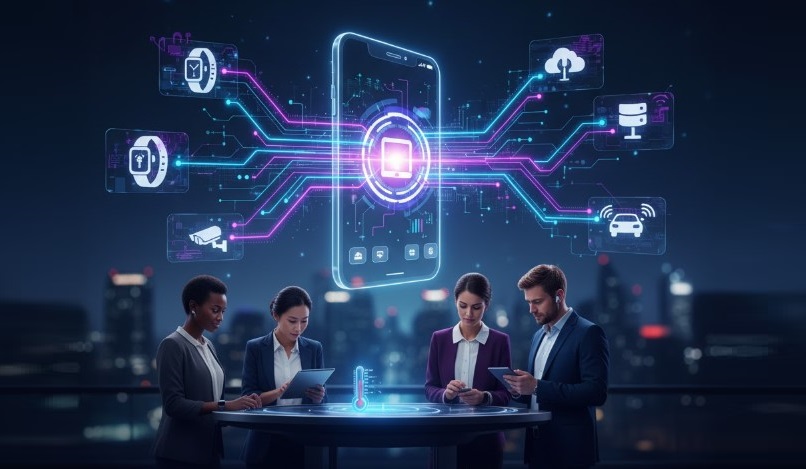
Mobile apps have come a long way from being standalone utilities. In 2025, they’ve become the central nervous system of the connected world. From smartwatches and home devices to cars and digital assistants, today’s apps orchestrate data, manage devices, and unify experiences across platforms.
This transformation marks the rise of ecosystem-based design — where the true value of an app lies not just in what it does alone, but in how it connects with everything else.
The Shift from Standalone to Ecosystem-Based Apps
The early era of mobile apps focused on single-purpose tools: a music player, a map, a messenger. But the digital landscape has matured. Now, users expect apps to:
- Sync seamlessly across devices.
- Control multiple connected products from one interface.
- Share data with other services for personalized experiences.
This is the foundation of the super-platform model — ecosystems where apps, hardware, and cloud services function as one.
Examples include:
- Apple’s ecosystem linking iPhone, Watch, AirPods, HomeKit, and Mac.
- Google Home / Nest integrating IoT and Android devices.
- Samsung SmartThings as a universal IoT control hub.
- Amazon Alexa as a voice-first platform controlling smart homes and wearables.
These ecosystems thrive not on isolated functionality, but interconnectivity — where each device or app strengthens the value of the others.
The Core Technologies Enabling Integration
🌐 1. Internet of Things (IoT)
IoT devices generate real-time data from homes, factories, vehicles, and wearables.
Mobile apps serve as user-friendly gateways, visualizing and managing that data.
Protocols like MQTT, Zigbee, and Matter make communication between devices possible, while cloud APIs enable seamless control from anywhere.
⌚ 2. Wearable Technology
Smartwatches, fitness trackers, AR glasses — all feed into the mobile ecosystem.
Apps aggregate biometric data (heart rate, sleep, steps, mood) and sync it with health dashboards, AI assistants, or insurance platforms.
Example:
Apple Health and Google Fit act as data hubs, integrating inputs from multiple wearable brands through shared APIs.
🏠 3. Smart Home & Ambient Computing
Voice assistants, lighting systems, thermostats, and appliances connect through mobile apps.
The goal: create a context-aware home that anticipates user needs — adjusting temperature, lighting, or security settings automatically.
☁️ 4. Cloud & Edge Integration
Cloud computing ensures data synchronization across devices, while edge processing (local computation on IoT nodes) reduces latency and enhances privacy.
Together, they form a hybrid architecture — global intelligence with local responsiveness.
Why Integration Matters
⚡ 1. Unified Experience
Users no longer want multiple apps for multiple devices. A single, integrated interface reduces friction and enhances control.
💡 2. Data Intelligence and Personalization
Connected ecosystems allow apps to gather holistic insights — from fitness to lifestyle to environment — powering smarter recommendations.
🔒 3. Privacy and Security Balance
As data moves across devices, secure encryption, end-to-end authentication, and transparent permissions become essential pillars.
🌍 4. Scalability for Businesses
Developers and brands gain access to broader ecosystems, expanding reach and engagement. Integration encourages user retention and subscription models.
Real-World Examples of Ecosystem-Based Apps
- Tesla App: Connects car systems, home energy products, and AI assistants into one mobile control hub.
- Google Home App: Controls IoT devices, cameras, thermostats, and media across an entire household.
- Samsung Health: Integrates smartwatch data, fitness equipment, and partner apps for holistic wellbeing insights.
- Home Assistant (open source): Centralizes IoT devices from different vendors in one user-controlled ecosystem.
These examples highlight a trend toward platform convergence — apps no longer belong to isolated brands, but to interconnected networks that define lifestyle and convenience.
The Role of Super-Platforms
Super-platforms like Apple, Google, Amazon, and Tencent are building foundational ecosystems that smaller apps plug into.
They offer:
- Shared identity systems (e.g., Apple ID, Google Account)
- Cloud synchronization and AI services
- Device management frameworks (e.g., HomeKit, Wear OS, Alexa Skills)
For developers, this means a shift from competition to cooperation — building integrations rather than separate solutions.
For users, it means one cohesive digital experience that follows them across devices, environments, and contexts.
Design and Development Considerations
🔧 1. APIs and Interoperability
APIs are the language of ecosystems. Building flexible integrations ensures longevity and compatibility with emerging platforms.
🔒 2. Security by Design
IoT integration multiplies risk. Developers must use secure communication protocols, encryption, and zero-trust architectures.
🧩 3. User-Centric Ecosystem Design
Ecosystem apps should give users control over connections, privacy, and automation.
Transparency and consent are now essential UX features.
☁️ 4. Sustainability and Efficiency
With billions of connected devices, energy-efficient protocols and green computing practices are critical for sustainable ecosystems.
The Future: Hyperconnected, Predictive, and Intelligent Ecosystems
The next generation of ecosystems will merge AI, IoT, and ambient intelligence into proactive systems that anticipate user intent.
Imagine:
- A phone that adjusts your home lighting as you commute.
- A smartwatch that triggers your car’s climate control when your heart rate rises post-workout.
- A voice assistant coordinating with IoT devices, wearables, and digital twins to create real-time personalized experiences.
This is the direction of “super-platforms” — integrated digital environments where apps evolve into intelligent ecosystems.
✅ Conclusion
The evolution from standalone apps to integrated ecosystems marks one of the most profound shifts in mobile technology.
As apps become hubs for IoT, wearables, and connected platforms, they’re not just tools — they’re orchestrators of digital life.
For users, this means seamless convenience and smarter living. For developers, it demands ecosystem thinking — designing not in isolation, but as part of a connected world.
The future of mobile isn’t about building another app — it’s about building the connections that make the digital world work together.