Introduction
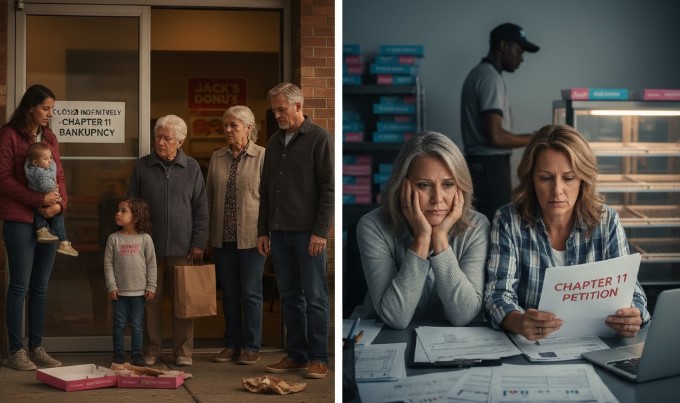
Jack’s Donuts, the long-standing Indiana-based donut chain founded in 1961, is facing a major financial restructuring. On October 29, 2025, Jack’s Donuts of Indiana Commissary LLC filed for Chapter 11 bankruptcy, citing $14.2 million in liabilities owed to more than 100 creditors.
The move comes amid lawsuits, regulatory scrutiny, and mounting debts — but despite the filing, many franchise locations claim they remain open and operational.
1. A Brief History of Jack’s Donuts
- Founded in 1961, Jack’s Donuts has been a fixture in Indiana for over six decades.
- The chain operates primarily under a franchise model, with multiple stores relying on a central commissary for supplies.
- Known for handmade yeast and cake donuts, Jack’s Donuts has cultivated a loyal regional following.
Over the years, the chain expanded gradually, emphasizing quality and community presence over rapid nationwide growth.
2. The Bankruptcy Filing
- The Chapter 11 filing lists $14.2 million in liabilities, including claims from suppliers and service providers.
- Lawsuits have been filed against the commissary, including a notable claim from Carter Logistics for over $700,000 in unpaid delivery services.
- The CEO, Lee Marcum, is also under scrutiny due to a cease and desist order from the Indiana Secretary of State related to alleged unregistered securities offerings.
Chapter 11 allows the commissary to restructure its debts while continuing operations, unlike Chapter 7, which involves liquidation.
3. Status of Franchise Operations
- Several independent franchise locations, including those under the Ganote franchise in Indiana, have stated they are not part of the bankrupt commissary and remain open.
- Customer-facing operations, including in-store purchases and social media engagement, continue as normal.
- The brand emphasizes that while the commissary undergoes restructuring, franchisees will continue to serve their communities.
Customers may still enjoy their favorite donuts without interruption, but long-term supply and consistency could be impacted depending on the restructuring outcome.
4. Implications for Franchisees
Franchisees should carefully monitor developments:
- Supply chain risks: Dependence on the commissary for donuts and ingredients may be affected.
- Contractual considerations: Review franchise agreements in light of the bankruptcy filing.
- Brand reputation: Public perception and media coverage may affect sales.
Franchisees should communicate transparently with customers and stay informed about restructuring developments.
5. Consumer Perspective
- Stores are currently open and operational, so customers can continue purchasing donuts as usual.
- Social media and franchise updates confirm ongoing product availability.
- Customers seeking reassurance should confirm that specific locations are independent franchises if concerned about supply consistency.
Despite financial troubles at the commissary level, the day-to-day customer experience remains largely unaffected — for now.
6. What to Watch Next
- Restructuring outcome: How the commissary reorganizes its debts will determine long-term viability.
- Legal developments: Lawsuits and regulatory actions could further affect operations.
- Franchisee operations: Any supply interruptions could impact store-level performance.
- Brand perception: Continued customer trust will be key to survival.
The next several months will be critical for the brand, franchisees, and customers alike.
✅ Conclusion
Jack’s Donuts, a cherished Indiana chain, is navigating financial and legal challenges through a Chapter 11 bankruptcy filing. While some franchise operations remain open and unaffected, the commissary’s restructuring will have ripple effects on supply, operations, and the brand’s reputation.
For franchisees, staying informed is crucial. For customers, the experience remains familiar — delicious donuts are still available, but the long-term future will depend on how the company emerges from bankruptcy.
References & Sources
- WRTV – Jack’s Donuts of Indiana Commissary files for Chapter 11
- Blavity – Beloved donut chain files for bankruptcy
- LinkedIn – Jack’s Donuts Company Page