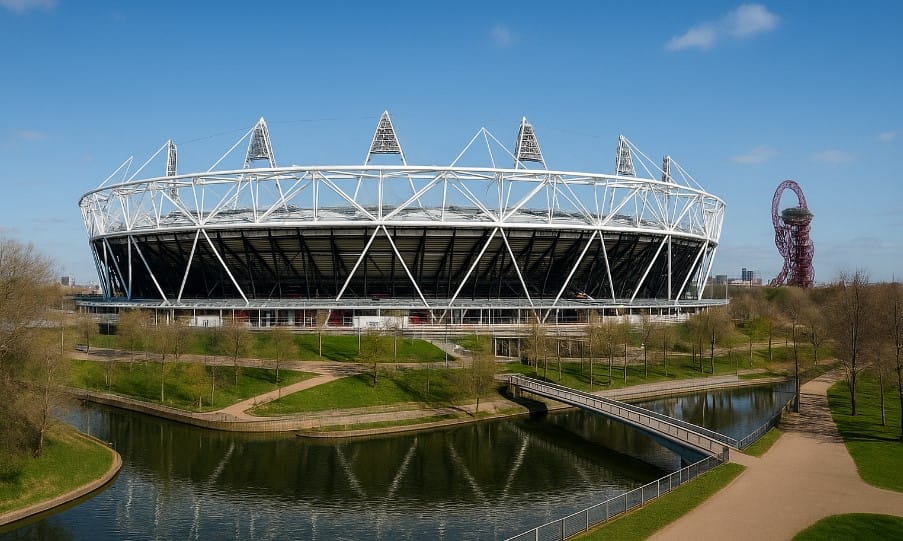
London Stadium: From Olympic Glory to a Modern Icon of Sport and Culture
Introduction
Few venues in the world carry the same blend of history, architectural brilliance, and cultural significance as the London Stadium. Located in Stratford, East London, this modern multi-purpose arena was originally built as the centerpiece of the 2012 Summer Olympics and Paralympics. Today, it stands as a versatile hub for sports, entertainment, and community events, bridging the gap between legacy and modern urban life.
In this article, we’ll explore the fascinating journey of London Stadium—from its Olympic origins to its current role in football, athletics, and music. We’ll also look at its impact on the local community, architecture, challenges, and why it remains one of the UK’s most significant stadiums.
The Birth of an Olympic Dream
When London won the bid to host the 2012 Summer Olympics, one of the biggest challenges was delivering a stadium that not only met international standards but also left a lasting legacy. Designed by Populous, the architectural firm behind iconic venues like Wembley and Yankee Stadium, the London Stadium was envisioned as a flexible, sustainable, and cost-efficient arena.
Construction began in 2008 and was completed in 2011 at a cost of approximately £486 million. The stadium officially opened on 5 May 2012, hosting various test events before becoming the heart of the London 2012 Games. During the Olympics, it welcomed up to 80,000 spectators, hosting the spectacular opening and closing ceremonies as well as track and field competitions.
Post-Olympic Transformation
One of the biggest questions after the Games was: What happens to the stadium now?
The UK had learned from the struggles of other Olympic cities where expensive venues became underused. The goal was clear—London Stadium had to become a multi-purpose arena that would continue generating revenue and community value.
- In 2013, the London Legacy Development Corporation (LLDC) announced plans to transform the stadium.
- Seating was reduced from 80,000 to around 60,000–66,000, depending on configuration.
- Retractable seating was added to accommodate both football and athletics.
- Roof extensions made it one of the largest covered stadiums in the world, protecting fans from the unpredictable British weather.
Home of West Ham United
In 2016, West Ham United Football Club officially moved into London Stadium, marking a new era for the venue. The move from Upton Park was controversial, but it significantly raised the stadium’s profile in football.
Today, it is the permanent home of West Ham, with a capacity of 62,500, making it the second-largest football stadium in London, after Wembley. It has also hosted UEFA Europa Conference League matches, with West Ham’s 2023 victory cementing the stadium as a site of triumph for the club and its fans.
Athletics and Major Sporting Events
While football dominates, London Stadium remains true to its Olympic heritage by hosting athletics events.
- It hosted the 2017 IAAF World Championships in Athletics, where Usain Bolt made his final competitive appearance.
- The Anniversary Games, part of the Diamond League, have been regularly held here.
- It has also hosted rugby matches, including the Rugby World Cup 2015, and even Major League Baseball (MLB) games in 2019, when the New York Yankees faced the Boston Red Sox.
This multi-sport adaptability makes it one of the most versatile stadiums in the world.
A Global Stage for Entertainment
Beyond sports, London Stadium has become a major music and cultural venue. Some of the biggest names in entertainment have performed here, including:
- The Rolling Stones
- Beyoncé and Jay-Z
- Foo Fighters
- Red Hot Chili Peppers
- Arctic Monkeys
With its vast capacity and world-class acoustics, it rivals Wembley and the O2 Arena as one of London’s top concert destinations.
Impact on East London
Perhaps one of the most overlooked aspects of London Stadium is its community impact. Stratford was once an underdeveloped industrial area. The Olympic Games and the stadium’s construction brought massive regeneration to the region:
- New housing and transport infrastructure.
- The creation of Queen Elizabeth Olympic Park, a public space that continues to serve families, athletes, and visitors.
- Job opportunities in tourism, hospitality, and events.
The stadium is not just a sports arena—it’s a driver of local economic growth and urban renewal.
Challenges and Criticisms
Despite its success, London Stadium has not been free of controversy.
- Cost Overruns: The transformation from Olympic to football stadium cost hundreds of millions more than initially planned.
- West Ham Deal: Critics argue the club’s rental agreement is too favorable, sparking debates over public money and fair use.
- Identity Issues: Balancing athletics with football and concerts has sometimes created logistical challenges.
Yet, these criticisms haven’t overshadowed the stadium’s ongoing success and its global recognition.
The Future of London Stadium
Looking ahead, London Stadium is set to remain a central hub for London’s sporting and cultural life. Plans include:
- Hosting future World Athletics Championships and Diamond League events.
- Expanding its concert calendar to attract even more global artists.
- Increasing its role in community programs and urban development.
With sustainability and adaptability at its core, the stadium continues to evolve.
Conclusion
The London Stadium is far more than steel, glass, and turf. It is a living legacy of the 2012 Olympics, a home for passionate football fans, a stage for global superstars, and a symbol of East London’s transformation.
While it has faced challenges, its story reflects the complexities of modern mega-projects—balancing heritage, community, and economics. A decade on from its Olympic debut, the stadium continues to inspire, entertain, and unite people from across the world.
It is not just a stadium—it’s a landmark of resilience, versatility, and human achievement.