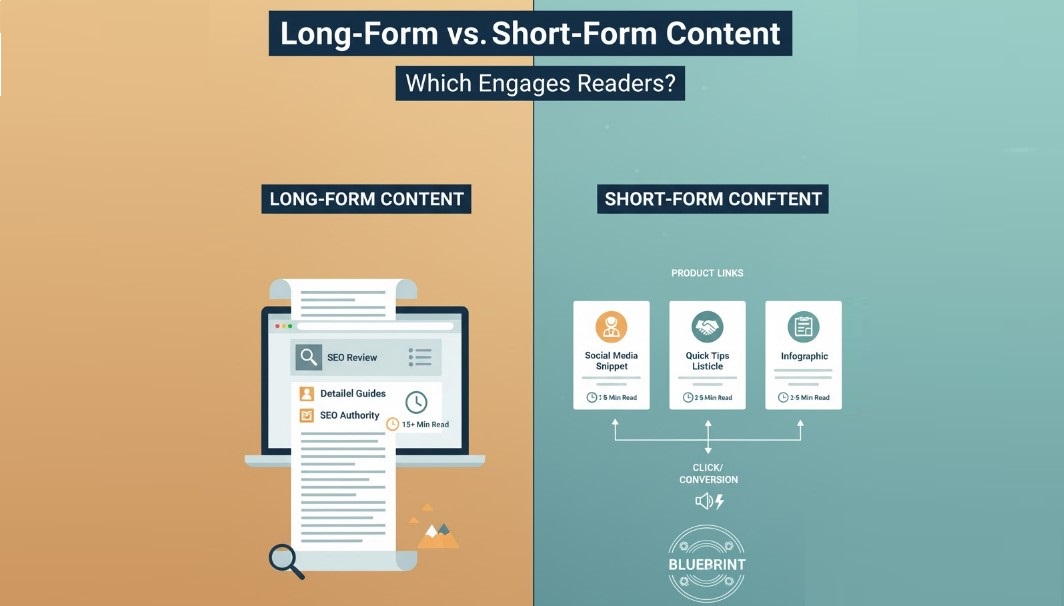
Introduction: The Content Length Debate
Bloggers and marketers often debate: Should I write long-form content or short-form posts?
In 2025, content strategy is no longer just about publishing frequently — it’s about intent, value, and audience engagement.
“The real question isn’t long vs. short — it’s which format best serves your audience and goals,” says Rachel Kim, senior content strategist at GrowthFlow Media.
This article explores the strengths, weaknesses, and best practices for both content types, helping you maximize traffic, authority, and conversions.
1. Defining Long-Form and Short-Form Content
Long-Form Content:
- Typically 1,500–3,500+ words
- In-depth guides, tutorials, case studies, and ultimate resources
- Focused on comprehensive coverage of a topic
Short-Form Content:
- Typically 300–800 words
- Quick tips, updates, news, or mini-guides
- Focused on rapid consumption and immediate value
Human insight:
Leo, a digital marketing blogger, uses long-form for detailed guides and short-form for quick tips or news updates. He reports that long-form posts drive SEO traffic, while short-form posts engage social followers.
2. Benefits of Long-Form Content
2.1 Authority and Trust
Long-form posts position you as an expert. They cover all aspects of a topic, leaving readers confident in your authority.
Example:
Emma, a personal finance blogger, wrote a 2,500-word post on “Beginner’s Investing Strategies.” It ranks consistently on Google and generates leads years later.
2.2 SEO Advantages
- Longer posts rank for more keywords and long-tail queries
- Increased dwell time improves search engine signals
- Natural opportunities for internal linking
2.3 Higher Conversions
In-depth guides often include multiple calls-to-action (CTAs) and provide enough context to encourage email sign-ups, affiliate clicks, or purchases.
3. Benefits of Short-Form Content
3.1 Quick Consumption
Short posts cater to readers who want actionable advice in under five minutes.
Example:
David, a productivity blogger, shares daily short-form tips on LinkedIn. Engagement is high, even if individual posts don’t drive much long-term traffic.
3.2 Frequent Publishing
Short-form content allows you to maintain consistency, which helps with audience retention and social media amplification.
3.3 Easy Repurposing
Short-form content can be turned into tweets, Instagram posts, TikTok videos, or email snippets. This expands reach without creating new articles.
4. Human Experiences: When Each Format Shines
4.1 Long-Form Wins for Authority
Sophia, a health blogger, published a 3,000-word guide on “Home Workout Programs for Beginners.”
- Result: Consistent Google ranking and affiliate revenue for 18 months.
4.2 Short-Form Wins for Engagement
Ethan, a tech blogger, posts 400-word reviews of gadgets weekly.
- Result: High social engagement, quick shares, and fast audience growth.
4.3 Combined Approach
Leah, a SaaS marketing blogger, combines formats:
- Long-form: In-depth tutorials and ultimate guides
- Short-form: Quick insights, tool updates, and news
- Result: Long-term SEO benefits plus frequent audience touchpoints
5. Choosing the Right Format
Ask yourself:
- Goal: Build authority, educate, convert, or engage quickly?
- Audience: Do they want deep dives or quick tips?
- Resources: Can you invest time in research and writing?
Rule of thumb:
- Long-form: Best for evergreen content, lead generation, and SEO growth
- Short-form: Best for social engagement, frequent updates, and building a personal connection
6. SEO and Content Strategy Implications
- Long-form content:
- Rank for multiple keywords
- Build backlinks
- Attract email subscribers through detailed guides
- Short-form content:
- Drives traffic from social media
- Keeps your blog active and dynamic
- Supports link-building via frequent updates
Pro Tip: Combine both — use short-form posts to promote long-form guides and maintain audience engagement.
7. Monetization Insights
Long-form and short-form content monetize differently:
- Long-form:
- Affiliate marketing (detailed reviews, guides)
- Paid subscriptions or email lead magnets
- Sponsored content placements
- Short-form:
- Quick affiliate recommendations
- Sponsored social snippets or newsletter mentions
- Funnel traffic to monetized long-form posts
Human example:
Emma, the personal finance blogger, drives most affiliate revenue from long-form guides but uses short-form tips to build her email list and social audience.
8. Best Practices for 2025
- Plan content clusters: Mix long-form cornerstone content with short-form supporting posts.
- Update regularly: Refresh long-form content every 6–12 months for accuracy and SEO.
- Repurpose short-form: Turn mini-tips into infographics, reels, or stories.
- Track engagement: Use analytics to see what resonates — then scale that format.
- Balance effort and reward: Don’t overcommit to one style at the expense of your goals.
9. Key Takeaways
- Both long-form and short-form content have unique strengths.
- Long-form builds authority, SEO, and conversions.
- Short-form drives engagement, frequency, and quick wins.
- The most effective strategy in 2025 is a hybrid content plan.
- Focus on audience needs, goals, and monetization strategy to guide your approach.
“Content length should serve your audience, not your ego,” says Rachel Kim.
Conclusion: A Balanced Blogging Strategy
There’s no winner in the long-form vs. short-form debate — there’s balance.
- Long-form content ensures your blog remains relevant, authoritative, and monetizable.
- Short-form content keeps your audience engaged, informed, and returning frequently.
The smartest bloggers in 2025 use both formats to maximize traffic, authority, and revenue while building a sustainable content ecosystem.