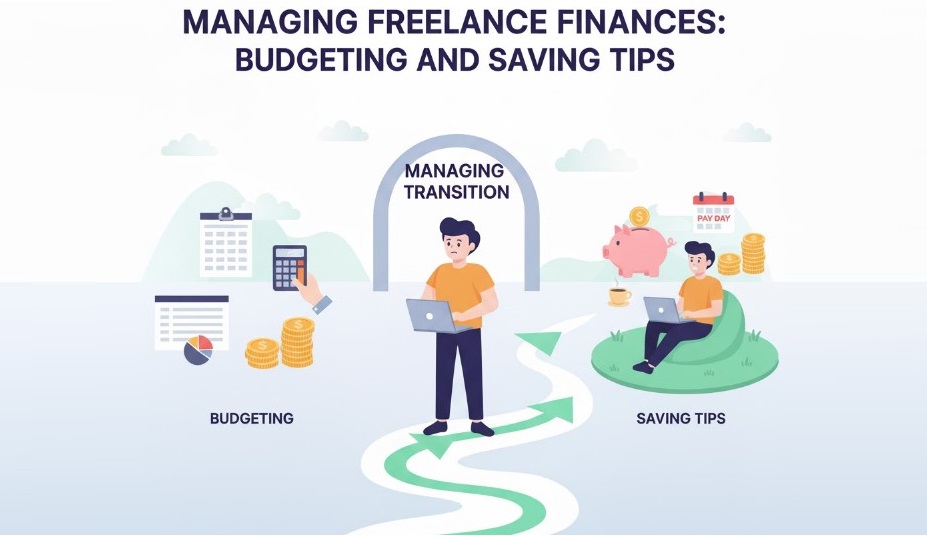
Introduction: Why Financial Management Matters for Freelancers
One of the biggest challenges freelancers face isn’t finding clients—it’s managing irregular income. Unlike a traditional job, freelancing doesn’t guarantee a paycheck every two weeks. Some months can be incredibly profitable, while others feel uncertain.
That’s why mastering budgeting and saving strategies is essential for long-term success. Whether you’re just starting or scaling your freelance business, good financial habits give you freedom, stability, and peace of mind.
In this guide, we’ll explore how to budget effectively, build savings, and manage your freelance income like a pro.
1. Understand Your Income Patterns
Freelancers often experience income fluctuations due to project-based work, delayed payments, or seasonal trends.
The first step to financial control is understanding your income flow.
Track Your Earnings:
- Record all sources of income monthly
- Identify high and low-earning months
- Estimate your average monthly income over 6–12 months
💡 Pro Tip: Use tools like Notion, Excel, or QuickBooks Self-Employed to visualize income trends. Knowing when your income dips helps you plan for those slow months in advance.
2. Create a Freelance Budget That Works
A well-structured budget helps ensure you always have enough to cover expenses—even when income varies.
Simple Budgeting Formula for Freelancers:
- 50% — Essentials: Rent, food, bills, insurance
- 30% — Business Expenses: Software, internet, marketing, subscriptions
- 20% — Savings & Investments: Emergency fund, retirement, taxes
💡 Strategy: Automate transfers so a portion of every payment goes directly to savings or tax accounts.
3. Separate Business and Personal Finances
Mixing business and personal money can lead to confusion, missed tax deductions, and financial stress.
What to Do:
- Open a separate business bank account
- Use one credit card for freelance expenses
- Track all receipts and invoices
💡 Pro Tip: Keeping finances separate makes tax season easier and gives you a clear picture of your business’s real profit.
4. Build an Emergency Fund
Every freelancer needs a financial cushion for slow periods, late payments, or unexpected expenses.
Aim to Save:
- 3–6 months of living expenses minimum
- Keep the fund in a high-yield savings account
- Refill it after every withdrawal
💡 Tip: Treat your emergency fund like a safety net, not extra spending cash.
5. Save for Taxes Year-Round
Freelancers are responsible for paying their own taxes, which can catch new freelancers off guard.
Tax Management Tips:
- Set aside 20–30% of each payment for taxes
- Pay quarterly estimates if required in your country
- Track all deductible expenses (software, internet, equipment)
💡 Tool Recommendation: Use Bonsai, FreshBooks, or Wave Accounting to automate tax tracking and invoicing.
6. Plan for Retirement Early
Freelancers don’t have employer-sponsored pensions or 401(k)s—but that doesn’t mean you can’t plan ahead.
Options to Consider:
- IRAs or Roth IRAs (US)
- Private pension plans or investment accounts
- Index funds or mutual funds for long-term growth
💡 Strategy: Set up automatic contributions—small, consistent savings grow significantly over time.
7. Control Business Expenses
It’s easy to overspend on software, gadgets, or courses.
Before every purchase, ask: “Will this tool make me more money or save me time?”
Cost Control Tips:
- Review subscriptions monthly
- Choose free or low-cost alternatives when possible
- Batch software payments annually for discounts
💡 Pro Tip: Track expenses in a tool like Mint or YNAB (You Need A Budget) for real-time visibility.
8. Diversify Your Income Streams
To reduce financial stress, don’t rely on one client or one service.
Diversification Ideas:
- Offer multiple services (e.g., writing + strategy consulting)
- Create passive income like digital products or courses
- Explore affiliate marketing or online teaching
💡 Strategy: A diversified income protects you during market shifts and client slowdowns.
9. Pay Yourself a Consistent Salary
One of the smartest things a freelancer can do is treat their business like a company—including paying themselves a fixed salary.
How It Works:
- Set a base monthly income (e.g., $2,500)
- Keep extra earnings in your business account as savings or reinvestment
- Pay yourself consistently, even during slow periods
💡 Benefit: This approach creates financial predictability and helps maintain a stable personal budget.
10. Use Financial Tools and Apps
Managing freelance money doesn’t have to be complicated. Many tools simplify the process:
| Purpose | Recommended Tools |
|---|---|
| Budgeting | YNAB, Mint, Goodbudget |
| Invoicing | Wave, Bonsai, PayPal Invoicing |
| Tax Tracking | QuickBooks Self-Employed, FreshBooks |
| Expense Management | Expensify, Zoho Books |
💡 Pro Tip: Automate as much as possible—reminders, savings transfers, and invoicing—to save time and avoid stress.
11. Prepare for Slow Months in Advance
Every freelancer faces downtime. The key is anticipation, not reaction.
Prepare by:
- Saving extra during high-earning months
- Offering retainer packages to maintain steady income
- Keeping a marketing calendar to fill gaps ahead of time
💡 Strategy: Predictable income is built, not hoped for—plan for it proactively.
12. Reinvest in Your Business
Don’t forget to allocate part of your income to growth.
Smart Reinvestments:
- Online courses or skill certifications
- Better software or equipment
- Marketing campaigns to attract premium clients
💡 Pro Tip: Every investment should either increase efficiency or improve earning potential.
Conclusion: Freelance Freedom Requires Financial Discipline
Freelancing gives you the ultimate freedom—but freedom without financial discipline leads to chaos.
With smart budgeting, consistent saving, and a clear separation between business and personal finances, you can build a profitable, stress-free freelance career.
Remember, the goal isn’t just to earn more—it’s to manage what you earn wisely so you can enjoy the freedom freelancing promises.
💡 Final Thought: Freelancers who master money management don’t just survive slow months—they thrive all year long.
Bonus: Freelancer Financial Checklist
✅ Track income and expenses monthly
✅ Build an emergency fund (3–6 months)
✅ Save for taxes with every payment
✅ Plan for retirement early
✅ Use financial tools to automate money management
✅ Pay yourself a consistent salary